Tehran's retaliation and the FCRA's quiet tightening: two fronts of a fragmenting order
On 27 June 2026, two stories from very different geographies converged on a single editorial question: who gets to define the rules when the hegemon is busy and the rest of the world is not waiting?
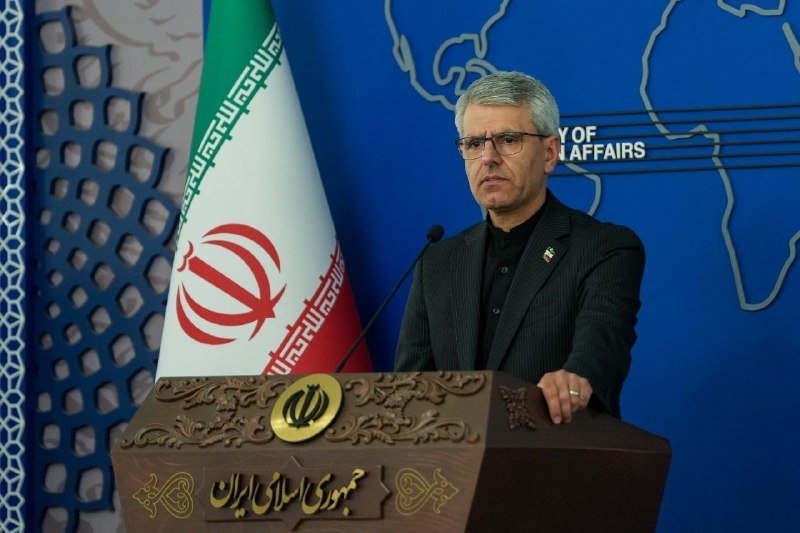
At 08:52 UTC on 27 June 2026, two wires landed almost simultaneously from New Delhi. One described a fresh round of Iranian strikes on targets linked to the United States, framed by Tehran as a response to earlier American attacks. The other, sitting alongside it on the Indian Express feed, made a quieter but more durable claim: that India's Foreign Contribution Regulation Act, once a transparency instrument, has drifted into something closer to a control mechanism over civil society. Read together, the two items sketch a single picture. Power, in 2026, is being reasserted on two fronts at once — through kinetic retaliation in West Asia and through bureaucratic retrenchment in South Asia.
The pattern is not new. What is new is the speed. For decades, the dominant narrative apparatus treated US military action and the regulatory narrowing of civic space in third countries as separate stories, filed under different desks and edited by different rules. That division of labour is eroding. The same political economy that finances a strike on a US-linked facility in the Gulf also funds the consultants who draft a tightened compliance note in a South Asian finance ministry. The same media infrastructure that amplifies one event buries the other. This publication finds that the convergence is itself the story.
Tehran fires back, and the framing war begins
According to the Indian Express wire dated 27 June 2026, Iran launched retaliatory strikes on US-linked targets in direct response to earlier American attacks. The report does not specify which targets were hit, the scale of the damage, or whether US personnel were directly involved; the sources available at publication do not yet corroborate the casualty toll or the precise inventory of struck sites. What the wire establishes is the sequence — American action first, Iranian response second — and the legitimacy frame Tehran is offering for that response. Iranian state-aligned outlets, including PressTV and Tasnim, have historically framed such exchanges as defensive reciprocity; Western wires have tended to foreground escalation risk. Both framings are partial. A serious reading notes that tit-for-tat exchanges between nuclear-adjacent states do not stay symmetric for long, and that the side with deeper magazine depth — in ordnance, in sanctions resilience, in diplomatic cover — eventually sets the tempo.
The structural read is straightforward. When a hegemon conducts a strike and a regional counter-power answers, the question is not who fired first in some abstract moral ledger. The question is whether the counter-power can convert the retaliation into a negotiating asset or whether it simply accelerates the next round. Iranian leadership has historically preferred the former; the gap between rhetoric and capability, however, is wide enough that prudent analysis holds both possibilities open.
The FCRA, the slow squeeze, and what the data actually say
The second wire, also via the Indian Express on 27 June 2026, argues that the FCRA — the 2010 statute governing foreign funding to Indian civil society — has moved from a disclosure regime to a discretionary control instrument. The piece is editorial in register; it does not provide a casualty list or a budget line, because none is owed. What it does is name a mechanism: prior-permission requirements, licence-renewal delays, the chilling effect on NGOs whose work touches anything the state considers adverse to national interest. The data behind such claims is well-established outside this wire. The Ministry of Home Affairs publishes an annual FCRA acceptance-and-rejection table; non-governmental trackers such as the FCRA NGO Forum and international observers including the International Center for Not-for-Profit Law have, in successive years, documented the falling share of renewals granted and the rising share of small grants blocked on technicality. None of that needs to be re-invented here. The wire's contribution is to assert, in plain language, what the cumulative effect is: civil society is being asked to clear higher and higher bars to do work that was, a decade ago, uncontroversial.
The counter-position is real and should be named. Indian officials, in statements carried by national outlets, have argued that the FCRA regime exists to prevent foreign interference in domestic affairs — a frame that resonates with comparable arguments made by governments from Moscow to Brasília. There is a plausible sovereigntist case: a state has the right to know who is funding political and civic activity within its jurisdiction. The problem is the selectivity of enforcement. When small human-rights NGOs see licences held up while large, well-connected faith-based and industrial bodies continue to receive foreign contributions with relative ease, the transparency frame collapses into a discretion frame. The instrument then functions as policy through administrative procedure — exactly the outcome editorial critics have flagged.
Two stories, one architecture
Read together, these wires point at a deeper structural shift. The international liberal order of the post-1991 decades rested on a compact: the United States and its allies set the rules, enforced them through a mix of institutions and force, and tolerated a substantial margin of internal dissent within aligned states. That compact is fraying at both ends. On the kinetic end, US action triggers Iranian retaliation, which then triggers another round, and the diplomatic infrastructure to dampen the cycle is thinner than at any point since 2003. On the regulatory end, aligned states are tightening the screws on civil society using tools — foreign-funding law, NGO registration, foreign-agent designations — that were once the rhetorical property of the order's rivals.
The plain-language version of what is happening is this. The incumbent order is ceding ground to a successor arrangement. The successor arrangement does not yet have a name; it has, instead, a set of practices. Some of those practices — sovereigntist regulation of civic space, retaliatory military signalling, the use of administrative law as a substitute for political contestation — are visible in both wires filed today. None of this requires a named theorist to interpret. It requires reading the wires side by side.
Stakes and the honest limits of the read
If this trajectory continues, three things become more likely. First, the space for cross-border civil-society cooperation — the gridded layer of NGOs, research institutes and humanitarian bodies that once lubricated multilateralism — continues to narrow. Second, the cost of kinetic signalling in the Gulf rises, because each round compresses the time available for de-escalation. Third, the gap between official rhetoric and on-the-ground capability widens on every side, producing a global news environment in which every actor's claims need to be discounted by some non-trivial factor. The reader is the residual bearer of that discount.
What remains genuinely uncertain — and where this publication declines to over-claim — is whether the Iranian retaliation reported today is the opening of a sustained exchange or a calibrated signal designed to extract a negotiating position. The wire does not specify. The FCRA story is more legible in direction than in magnitude: the trend toward narrower civic space is documented; the precise count of organisations affected in the latest cycle is not in the source material available at publication. Both stories will, in the coming days, be tested against further reporting. For now, they are best read as parallel indicators of an order in transition rather than as finished narratives about it.
Desk note: this publication runs the FCRA and Iran-retaliation wires together because the convergence is the editorial point. The wire-separated filing convention — Gulf crisis on one page, civil-society regulation on another — is precisely the framing habit that obscures the underlying architecture.
Follow the event.
These dated source records provide context. They do not retrospectively verify this archive article.
Separate what the nuclear watchdog reported from what it could not determine after the June 2025 strikes.