A Ceasefire That Wouldn't Hold: Trump, Iran, and 24 Hours in the Strait of Hormuz
Within hours of accusing Tehran of breaching a fragile ceasefire, the United States launched strikes on Iranian targets. The episode exposes how thin the diplomatic floor still is in the Gulf — and how much now rides on a single waterway.
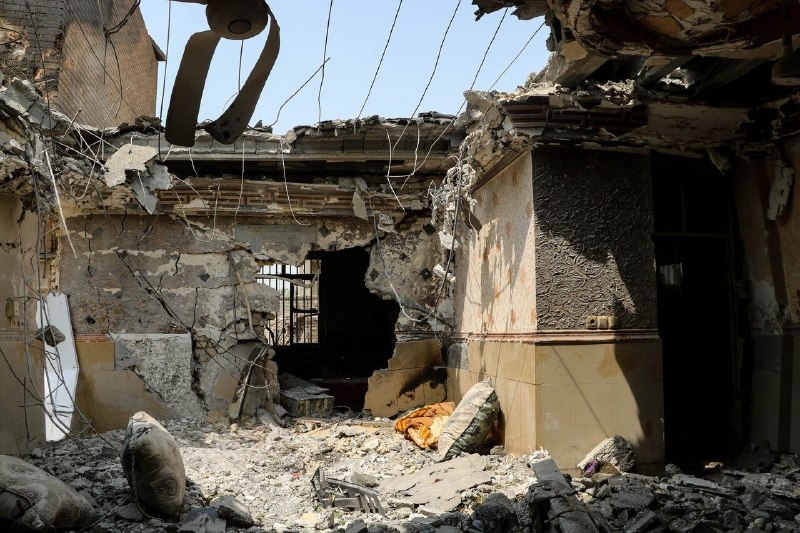
The first reports reached the wire desks at 16:20 UTC on 26 June 2026. President Donald Trump told reporters that Iran had launched four one-way attack drones at commercial shipping in the Strait of Hormuz. Three were intercepted by U.S. forces, he said; one struck a cargo vessel. By 21:33 UTC the same day, France 24 was reporting U.S. strikes on Iran, framed as retaliation for what Trump described as a ceasefire violation. Within five hours, the diplomatic choreography that had defined the preceding weeks had collapsed back into open fire.
The pattern is now familiar enough to name. A declared ceasefire holds just long enough for oil futures to settle and shipping insurance premiums to recede. Then an incident — usually at sea, usually deniable in its early hours — provides the pretext for renewed force. What is different this round is the speed. There was no extended investigation, no UN panel, no third-party verification before the U.S. response. The accusation and the retaliation landed inside a single news cycle.
What was actually claimed
The facts as presented by the Trump administration are narrow. Four drones. One cargo ship hit. Three intercepted. The vessel was not named in the wire reports this publication reviewed; the flag state, the crew composition, and the cargo manifest were not disclosed in any of the source items. Trump characterised the action as a "foolish violation" of a ceasefire agreement, language carried by Polymarket's breaking-news account and amplified by the Unusual Whales feed and the Epoch Times' Telegram channel. Cointelegraph's wire, citing the President's own statement, framed the intercept operation as a U.S. success and the Iranian action as a deliberate breach.
The claims were not, at the time of writing, independently corroborated by Iranian state media in any of the items this publication reviewed. Iranian state outlets — IRNA, Tasnim, PressTV — did not appear in the source set. The structural question that follows is therefore also a reporting question: the picture of who did what to whom, on 26 June 2026, is at this point almost entirely a U.S. presidential narrative carried through sympathetic and aggregator channels. France 24 reported the U.S. strikes but the underlying triggering incident remains, in the public record this article draws on, single-sourced.
That is not a small caveat. A ceasefire is only as durable as the agreement each side believes the other is keeping. When the trigger for a return to hostilities is a presidential statement rather than an independently verified event, the threshold for renewed war drops materially.
The corridor problem
The Strait of Hormuz is the world's most consequential oil chokepoint. Roughly a fifth of global petroleum passes through it on any given day. The shipping lanes are narrow — Iran sits on the northern shore, Oman on the southern — and the legal framework that governs them is a patchwork of UNCLOS provisions, bilateral naval agreements, and the residual arrangements from the 1980s tanker war. When a ceasefire holds, traffic flows and insurance premiums drop toward baseline. When it breaks, freight rates spike within hours, refiners in India and East Asia start calling for alternative sourcing, and oil futures open the next session limit-up.
The economic stakes explain why both sides have an interest in presenting the latest incident as the other side's fault. Iran has, in past episodes, used drone and fast-boat harassment in the Strait as a calibrated pressure tactic — designed to remind Gulf importers and global markets that Tehran retains the ability to disrupt traffic without provoking a full conventional response. The U.S. has, in turn, used the threat of escalation as a negotiating lever for sanctions relief and nuclear constraints. Each accusation of "violation" is also a positioning move inside the next round of talks.
The risk is that calibrated pressure stops being calibrated. A single successful drone strike on a cargo vessel — if that is what occurred — moves the episode out of the grey zone and into the realm of unambiguous aggression against civilian shipping. That is the read the Trump administration is offering, and it is the read that justifies the strikes France 24 reported hours later.
What the framing leaves out
The Western wire framing of the 26 June episode treats Iranian action as the cause and U.S. retaliation as the response. That sequencing is defensible on the narrow facts as stated. It is also incomplete.
The structural backdrop matters. The United States has maintained a continuous carrier presence in the Gulf and a network of bases across Qatar, Bahrain, Kuwait, and the UAE throughout the ceasefire period. That presence is not neutral; it is a coercive posture. Iran has framed the ceasefire itself — and the broader sanctions architecture it sits inside — as economic warfare conducted by other means. From Tehran's vantage point, a drone launched at a cargo vessel is a warning shot inside a wider confrontation that the U.S. has been waging through secondary sanctions, oil export restrictions, and the freezing of Iranian assets abroad.
A complete picture therefore requires both accounts. The U.S. account: Iran violated a standing agreement with a deliberate attack on commercial shipping, and the U.S. responded proportionally. The Iranian counter-account — which the sources in this article do not directly capture but which the structural context implies — is that a ceasefire imposed on an economically besieged country is not a neutral arrangement, and that the U.S. escalatory posture never materially relaxed during the period the agreement was nominally in force. Neither account is, on the current public record, more verified than the other. The U.S. version is simply the one with the aircraft carrier behind it.
The stakes, concretely
If the 26 June strikes produce a controlled de-escalation — a return to negotiations, a tightening of rules of engagement in the Strait, a renewed ceasefire with sharper verification mechanisms — then the episode will join the long list of near-misses that the Gulf has absorbed since 2019. Markets will reopen, insurance premiums will retreat, and the diplomatic calendar will resume.
If they do not, the consequences radiate outward quickly. Oil above $120 a barrel is a near-term possibility; $150 is no longer an extreme tail scenario in a sustained Hormuz disruption. India, China, Japan, and South Korea — the four largest importers of Gulf crude — would face immediate inflationary pressure. The U.S. domestic political cost would rise in step with pump prices, and the administration that launched the strikes would own the next round of escalation. Iran, for its part, has less room to escalate than to absorb; its conventional military cannot match the U.S. Fifth Fleet, but its asymmetric options — drone swarms, mining operations, proxy strikes on U.S. bases in Iraq and Syria — remain live.
The narrower political question is whether the ceasefire that allegedly governed the period before 26 June was ever more than a public label. If the answer is that it was a real agreement that Iran broke, the U.S. response is defensible under the doctrine of necessity. If the answer is that it was a verbal fiction maintained for market optics while both sides continued low-grade pressure — which the incident pattern of the past several months tends to support — then the strikes are not a response to a violation but an escalation inside an ongoing contest, dressed in the language of violation.
The sources this publication reviewed do not resolve that ambiguity. They establish what was said, by whom, and in what order. They do not, on their own, establish what actually happened in the water.
This article was compiled from wire reports and aggregator feeds active on 26 June 2026. Monexus will update as independent verification of the underlying maritime incident becomes available.
Wire provenance
This editorial synthesis draws on the following public wire/social posts:
- https://t.me/cointelegraph
- https://t.me/CoinDesk
- https://t.me/epochtimes
- https://t.me/ClashReport
Follow the event.
These dated source records provide context. They do not retrospectively verify this archive article.
Separate what the nuclear watchdog reported from what it could not determine after the June 2025 strikes.