Ukrainian Flamingo cruise missiles hit Titan-Barricades plant in Volgograd
A Ukrainian Flamingo strike on a Volgograd fortification-supply plant signals a quiet reorientation of deep-strike doctrine, and the wire's hesitation to say so out loud is itself part of the story.
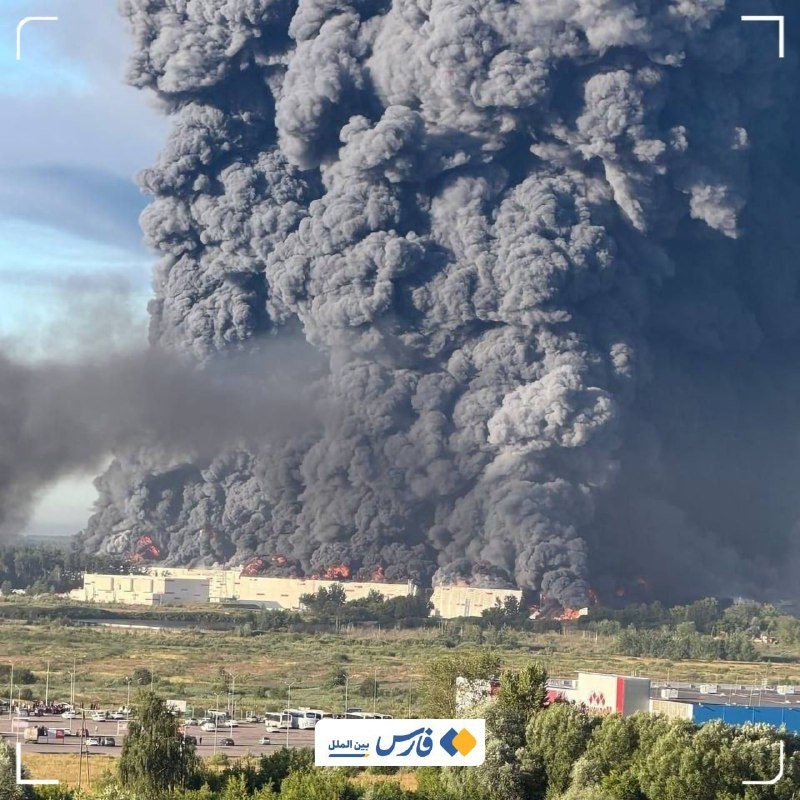
Ukrainian Flamingo cruise missiles struck the Titan-Barricades plant in Volgograd overnight, with the first detonations recorded at the site shortly after 02:00 local time on 27 June, according to open-source intelligence channels monitoring the attack in real time. Telegram posts from ButusovPlus and Hromadske circulated satellite imagery within hours showing thermal scarring across several production halls and what channel analysts described as secondary detonations consistent with stored propellant or warhead components. The plant, sited on the western edge of Volgograd along the Volga, produces reinforced concrete and composite barrier systems used in Russian fortification lines from the Donbas down to the Kursk salient.
The strike is the deepest confirmed hit on Russian strategic-industry infrastructure since early spring and lands at a moment when Kyiv's long-range strike complex is visibly diversifying beyond the drones that dominated last summer. Within 72 hours of the Volgograd attack, Ukraine's Digital Transformation Minister Mykhailo Fedorov confirmed that Kyiv was negotiating with Paris for a licence to domestically produce SCALP cruise missiles, a Franco-British weapon previously imported only as finished munitions. The pairing is significant: it suggests the Volgograd raid is part of a deliberate escalation sequence aimed at Russian fortification-industrial capacity rather than a one-off retaliatory strike.
What actually hit Volgograd
The Flamingo is a Ukrainian-produced cruise missile with a reported range comfortably exceeding 1,000 kilometres, a circular-error-probable figure that puts deep rear-area industrial sites inside its operational envelope. Open-source channels including Clash Report and osintlive circulated geolocated imagery on the morning of 27 June placing the impact points on the southern end of the Titan-Barricades complex, adjacent to a rail spur that, according to ButusovPlus analysts, services the facility's outbound logistics. Telegram war_monitor, one of the first channels to flag the attack, posted timestamped screenshots of Russian emergency-services traffic at 02:14 local time describing fires across at least three production halls.
Titan-Barricades is not a household name in Western coverage, which has tended to fixate on aviation factories and oil refineries as the canonical Russian deep-strike targets. But the plant sits at a quieter node of strategic importance: reinforced concrete bunkers, dragon's-teeth obstacles, mobile barrier systems and gabion revetments all roll out of facilities like Titan-Barricades and feed directly into the line-of-contact engineering that has, since autumn 2023, defined the slow positional grind in southern Ukraine. Disrupting that supply chain attacks the Russian army at the point where it has historically held its largest cost-imposing advantage: cheap, labour-intensive fortification built by contractors rather than conscripts.
Hromadske's coverage on the day emphasised the operational logic. The plant's product line, the channel noted, is consumed almost entirely by Russian forces in Ukraine and a handful of export contracts in Central Asia and the Caucasus. There is no plausible civilian-domestic market for industrial-grade dragon's-teeth in a Russian Federation that does not face an armoured invasion threat. Titan-Barricades is, in plain terms, a war-supply factory.
The Russian counter-frame
Russian state media and Russian-aligned Telegram channels moved quickly to minimise the strike. Initial reporting from Moscow characterised the damage as limited to auxiliary buildings, with no impact on core production. By midday, Volgograd Oblast Governor Andrei Bocharov had issued a statement claiming all fires had been extinguished and that production would resume within 48 hours. Russian milbloggers split along familiar lines: hawkish channels dismissed the attack as a provocation destined to accelerate Russian long-range strikes on Ukrainian energy infrastructure; nationalist-commentary accounts cast the strike as a Western-orchestrated escalation designed to derail ongoing peace-track discussions.
The pattern is recognisable. Over the past 18 months, Russian state-aligned coverage of Ukrainian deep strikes has reliably applied a two-step sequence: first, deny or minimise the hit; second, redirect attention toward collateral damage or a Russian retaliatory strike. The Volgograd episode fits the template closely, though the satellite-imagery record published by ButusovPlus and Hromadske is harder to dismiss than the social-media residue from earlier strikes. Tsaplienko's coverage in particular flagged visible roof collapse across at least two structures that production-line activity does not typically require and that would be expensive to replicate under wartime sanctions on construction materials.
The wire frame, by contrast, has been quieter. Most major Western outlets led the day with a tactical-fragment framing: a missile hit, an industrial site, satellite photos. That framing is not wrong; it is just incomplete. The strategic question is not whether Titan-Barricades burned, but what its burning implies about the trajectory of Ukrainian strike planning and the architecture of Russian rear-area defence.
The strategic-industrial frame
What is unfolding is a slow, deliberate reorientation of Ukrainian long-range fire from energy and aviation targets toward the connective tissue of Russian military-industrial production. Energy strikes impose cost on the Russian economy broadly and degrade the broader war-making potential of the state. Industrial strikes on fortification suppliers are narrower but more punishing: they degrade the specific inputs that the Russian army requires to continue digging in at scale.
The SCALP licence negotiations, announced by Fedorov on 29 June, fit directly into this reorientation. SCALP is a stealth-optimised cruise missile designed for hardened, well-defended targets: command bunkers, radar installations, industrial facilities with substantial concrete aprons. It is not a fuel-depot weapon. The pairing of the Flamingo strike on Titan-Barricades and the SCALP licensing push suggests that Kyiv and its partners have identified the same target set and are now building a redundant strike complex to service it. Flamingo, an indigenous Ukrainian product, provides volume and reach. SCALP, eventually produced under licence inside Ukraine, provides survivability and penetration against hardened structures.
The structural argument that emerges from the open-source record is straightforward: the Russian fortification line is a force multiplier that has compensated, in slow-war accounting, for Russian manpower and manoeuvre disadvantages. If the supply chain feeding that line can be persistently degraded by long-range fire, the cost calculus of Russian positional defence shifts. Trenches have to be re-dug. Dragon's teeth have to be re-cast. Logistics corridors have to be re-engineered. Each of these activities consumes labour, transport capacity and construction material that the Russian rear area is already short of.
The Western coverage gap
The wire has been slower than the open-source community to draw this inference. There are reasonable explanations: Western outlets operate under verification constraints that Telegram channels do not, and Western analysts are often reluctant to extrapolate from a single strike to a doctrinal shift. But the cumulative effect of that caution has been a coverage pattern that treats each Ukrainian deep strike as an isolated tactical event rather than as a sequential indicator of evolving strike doctrine.
The Hromadske coverage on 27 June was the cleanest articulation of the alternative frame. The Ukrainian channel's analysts treated Titan-Barricades not as a target of opportunity but as a target of system: a node in a supply chain that the Russian army cannot easily replicate under sanctions and wartime labour scarcity. ButusovPlus, whose reporting on the strike has been particularly granular, walked readers through the plant's product lines, its rail logistics and its principal customers, an analytical step that most wire coverage skipped.
This is not a criticism of any individual wire report. It is a structural observation about how stories of this kind tend to travel: open-source channels lead with analysis, Western wire waits for confirmation, and the gap between the two gets filled in the public mind by whichever frame moves faster. On Volgograd, the faster frame was the tactical one.
What to watch in the next 30 days
Three indicators will determine whether the Volgograd strike marks the start of a campaign against Russian fortification-industry targets or remains a one-off. First, follow-on strikes on similar nodes: cement plants, prefab concrete works, and barrier manufacturers in Russia's interior. ButusovPlus has already flagged at least two other facilities that fit the same product profile and lie within Flamingo's operational envelope. Second, the SCALP licensing timeline. Fedorov's announcement was diplomatic language for an early-stage negotiation; a signed licence would imply a multi-year production pipeline and would signal a Ukrainian commitment to a sustained deep-strike campaign rather than a single operational spike. Third, the Russian response pattern. Moscow's retaliation doctrine for industrial strikes has, historically, run through Ukrainian energy infrastructure and ammunition depots. A Russian response to Volgograd aimed specifically at Ukrainian fortification-industry nodes would be the cleanest signal that Moscow itself reads the strike as doctrinal rather than tactical.
The open-source intelligence record on the night of 26-27 June is now reasonably settled. What the strike means for the trajectory of the war is not. But the direction of travel is visible in the sources, and the wire's reluctance to read that direction out loud is itself a story worth naming.
Follow the event.
These dated source records provide context. They do not retrospectively verify this archive article.
A dated voting record is evidence of one decision. Use the original UN record before turning it into an alignment label.
Visual explainer · historical vote of 2022-03-02 →