Two Crashes, One Evening: The Hidden Attrition Cost of Ukraine's Fighter Fleet
Within hours on 26 June 2026, Ukraine lost a MiG-29 in Poltava and an Su-24M in Khmelnytskyi. The pattern matters more than either crash alone.
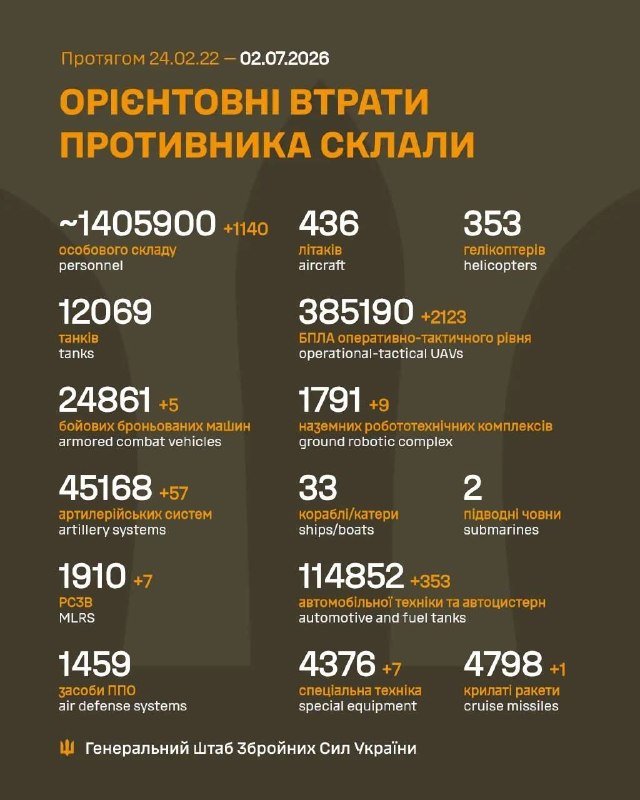
Two Ukrainian combat aircraft went down within a single evening of operations, according to separate reports circulated on Telegram in the early UTC hours of 27 June 2026. A MiG-29 fighter crashed overnight in Poltava Oblast, with the pilot safely ejecting, the open-source channel Clash Report said at 10:09 UTC on 27 June 2026, citing the Ukrainian Air Force. Hours earlier, the Ukrainian Air Force had announced the loss of an Su-24M front bomber in Khmelnytskyi Oblast — a strike aircraft type flown from Starokostyantyniv airbase — with both pilots killed, the channel @wfwitness reported at 09:57 UTC on 27 June 2026. DDGeopolitics, another monitoring account, confirmed the Poltava loss at 10:34 UTC. Iran's Fars News International, framing the Poltava incident as "mysterious," carried an initial wire-style summary at 10:46 UTC.
Read together, the two losses say less about either crash than about the tempo Ukraine is flying at — and the arithmetic that frames the air force's near-term sustainability.
What the initial accounts say
The MiG-29 loss in Poltava is the cleaner of the two events for early verification. The pilot ejected and survived, which is consistent with the air force's standard reporting protocol for a controlled egress, and matches the framing offered by Clash Report and DDGeopolitics, both of which drew explicitly on Ukrainian Air Force statements. Poltava Oblast is well inside Ukrainian-controlled airspace, deep behind what would normally be considered a contested line; an aircraft loss there in a non-ejection scenario would invite obvious questions about ground fire, but the survivor account pushes that line of speculation to one side.
The Su-24M crash is the heavier event. Starokostyantyniv, the home base for Ukraine's surviving Su-24 fleet, sits in Khmelnytskyi Oblast — also far from the front line — and the loss of both aircrew, as reported by @wfwitness citing the Ukrainian Air Force, removes two trained pilots from an already thin crew pool in a single sortie. The Su-24M is a Soviet-era swing-wing bomber that has carried the bulk of Ukraine's standoff cruise-missile burden, including Storm Shadow and SCALP-EG launches. Each airframe lost is, in practice, also a delivery platform for Western-supplied munitions.
What the dominant framing leaves out
Most Western wire coverage of Ukrainian aircraft losses in 2025 and 2026 has leaned on a narrow set of causes: maintenance strain, pilot error, or — in the rarer cases where a Russian claim surfaces and is later corroborated — friendly-fire incidents inside dense air-defence envelopes. That framing is technically defensible but strategically parochial. It treats each airframe as a discrete accident rather than as a draw on a finite inventory.
The structural read is more uncomfortable. Ukraine is operating a fighter fleet composed almost entirely of Soviet-era types — MiG-29s refurbished in Poland and Slovakia, Su-24s pulled from deep storage, and a small number of Su-25s — that the original manufacturers stopped producing three decades ago. Spares come from cannibalisation, third-country inventories, and an irregular parts pipeline that has tightened as the war grinds on. Every airframe that goes down in non-combat circumstances, or in circumstances where Russian air defence is not the proximate cause, is airframe that cannot be replaced.
What the sources disagree on
The Fars News International summary of the Poltava crash — the only Iran-linked outlet in the source set — is notable chiefly for the word "mysterious." Russian-aligned channels have, in earlier incidents, used that word to seed speculation about internal Ukrainian technical failure or NATO-sourced aircraft defects, a framing that lets Moscow avoid acknowledging its own long-range strike capability. The framing should be read for what it is: a counter-narrative asset, not an early finding. Ukrainian Air Force statements, on the evidence available, point to a combat-mission loss with a successful ejection; whether the cause was mechanical, an air-defence hit at altitude, or a sortie-end incident is not established in the source material. The sources do not specify a cause for either crash.
The stakes
Two airframes and two aircrew in one evening is not, by itself, a strategic reversal. Ukraine has absorbed heavier single-day losses. But the losses land inside a broader pattern that warrants honest accounting: the Soviet-era fleet is shrinking faster than it is being backfilled, and the F-16 deliveries that were supposed to close the gap have arrived in numbers too small, and trained too thinly, to offset attrition at this pace. If the Poltava and Khmelnytskyi losses of 26 June 2026 turn out to be representative rather than exceptional, the air force's sortie-generation capacity will be the constraint long before the supply of Western munitions is.
The honest reading is not that either crash was avoidable. It is that the cost of losing aircraft Ukraine cannot build is fundamentally different from the cost of losing aircraft a domestic industrial base could replace.
Desk note: This article was framed around fleet arithmetic rather than around the cause-of-crash speculation that Fars and other non-aligned channels seeded on the morning of 27 June 2026. The wire treatment of Ukrainian air losses has tended to underweight the inventory question; Monexus is foregrounding it.
Wire provenance
This editorial synthesis draws on the following public wire/social posts:
- https://t.me/ClashReport/xxxxx
- https://t.me/DDGeopolitics/xxxxx
- https://t.me/FarsNewsInt/xxxxx
- https://t.me/wfwitness/xxxxx