Strikes and Signals: The First US-Iran Exchange Since the Deal
On 27 June 2026, Washington and Tehran traded strikes inside a 60-day negotiation window — a sequenced escalation that leaves the deal architecture intact, for now.
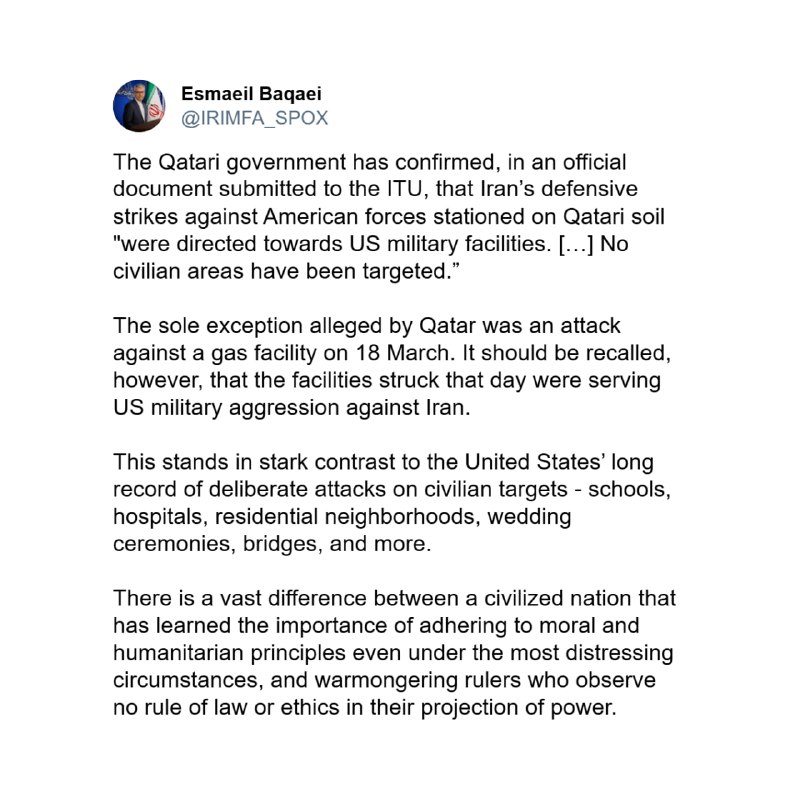
The first exchange of strikes between the United States and Iran since the signing of the bilateral agreement occurred on 27 June 2026. According to wire reporting carried by Reuters at 11:40 UTC, Tehran said it struck US-linked targets in retaliation for US attacks on Iranian missile and drone storage sites earlier in the sequence. The framing is significant. Both governments continue to describe their actions as calibrated responses within an existing negotiation framework, not as the opening shots of a wider war.
For six weeks the two sides have been operating inside a 60-day negotiation period that markets, diplomats, and intelligence agencies alike had treated as the architecture for de-escalation. The exchange on 27 June happened inside that architecture, not outside it. That distinction — between a collapse of the framework and a stress test of it — is the one most consequential for the weeks ahead.
What was struck, and by whom
The publicly available reporting, drawn from a Reuters wire circulated on X at 11:40 UTC and corroborated by the Sprinterpress feed at 10:19 UTC, describes two distinct operations. The United States carried out strikes on Iranian missile and drone warehouses. Iran, in turn, carried out strikes against what it described as US-linked targets. Neither side has published a comprehensive target list. The Reuters language — "Iran says it struck US-linked targets in response to US attacks" — preserves Tehran's framing as a responsive action rather than an initiating one.
The substance of the targets matters more than the framing. Missile and drone warehouses are dual-use infrastructure: they are simultaneously the storage capacity that would be used against Israel, against Gulf shipping, or against US bases in the region, and they are also the conventional deterrent inventory that any negotiating Iranian government argues it needs as leverage at the table. Striking them degrades capability. It also signals that Washington is willing to escalate kinetic action within the negotiation window rather than waiting for it to lapse.
The Iranian strikes, by contrast, landed on what Tehran characterised as US-linked targets — language that allows deniability about whether US personnel were directly in the blast radius, and that preserves the option for both governments to describe the exchange as contained.
The negotiation clock is still running
The exchange sits inside an active 60-day negotiation period. A Polymarket market indexed at 16:15 UTC on 26 June 2026 priced a 64% probability that the window would be extended. That figure is not a forecast of success; it is a forecast that the negotiation architecture survives the next several weeks in some form, whether through formal extension, tacit rollover, or a successor arrangement.
The market's read is consistent with the diplomatic signalling. Both governments, on the evidence currently available, continue to use the language of negotiation rather than rupture. Tehran's framing of its strikes as "in response to" US attacks preserves the contract — implicit though it is — that action and reaction inside the window remain legible to both sides. Washington's choice of targets (warehouses rather than command-and-control nodes, IRGC headquarters, or nuclear infrastructure) likewise preserves the option of returning to the table.
The risk is that a third move breaks that legibility. If Iran's next action strikes a target with US casualties, or if Washington's next action reaches a target that Tehran cannot publicly absorb, the negotiation clock stops being useful to either side as a domestic-political cover for restraint.
Why both sides have an interest in calling this a stress test
The conventional read from the Western-wire ecosystem is that this is the deal coming apart. That framing is plausible but not yet supported by the reporting. The structural incentives on both sides point in a different direction.
For the United States, an open-ended kinetic exchange with Iran would close the diplomatic space that the current administration has invested in for the first half of 2026, would push oil prices through levels that complicate the domestic macro picture, and would pull resources away from the Indo-Pacific posture that remains the strategic centre of gravity. Strikes on warehouses are the kind of action that can be defended to a domestic audience as decisive without foreclosing the negotiation that the same audience was promised.
For Iran, the calculus is mirrored. The Islamic Republic has, since 2023, been rebuilding access to foreign currency through oil exports to Chinese refiners and through selective engagement with Gulf intermediaries. A return to open confrontation would close the sanctions-evasion architecture that has kept the rial from another catastrophic spiral and that has allowed Tehran to pay for the proxy network across Iraq, Syria, Lebanon, and Yemen. Strikes on what Tehran calls US-linked targets allow the regime to demonstrate that it can still respond, while stopping short of the casualty-producing action that would trigger the kind of sustained US response that the negotiation window currently absorbs.
Both governments have, in other words, an interest in describing the past 24 hours as a stress test rather than a rupture. The reporting so far suggests that is exactly what they are doing.
The structural frame: hegemonic transition, sequenced escalation
The pattern visible here is not novel. When a rising power and an incumbent power share a region, the default mode is not war and not peace but sequenced escalation inside a framework both sides treat as preferable to either extreme. The 60-day negotiation window is that framework. The strikes are the escalation that the framework absorbs.
What the exchange does is harden the boundary of what each side will and will not do inside the window. It clarifies, for both governments and for the intelligence services and proxy actors watching, that certain targets remain inside the negotiable space and certain targets do not. The Iranian missile and drone warehouse infrastructure is now understood, by everyone who tracks these systems, to be inside the negotiable space. The American bases in Qatar, Bahrain, and Kuwait, and the Israeli cities that Iranian-aligned rhetoric references daily, remain outside it — for now.
The broader pattern is the incremental substitution of negotiated framework for open confrontation as the default mode of US-Iran interaction. The negotiation window does not resolve the underlying conflict. It sequences it. And each sequenced exchange narrows the set of actions that either side believes it can take without breaking the framework.
Stakes over the next sixty days
If the negotiation window is extended — the 64% Polymarket probability currently embedded in that market — the architecture survives. That outcome implies a further round of strikes at roughly the cadence seen over the past 24 hours, each one calibrated to fall inside the framework, each one accompanied by a round of public framing from both capitals that preserves the option of return to the table.
If the window is not extended, the architecture collapses. That outcome does not require either side to formally withdraw; it requires only that one side take an action that the other side cannot publicly absorb. A US strike on an IRGC command node, or an Iranian strike producing US or Israeli military casualties, would do it. The market is, in effect, pricing the probability that neither side misjudges by that margin in the next thirty to sixty days.
The third possibility — extension but on degraded terms, with both sides walking back the substance of what they had previously conceded — is the one that produces the most dangerous misreading. Each side would then believe it had preserved the framework while having actually hollowed it out. The next sequenced escalation would then occur inside an architecture neither side trusted, and the calibration that has kept the past 24 hours contained would no longer hold.
What remains uncertain
The reporting does not specify casualty figures on either side. It does not name the specific US-linked targets Iran says it struck, nor confirm independently whether US personnel were within striking distance. It does not include an official readout from the Iranian Foreign Ministry, nor a White House statement beyond the wire-level framing. The 64% Polymarket figure is a market consensus, not an official assessment.
What is clear is the architecture. A 60-day negotiation window opened. Inside it, the two sides traded strikes for the first time. Both sides used language that preserved the framework. The market continues to price the framework as more likely than not to survive the next several weeks. The next move belongs to whichever side decides the cost of further calibration has become greater than the cost of rupture.
How Monexus framed this versus the wire: the dominant wire framing treats the exchange as a possible collapse of the deal. Monexus finds that the available reporting — including Tehran's own "in response to" language and the warehouse-level rather than command-node targeting — supports a more cautious read: the framework has absorbed a stress test, and the question for the next sixty days is whether the next move respects that boundary or breaks it.
Wire provenance
This editorial synthesis draws on the following public wire/social posts:
- http://reut.rs/4wedZVu
- https://x.com/sprinterpress/status/...
- https://x.com/sprinterpress/status/...
Follow the event.
These dated source records provide context. They do not retrospectively verify this archive article.
Separate what the nuclear watchdog reported from what it could not determine after the June 2025 strikes.