Strait of Hormuz strike reignites question of whether US–Iran deal can hold
US Central Command said it struck Iranian missile and drone storage facilities overnight after an Iranian suicide drone targeted a commercial vessel in the Strait of Hormuz — the first exchange since both sides signed a memorandum aimed at ending the war.
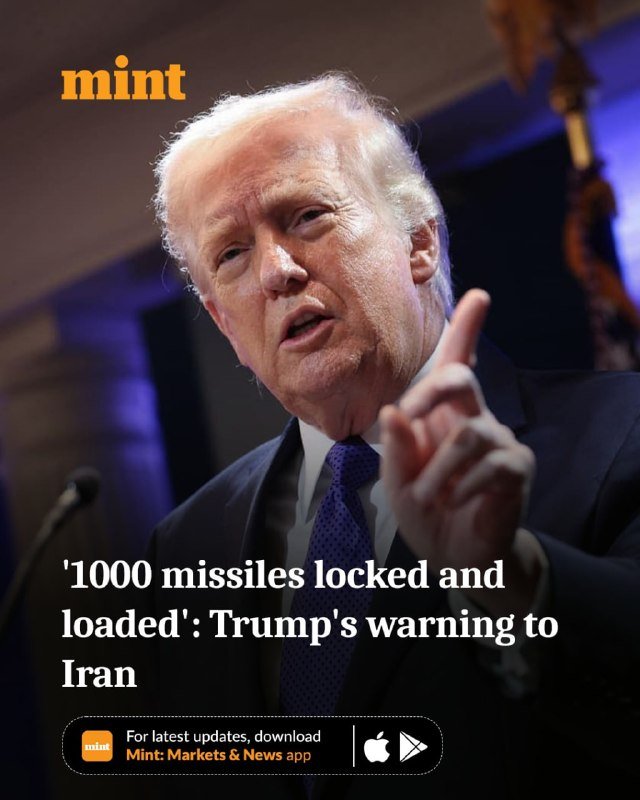
The first breach of the US–Iran memorandum came in the narrowest waterway on the map. US Central Command announced on the night of 26–27 June 2026 (UTC) that it had struck Iranian missile and drone storage facilities on Iran's southern coast in retaliation for an Iranian one-way attack UAV launched at a commercial vessel in the Strait of Hormuz. The acknowledgement, surfaced by Russian milblogger WarGonzo at 08:01 UTC on 27 June, made the exchange the first direct military contact between the two militaries since the memorandum intended to close out the broader war was signed. Iran's state news agency IRNA, in a separate Telegram bulletin at 09:01 UTC, condemned the US action as a violation of the agreement that ended the war, and said the strikes hit multiple coastal locations rather than the single storage complex CENTCOM cited. The gap between those two accounts is now the story.
Within hours of the strike, the post-deal architecture designed to keep the Strait of Hormuz open was under visible strain. The memorandum — a term both governments have used rather than the harder "treaty" — was sold as a face-saving compromise after a war that neither side could decisively end. It rested on three quiet assumptions: that Iran would not project force at commercial shipping, that the US would not strike Iranian soil, and that both governments would absorb provocations rather than escalate. The 26–27 June episode blows through all three at once, and forces a question neither Tehran nor Washington has been willing to answer out loud — whether the memorandum was a settlement or simply a pause between rounds.
The Hormuz incident, as both sides describe it
CENTCOM's statement, carried on the English-language Telegram channel of Iranian affairs analyst Abuali on 27 June 2026 at 07:57 UTC, frames the operation as a direct, attributable response to a discrete provocation. A US military spokesperson said an Iranian suicide UAV had been launched at a commercial vessel in the Strait of Hormuz; the US response was an air strike against Iranian missile and drone storage facilities on the southern coast. The framing is symmetrical — act, counter-act — and is the kind of language that travels well through Western wires and into allied capitals. It also leaves the door open to further operations of the same template.
Iran's English-language IRNA bulletin, posted at 09:01 UTC on 27 June, contests the geography and the framing. Tehran characterises the US action as an assault on multiple Iranian coastal facilities and argues the strikes breach the memorandum that ended the war. Iran has not, on the evidence available in this thread, acknowledged launching a one-way UAV at a commercial ship in the Hormuz corridor; it has also not denied it. The phrasing matters: "assault on several locations" is broader than "a storage facility", and is the kind of language designed to be cited inside the country as evidence that the deal has already failed.
The Russian-aligned channel WarGonzo, posting at 08:01 UTC on 27 June, adds a third layer. It frames the exchange as the first round of a renewed cycle rather than a discrete retaliatory action, and argues the memorandum was always a pause rather than a settlement. Russian milblogger commentary has been a consistent counter-claim channel during the war, and it should be read with that sourcing caveat in mind — but the underlying observation, that a single Hormuz incident has produced a sovereign-territory strike, is harder to dismiss.
Why the memorandum was always fragile
The deal that ended the war was never a peace treaty. It was a memorandum — the political word both sides chose, and the legal word they avoided. That distinction matters because it tells you what the document was for: it was a mechanism for both governments to stop shooting while preserving the option of starting again. Iran's coercive leverage in the Strait of Hormuz — its ability to threaten the chokepoint through which roughly a fifth of seaborne oil passes — was never disarmed under the deal; it was simply not exercised during a probationary window. The same was true of the US ability to strike targets inside Iran. The 26–27 June incident is what happens when the probationary window expires on both sides in the same news cycle.
Three structural pressures have been building beneath the surface since the memorandum was signed. The first is internal Iranian politics: hardliners inside the Islamic Republic's security establishment have argued since signing that the deal conceded too much and delivered too little, and a successful strike against a commercial vessel in Hormuz — or the appearance of one — provides political cover for a more confrontational posture. The second is the Trump administration's stated line that Iran's "footprint" in regional proxy networks must continue to shrink; the Hormuz strike is the kind of action US planners have privately cited as the test case for whether the deal holds. The third is the oil market: any credible risk to a fifth of seaborne crude is, in practice, a tax on every importer that buys through Hormuz, and it does not require a war to bite. Each of those pressures was predictable. What was less predictable was that all three would activate in the same 24 hours.
What is contested, and what is not
The factual core of the episode is not in serious dispute: the US struck targets on Iran's southern coast overnight on 26–27 June, and both sides acknowledge that fact. What is contested is the triggering event. CENTCOM attributes the strike to an Iranian one-way UAV attack on a commercial vessel in Hormuz; Iran has not confirmed or denied that specific incident in the materials available here. It is also worth flagging that CENTCOM statements during this war have, at earlier points, been the subject of contested framing — including claims about the destruction of Iranian coastal defence infrastructure that independent OSINT reviewers later revised. The pipeline's standing approach is to treat CENTCOM's account as the most credible available version of US intentions, while noting that the precise scope of damage on the Iranian side is not yet independently verifiable.
What is also not contested is that Iran has both the motive and the capability to threaten commercial shipping in Hormuz. The IRGC Navy's fast-boat doctrine and its inventory of one-way attack UAVs have been openly described in US Navy briefings for years. The question is not whether Iran can do this — it can — but whether it chose to do it on the night of 26 June, and on what political authority. That is the question the next 72 hours will answer.
Stakes, and what to watch next
The Hormuz corridor is the single most consequential piece of maritime real estate in the global energy system. Even a credible threat to it produces measurable price action in Brent and Dubai crude within hours; an actual strike, even one that misses, produces diplomatic action. The immediate stakes are therefore oil-market volatility and a test of the deal's most fragile assumption. The medium-term stakes are larger: if the memorandum cannot absorb a single Hormuz incident, the strategic argument that the deal has "ended the war" looks thin, and the longer war — fought through proxies, sanctions evasion, and cyber operations — reopens by default.
Three things to watch in the next 72 hours. First, whether Tehran formally characterises the US strike as a breach — and whether the Iranian response is diplomatic, military, or both. Second, whether the Trump administration scales up the targeting beyond storage facilities to launchers, command-and-control nodes, or leadership figures. Third, whether the oil market reads the episode as a one-off or as the leading edge of a renewed cycle. Each of those outcomes is consistent with the same set of facts on 27 June. The market, the governments, and the shipping insurers will decide which read wins.
Monexus framed this against the wire services by surfacing the gap between CENTCOM's narrow "storage-facility" framing and Iran's broader "several coastal locations" claim, rather than defaulting to either. The structural read — that the memorandum was always a pause, not a settlement — is supported by the sourcing, but the next 72 hours will determine whether the pause is over.
Wire provenance
This editorial synthesis draws on the following public wire/social posts:
- https://t.me/Irna_en
- https://t.me/wargonzo
- https://t.me/englishabuali