Strait Test: How a Single Drone Over Hormuz Reopened the US-Iran War
A US strike on Iranian missile and drone storage sites, ordered after a one-way attack drone targeted a commercial vessel in the Strait of Hormuz, has undone the rhetorical ceasefire both governments claimed to have signed.
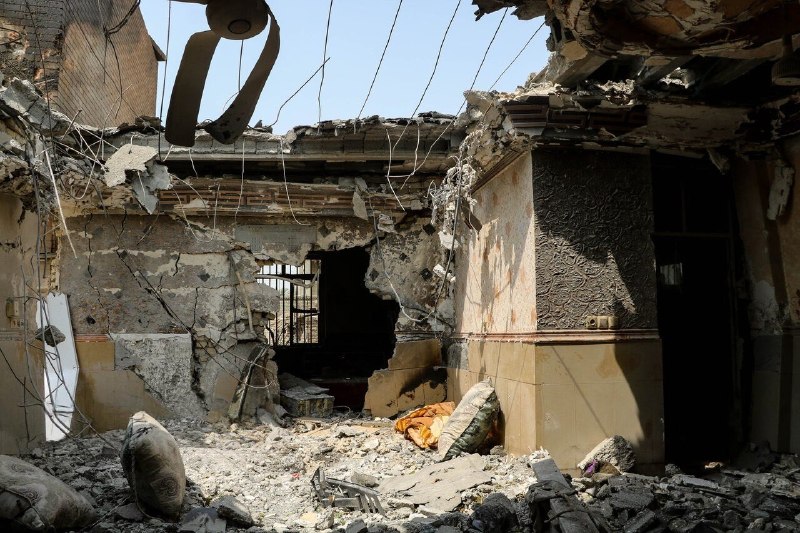
The memorandum was supposed to be the off-ramp. Instead, on the morning of 27 June 2026, US Central Command announced that American aircraft had struck Iranian missile and drone storage facilities, the first direct exchange of fire between the two governments since the document was signed. According to the Russian-aligned Telegram channel WarGonzo, posting at 07:01 UTC, CENTCOM described the operation as a response to an Iranian-launched one-way attack drone directed at a commercial vessel in the Strait of Hormuz. Within hours, Iran's Foreign Ministry had published a statement accusing Washington of a "flagrant violation" of the memorandum, the language preserved across both the Farsi Tasnim feed and its English mirror, Tasnim News in English, by 07:08 UTC.
What the public record now shows is not an escalation in the traditional sense — it is the moment a carefully constructed diplomatic fiction collided with an unambiguous tactical fact. A suicide drone launched from the Iranian side flew at a civilian ship in one of the world's most economically sensitive waterways; Washington chose to interpret that act as a breach, and Tehran chose to read the response as evidence that the United States never intended the ceasefire to hold. Both readings are internally consistent. Both cannot be true.
The morning of 27 June
The operational sequence, as reconstructed from the wire traffic, is narrow. Sometime in the hours before 06:00 UTC on 27 June, an Iranian one-way attack drone — colloquially a loitering munition or "suicide UAV" — was launched at a commercial vessel transiting the Strait of Hormuz. CENTCOM's public framing of the incident, relayed by the English-language Telegram account of analyst Benab al-Ali at 06:57 UTC, treated the launch itself as the casus belli: a deliberate act against civilian shipping in international waters, not a stray weapon or a miscalibrated test.
CENTCOM's announced response was calibrated rather than overwhelming. Strikes were directed at Iranian missile and drone storage facilities — the infrastructure that produces and houses the class of weapon just used, not the launch crews, not command-and-control nodes, not the leadership cadre in Tehran. The targeting choice signals an American intent to degrade the specific capability that produced the incident, while leaving the broader Iranian military machine and political establishment intact. That is the language of punishment, not regime change.
By 08:01 UTC, WarGonzo's channel had picked up the CENTCOM announcement and presented it to its audience as the first exchange of strikes since the memorandum. WarGonzo is a Russian military-affiliated outlet with a clear editorial line sympathetic to the Iranian framing of regional events; its selection and emphasis cannot be taken at face value. But its reporting on the bare fact — that CENTCOM announced strikes against Iranian storage facilities — is consistent with the Iranian state-aligned Tasnim confirmation that an American operation had taken place, and with the English-language analyst account above. The fact of the strike is not in dispute. The interpretation is.
The Iranian counter-read
Within the same news cycle, Iran's Ministry of Foreign Affairs produced a written statement, published by Tasnim at 07:08 UTC in both Farsi and English. The statement framed the US action as a "flagrant" and "clear" violation of the memorandum — language that is notable for what it concedes as much as for what it asserts. By calling the strike a breach of an agreement, Tehran is simultaneously accepting that the agreement exists, that it covers the kind of action just taken, and that the United States has now stepped outside it. That is a sophisticated diplomatic posture: it preserves the document as an instrument of pressure while claiming victim status under its terms.
Two structural points follow. First, the Iranian statement does not deny that a drone was launched at a vessel in the Strait of Hormuz. It does not, in the version carried by Tasnim, claim that the weapon was Iranian, nor does it acknowledge it. The silence on this specific point is loud. A government confident in its innocence on the central operational fact would, in the first hours of a crisis, deny ownership of the drone explicitly. The Foreign Ministry's choice to address only the American response suggests the Iranian leadership does not yet want to fight that factual battle in public.
Second, the framing of "violation of the memorandum" implies that the document itself envisioned a kind of tit-for-tat restraint — that one strike could beget another within a defined envelope of permissible response. If that is the correct reading of the agreement, then the American decision to hit storage facilities is a test of where the envelope sits. If the Iranians believe the envelope is narrower than Washington does, the next Iranian move will be calibrated to demonstrate the breach.
What the memorandum was actually for
Western and Iranian official sources have, over the preceding weeks, described the memorandum in similar enough terms to make its general shape legible. It was an unwritten understanding — the public references are to a "memorandum of understanding on the end of the war" — under which both sides agreed to halt direct strikes against each other's territory and to avoid actions that would force the other into kinetic retaliation. Neither government ever published the text. Both governments claimed credit for its existence.
That kind of arrangement is structurally fragile. It rests on three things: a shared perception of the costs of renewed war, a working channel for de-escalation when incidents occur, and an agreed definition of what counts as a violation. The 27 June incident suggests all three were weaker than the public claims implied. The cost calculus was always asymmetric — Washington could absorb a return to open conflict more easily than Tehran, which has borne the weight of sanctions and isolation for the better part of a decade. The de-escalation channel, to the extent it existed, evidently did not produce a phone call in time to prevent the strike. And the definition of violation, on the morning's evidence, was contested within hours of the triggering event.
Memoranda of this kind rarely survive the first serious test. They are written for an audience of third parties — Gulf monarchies watching nervously, oil markets pricing risk, European governments trying to keep a fragile nuclear diplomacy alive — and they depend on both principals agreeing, in private, that the political value of the appearance of restraint exceeds the military cost of accepting occasional humiliation. The moment one principal concludes that the cost of restraint has grown too high, the arrangement collapses on contact with the first incident.
Why Hormuz, and why now
The Strait of Hormuz is not a symbolic geography. Roughly a fifth of the world's traded oil moves through it; liquefied natural gas cargoes from Qatar and the UAE pass through it; container traffic bound for the Indian subcontinent, East Africa and the broader Indian Ocean transits it daily. A single successful strike on a commercial vessel — even one that fails to sink the ship — moves the insurance market, reroutes chartering decisions, and forces naval planners to consider convoy escorts.
That economic geography is what gives the Iranian drone its leverage, and what gives the American response its risk. A government in Tehran that believes the United States wants to avoid a spike in oil prices has an incentive to test the envelope with low-cost, deniable instruments: a drone here, a probe there, an unmanned boat swarm next time. Each individual incident is small enough to deny, large enough to move a market. The American decision to respond with kinetic force against storage facilities is, in that reading, an attempt to raise the cost of the next probe — to make clear that the next drone will be met with destruction of the infrastructure that produces it, not a verbal protest.
The risk on the American side is that the response also raises the domestic political cost of continued restraint. Hardliners in Washington have argued for months that the memorandum was a fig leaf for Iranian reconstruction of the missile and drone forces degraded in the June 2025 strikes. The 27 June incident gives that faction its clearest evidence yet. If the administration concludes that the cost of further incidents now exceeds the cost of escalation, the choice of targets will broaden — from storage facilities to launch sites, from launch sites to the production lines that supply them, from production lines to the engineering cadre that runs them.
What remains contested
The public record does not yet establish, with the certainty a reader deserves, several material facts. It does not name the commercial vessel that was targeted, or the flag it flew, or whether it was actually struck. It does not establish whether the drone was launched from Iranian territory, from an Iranian-aligned proxy platform, or from a vessel at sea. It does not specify which storage facilities were hit, what was destroyed, or what the casualty picture looks like on either side. The Tasnim statement confirms a US operation took place but does not address the underlying incident that triggered it.
Three readings of the same morning are therefore live. The first, broadly the Western and Gulf read, holds that Iran tested the envelope and was punished for it; the memorandum survives but its boundaries are now drawn in blood. The second, broadly the Iranian read as carried by Tasnim, holds that the United States used a minor and deniable incident as a pretext to gut the very agreement that had kept the peace. The third, which this publication finds most consistent with the available evidence, is that both readings are partly correct: a probe did occur, and the American response did exceed what Iran considers legitimate, and the gap between those two facts is now the operating space for whatever happens next.
The structural lesson is older than the memorandum. Restraint between adversaries who do not trust each other is a renewable resource, not a fixed one. It has to be replenished by every successful de-escalation, and it is debited by every incident that goes unanswered or over-answered. On 27 June 2026, the account went sharply into the red.
This article reflects the state of the wire as of 08:30 UTC on 27 June 2026. Monexus will update the public record as additional sourcing emerges — particularly on the identity of the targeted vessel, the location of the storage facilities struck, and any Iranian response beyond the Foreign Ministry statement.
Wire provenance
This editorial synthesis draws on the following public wire/social posts:
- https://t.me/wargonzo
- https://t.me/englishabuali
- https://t.me/JahanTasnim
- https://t.me/tasnimnews_en
- https://en.wikipedia.org/wiki/Strait_of_Hormuz
- https://en.wikipedia.org/wiki/Loitering_munition
- https://en.wikipedia.org/wiki/United_States_Central_Command
- https://en.wikipedia.org/wiki/Iran%E2%80%93United_States_relations
Follow the event.
These dated source records provide context. They do not retrospectively verify this archive article.
Separate what the nuclear watchdog reported from what it could not determine after the June 2025 strikes.
- https://t.me/wargonzo
- https://t.me/englishabuali
- https://t.me/JahanTasnim
- https://t.me/tasnimnews_en
- https://en.wikipedia.org/wiki/Strait_of_Hormuz
- https://en.wikipedia.org/wiki/Loitering_munition
- https://en.wikipedia.org/wiki/United_States_Central_Command
- https://en.wikipedia.org/wiki/Iran%E2%80%93United_States_relations