Strait of Hormuz on Edge as US-Iran Truce Collapses Three Days After Signing
An interim deal meant to end the war lasted barely long enough to be read out loud. A tanker was struck in the Strait of Hormuz, Iran fired on US positions, and Tehran's envoy in Rome was naming Italian suppliers by name.
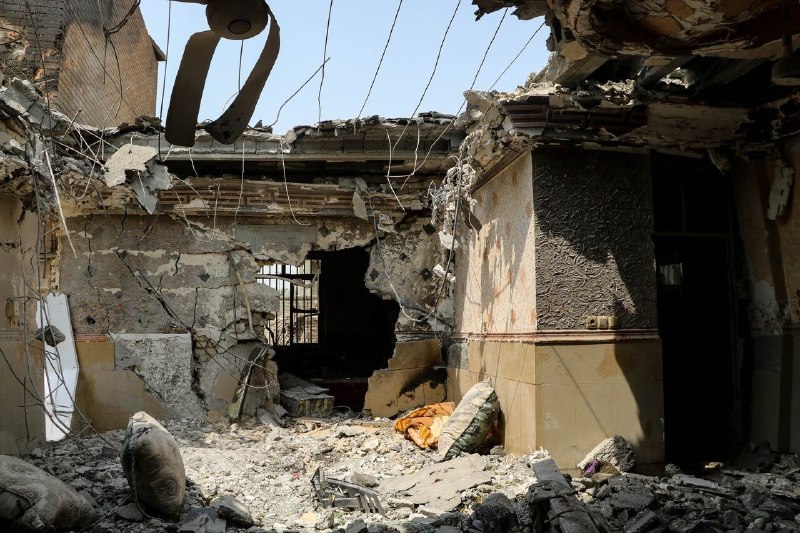
On the evening of 27 June 2026, a commercial tanker reported being struck by a projectile in the Strait of Hormuz, hours after the United States and Iran exchanged fresh strikes in what Reuters described as the worst escalation between the two countries since they signed an interim peace deal. The sequence of events — strike, retaliatory strike, projectile at sea, public recriminations directed at a third European capital — amounts to a working definition of a truce that lasted barely long enough to be read out loud. By 20:45 UTC, Iran's ambassador to Italy had published a written statement accusing Italian services of making "the illegal war of aggression launched by the United States and 'Israel' against Iran" possible, a framing that places Rome inside the conflict as a supplier rather than as a bystander. The text of the deal is not yet public. The pattern around it is.
The story this article is telling is not simply that a ceasefire broke. It is that the diplomatic architecture around it was thin, contested, and never extended to the two actors with the most operational reach in the region. Israel publicly disavowed the agreement the same day the projectiles flew, and Iran's widening list of grievances — Italian logistics, US bases in the Gulf, the legal characterisation of the war itself — suggests that Tehran is treating the post-deal window as a forum, not as a settlement. The Strait of Hormuz is where the rhetoric and the balance of payments meet.
The truce that wasn't
The interim deal between the United States and Iran was framed, on signing, as the end of an active shooting war. By 04:04 UTC on 27 June, the framing had already begun to slip. According to a wire summary circulated by LiveMint, fresh tensions erupted "days after" the interim deal was signed, with Iran targeting US positions in the Middle East in response to a US strike on Iranian territory. The mechanism — action, retaliation, action — is the same one the deal was supposed to suspend. Reuters's 20:00 UTC dispatch places the tanker strike in the Strait of Hormuz within that same window, after the exchange of strikes had already begun. The chronology matters: the deal did not fail gradually. It failed in the order events occurred, and the most consequential events occurred at sea, in the narrow chokepoint through which roughly a fifth of globally traded oil passes.
Israel as the variable the deal never contained
The interim agreement, as described by the publicly available reporting, was a bilateral arrangement between Washington and Tehran. Israeli Prime Minister Benjamin Netanyahu made plain on 27 June that this was a feature, not a bug, of Israel's posture. In a statement captured by ClashReport's Telegram channel, Netanyahu said: "We said from the very beginning that we were not a party to the agreement between the United States and Iran. But that does not mean we do not have interests. We have our own interests." The statement is significant for what it does not contain: any reference to Israeli restraint. It is a public reservation of operational autonomy, delivered in plain language, on the same day that Iranian-aligned and US-aligned forces were exchanging fire. If Israel chose to act against Iranian assets during the truce window, the diplomatic floor under the deal — already narrow — would not absorb it. The phrase "we have our own interests" is the operative clause.
The Strait as the actual battlefield
Talk of escalation in the Gulf has a tendency to abstract. The Strait of Hormuz does not. Reuters's reporting names a specific commercial vessel struck by a specific projectile at a specific location. The economic geography of that location is brutal: any sustained interference with traffic through the strait lifts the price of Brent and Dubai crude within hours, reroutes insurance premiums, and forces importing governments — Japan, South Korea, India, China — to choose between absorbing the cost, drawing down strategic reserves, or sourcing from non-Gulf suppliers at a premium. Iran's leverage in this configuration is real and structural. It does not require a single Iranian naval vessel to threaten the strait; it requires only that commercial shippers believe that one might. A single confirmed projectile strike, broadcast by wire, is enough to revise that belief upward. The strike, in other words, may be aimed less at the tanker's hull than at the underwriters' spreadsheets.
Rome as supplier, Rome as target
The Iranian ambassador's 27 June statement to Italian officials, carried by Al-Alam Arabic on Telegram, is the kind of communication that Western wire services usually paraphrase. The original framing — "These services made the illegal war of aggression launched by the United States and 'Israel' against Iran possible" — is published verbatim on the channel. Read closely, the statement does two things at once. It justifies continued Iranian military action as a defensive response to an externally enabled aggression, and it explicitly names Italian services as part of the enabling infrastructure. The legal characterisation matters: by labelling the war "aggression," Tehran is signalling that it considers the conflict covered by the rules governing international armed conflict, including the rules on neutrality and on third-party supply of matériel. If that framing holds in Iran's diplomatic posture, Italian-flagged or Italian-operated logistics, basing, and dual-use components become legitimate objects of complaint — and, in the Iranian rhetorical register, legitimate objects of counter-measure. Rome's interest in clarifying what its services actually provided has gone up materially in the last 48 hours.
What this sits inside
A pattern is forming around the post-deal window, and it is older than this particular crisis. Bilateral deals between a great power and a regional state tend to be honoured as long as they coincide with the operational plans of the other regional actors with a stake in the outcome. When those actors are excluded from the table — or, as Netanyahu put it, simply decline to attend — the deal is, in effect, a forecast about their restraint. Forecasts have a poor record in this part of the world. The Strait of Hormuz is also a reminder that the international energy system has not been re-engineered since the 1970s; the same narrow waterway still carries the same disproportionate share of seaborne crude, and any party with a coastal artillery battery or a fast-attack craft inventory retains a structural veto over the price of oil. The interim deal did not address that geometry. It could not have, in three days, and was not designed to.
The forward view
The near-term question is whether the 27 June exchanges harden into a new operational baseline or whether both Washington and Tehran treat the day as a flaring episode to be managed back to the text of the deal. Three indicators will tell. First, whether tanker traffic through the Strait of Hormuz continues at recent levels or whether owners begin diverting or holding position — Reuters's report of a struck vessel is a single data point; a second confirmed incident inside a week would re-price the route. Second, whether the Israeli operational tempo, which Netanyahu's statement explicitly disclaims any obligation to coordinate, produces a kinetic event inside Iran or against Iranian assets in a third country. Third, whether the European states newly named in Iranian complaints — Italy today, plausibly others tomorrow — begin to publicly distance themselves from US-Israel operational planning or, conversely, double down on it. Each of these is observable on a one-to-two-week horizon.
What remains uncertain
The text of the interim deal has not been published in this thread. The specifics of the US strike that prompted Iran's retaliation are described in summary form only. The strike on the tanker is reported, but the identity of the projectile, its origin, and the extent of damage are not specified in the available material. Italy's response, if any, to the Iranian ambassador's statement has not yet appeared in the sources reviewed. Each of these gaps is a place where the picture could darken or clarify in the next 24 hours. The honest summary is that the wire reporting establishes the shape of the crisis — bilateral truce, regional spoilers, maritime pressure, European supply chain named as co-belligerent — without filling in the operational detail. The detail is what will determine whether this is a 72-hour flare or the start of a wider war.
The desk's frame: where most wire copy is reading this as a fragile-but-salvageable ceasefire under stress, Monexus reads the 27 June events as the predictable consequence of an interim deal negotiated between two principals while the two most operationally active regional parties — Israel and Iranian missile and proxy forces — were either disinvited or unsigned. The Strait of Hormuz incident is the canary in the only corridor whose failure moves the global oil price in real time.
Wire provenance
This editorial synthesis draws on the following public wire/social posts:
- https://t.me/alalamarabi
- https://t.me/ClashReport
- https://t.me/LiveMint
Follow the event.
These dated source records provide context. They do not retrospectively verify this archive article.
Separate what the nuclear watchdog reported from what it could not determine after the June 2025 strikes.