Strikes on Iran, a Ceasefire in Name Only: What the 27 June Attacks Tell Us About the New Hormuz Calculus
A US strike package against Iranian surveillance, air-defence and drone-storage targets on 27 June — hours after Tehran-linked forces hit a tanker near the Strait of Hormuz — collapses the fiction that the recent ceasefire still holds.
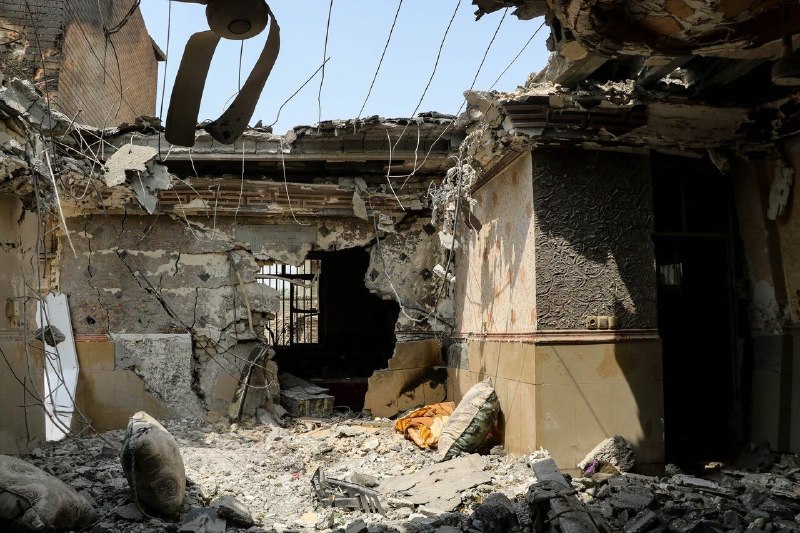
At 21:48 UTC on 27 June 2026, US Central Command confirmed it had struck a stack of Iranian military infrastructure — surveillance sites, communications nodes, air-defence systems, drone-storage facilities and naval minelayers — within hours of an attack on the tanker M/T Kiku near the Strait of Hormuz. The sequencing, not just the strike list, is the story. A ceasefire that was still being described as holding in morning wire copy had been declared void by the United States before the trading day on the Persian Gulf closed.
The arithmetic is uncomfortable for anyone who treated the May–June de-escalation as a settled fact. Iran-linked forces hit a commercial tanker in the world's most important oil chokepoint in the early hours of 27 June; the United States answered with a multi-domain strike package against the sensors, comms and launch infrastructure that make such attacks possible. What this publication is watching is not a tactical exchange but a test of whether the post-October 2023 deterrence regime in the Gulf survives a second breach of the same kind inside three months.
The strike package, in plain terms
According to CENTCOM's own statement, as relayed on 27 June by AMK Mapping and Clash Report on Telegram, the US strike package hit five categories of target. Surveillance sites — the radar and electro-optical infrastructure that lets Iran cue anti-ship missiles and one-way attack drones across the Gulf. Communications nodes, which integrate those sensors with launch crews. Air-defence systems, the IRGC and Artesh surface-to-air batteries that have grown more capable over the past two years. Drone-storage facilities, where the loitering munitions that have become Iran's weapon of choice against commercial shipping are pre-positioned. And naval minelayers — a deliberate signal that the United States is no longer drawing a distinction between Iran's regular navy and the fast-boat, mine-laying craft of the IRGC Navy.
This is not a list designed to degrade a single operation. It is a list designed to degrade Iran's ability to repeat the morning's attack. The decision to put minelayers in the same package as radar and drone hangars tells the reader that Washington now treats the tanker strike as a deliberate policy choice in Tehran, not a rogue action by a local commander.
The trigger: a tanker at Hormuz
The strike was triggered, CENTCOM said, by Iran breaking the ceasefire earlier the same day by striking the tanker M/T Kiku near the Strait of Hormuz. That wording matters. It implies the United States no longer accepts the Iranian framing of recent incidents as the work of allied militias acting without direction — a framing that Iran-aligned outlets such as Tasnim and the Jahan Tasnim channel continue to push, characterising CENTCOM as a "terrorist organisation" in mirror-language to how Western outlets once described the IRGC.
The Kiku incident follows a pattern. Iranian-aligned forces have hit or attempted to hit commercial shipping in and around the Strait of Hormuz repeatedly since the Gaza war began in October 2023, with the apparent strategic logic of raising global insurance and freight rates without triggering a direct US response. The insurance market has played along; war-risk premia for tankers transiting Hormuz have, by industry estimates quoted in wire reporting across 2025–26, sat at multiples of pre-2023 levels even on days with no incident. The 27 June strike suggests the United States has decided that this slow-motion pressure has crossed a line.
How the read differs across the wire
The reporting on what happened on 27 June splits along predictable fault lines, and the reader deserves to see them.
On the US side, the framing — visible in CENTCOM's own statement and in sympathetic US commentary — is that Iran broke a working ceasefire and was met with a proportionate, deliberately calibrated response. The choice of targets (sensors, comms, air-defence, drones, minelayers) is presented as evidence of restraint: no command-and-control bunkers, no nuclear sites, no oil infrastructure. The implicit argument is that Washington is still leaving Tehran a face-saving exit.
On the Iranian state-aligned side — Tasnim, the Jahan Tasnim Telegram channel, and Iranian state media in the hours after the strike — the framing is inversion. CENTCOM is labelled a "terrorist organisation," the strikes are described as an act of aggression against Iranian sovereignty, and the tanker incident is either minimised or attributed to "resistance forces" acting independently. The structural message is the same one Tehran has used since 2019: any US escalation will be answered, but the answer will be calibrated to avoid a wider war that Iran would lose.
Both readings deserve weight, because both contain a kernel of truth. The United States has indeed calibrated the strike package. And Iran does indeed retain meaningful ability to escalate through proxies, mines, and drone swarms if it chooses to. The question is not which side is lying; it is whether the calibration survives contact with the next incident.
Why this round is different
Three things distinguish the 27 June strike from earlier US action in the 2023–26 cycle.
First, the target set. Previous US responses — the February 2024 strikes on IRGC-linked facilities in Syria and Iraq, the discrete action against Houthi radar in Yemen throughout 2024 and 2025 — were mostly against proxy infrastructure, with the explicit logic of degrading Iran's forward edge while keeping the option of a direct US–Iran confrontation closed. The 27 June package strikes Iranian military infrastructure inside Iran, by name, under CENTCOM's own letterhead. The escalation ladder has been climbed, and publicly.
Second, the trigger. Earlier incidents were often ambiguous enough — a drone of unclear origin, a mine of disputed provenance — to allow both sides to step back. A tanker strike in daylight hours near Hormuz, claimed or claimed-adjacent by Iranian-aligned forces, is not that kind of incident. The United States has made a public attribution and acted on it inside the same news cycle.
Third, the oil market context. Brent has spent most of 2026 in a band shaped by recession risk, Chinese demand softness, and OPEC+ discipline. A sustained disruption to Hormuz traffic would not just spike prices for a week; it would test the spare-capacity assumptions that the market has been quietly leaning on. That gives every actor — including Iran's own customers in Beijing — an interest in capping the escalation, and it gives the United States leverage it did not have during the 2019 tanker crisis, when US shale had not yet reshaped the global supply picture.
The structural frame: a deterrence regime under stress
The deeper pattern here is the slow erosion of the post-2023 Gulf deterrence arrangement, in plain editorial terms.
For most of the past decade, the implicit rule was that Iran would not close the strait or hit Western-flagged tankers in a way that forced a direct US response, and the United States would not strike Iranian military infrastructure on Iranian soil. Both sides had reasons to keep that bargain. Iran needed oil revenue and did not want a war it would lose. The United States needed stable oil markets and did not want another Middle East ground campaign. The arrangement held even through the assassination of Qasem Soleimani in January 2020 and the downing of several US drones, because both sides kept probing inside the lines.
What has changed since October 2023 is that the Gaza war has given Iran-aligned forces a wider operational theatre and a more permissive political cover. Houthi strikes on Red Sea shipping, Hezbollah rocket and drone exchanges on the northern border, and the periodic harassment of Gulf shipping have all taken place under the umbrella of a regional conflict that, in Tehran's framing, justifies resistance action as a duty rather than a provocation. The United States has absorbed most of these costs in the form of higher deployment tempos, more frequent naval task-force rotations, and rising war-risk insurance — costs the previous deterrence regime was supposed to suppress.
The 27 June strike is the moment Washington appears to have concluded that the cost of absorbing the next probe is higher than the cost of answering it. That is a strategic choice with consequences. It lowers the threshold for US strikes on Iranian soil; it raises the threshold for Iranian-aligned forces contemplating tanker attacks; and it forces every capital in between — Riyadh, Abu Dhabi, Doha, Ankara, and crucially Beijing — to recalculate where its interests sit.
What Beijing reads from this
China is the silent variable in the 27 June equation. Iran is one of Beijing's largest crude suppliers under sanctions-era arrangements; Chinese refiners have become the marginal buyer of Iranian oil that no one else will touch at the same price. A sustained US strike campaign against Iranian military infrastructure does not change that flow directly, but it raises the political cost of being seen to benefit from Iranian instability while doing nothing to prevent it.
Beijing's likely posture, judging from its behaviour during the 2024 and 2025 Gulf incidents, is to call for restraint in public while continuing to take Iranian crude in private, using the disruption to lock in discounted long-term contracts. That posture is rational from a Chinese perspective and is not going to change. But it does mean that the diplomatic space to de-escalate after 27 June runs, to a meaningful degree, through Beijing — and that the United States now has an additional reason to keep the temperature below the level at which Chinese interests are materially threatened.
Stakes and forward view
If the trajectory of 27 June holds, three things follow over the next four to twelve weeks.
Insurance and freight rates for Gulf shipping will spike again, with knock-on effects on European refining margins and on the price of diesel in particular, given the limited spare refining capacity outside the Middle East and Asia. The political pressure on Tehran to demonstrate that it can still impose costs on Western shipping without triggering another US strike package will intensify — which makes another tanker incident more likely, not less, as Iranian hardliners argue that any sign of backing down will be read in Washington as weakness. And the United States will face its own pressure, from a domestic political audience that does not want a third Middle East war, to show that one round of strikes has actually changed Iranian behaviour rather than merely punished the last violation.
The most plausible outcome is a return to the implicit bargain at a higher baseline of mutual risk: Iran stops hitting tankers for a period; the United States pauses further strike packages; insurance markets slowly reset at a higher floor; and the cycle repeats the next time a local commander on either side decides the political cover is sufficient. That has been the pattern since 2019, and there is no clear reason, from the reporting available on 27 June, to believe either side is prepared to break out of it now.
What remains uncertain, and the available sources do not resolve, is whether the Kiku incident was authorised at the top of the Iranian system or represents another case of a local IRGC commander reading the political weather as permissive. Iranian state-aligned channels describe the tanker incident in the passive voice; CENTCOM attributes it to Iran directly. That gap is where the next forty-eight hours of diplomatic work will be done — or, if it is not done, where the next strike package will be launched from.
Desk note
This piece was written from four Telegram inputs published between 21:48 and 23:26 UTC on 27 June 2026 — two from Iranian state-aligned outlets (Tasnim English and Jahan Tasnim), one from an open-source-intelligence mapper (AMK Mapping), and one from a conflict-monitoring channel (Clash Report). Monexus treats the Iranian state-aligned items as legitimate primary sources for Tehran's framing and counter-framing, not as propaganda to be dismissed, and treats the Western-attributed CENTCOM statement as the working factual basis for what was struck and when. Where the two readings diverge — on attribution, on proportionality, on what "ceasefire" means in this context — the article names the divergence rather than resolving it. The wire will catch up in the next 24 hours; the analytical work is to say what the strike package actually changes, and what it does not.
Wire provenance
This editorial synthesis draws on the following public wire/social posts:
- https://t.me/tasnimnews_en
- https://t.me/JahanTasnim
- https://t.me/AMK_Mapping
- https://t.me/ClashReport
Follow the event.
These dated source records provide context. They do not retrospectively verify this archive article.
Separate what the nuclear watchdog reported from what it could not determine after the June 2025 strikes.