US strikes inside Iran: a Hormuz crisis the White House chose not to name
After a drone strike on a cargo vessel in the Strait of Hormuz and Iranian retaliation, US Central Command says it has carried out a second round of strikes inside Iran. The operation reads less like a discrete response than the opening move in an undeclared war.
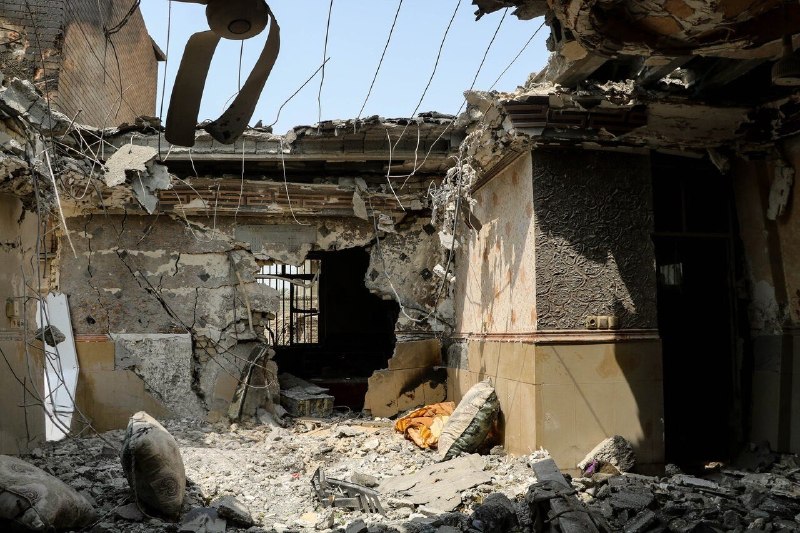
US Central Command announced at 21:51 UTC on 27 June 2026 that American forces had carried out a second, additional round of strikes against multiple targets inside Iran, at the Commander in Chief's direction, "after yesterday's Iranian aggression". The same statement, repeated through the regional press, follows Friday's retaliatory US action and a drone strike on a cargo ship in the Strait of Hormuz. Earlier in the evening, an Axios reporter said on the record that the US was conducting airstrikes inside Iran. By late evening, CENTCOM's framing — "self-defense", "additional strikes", "at the Commander in Chief's direction" — had become the only official American vocabulary for what is, on the ground, a cross-border aerial campaign against a sovereign state.
The choice of language is the story. Calling a second round of strikes against another country a continuation of "self-defense" rather than a war is a doctrinal decision, not a semantic one. It determines what legal authorities apply, which Congressional notifications are required, and which coalition partners the administration must consult. It also determines how the rest of the world reads Washington's intent. The strikes are presented as a maritime-protection operation pushed inland by necessity, when the target set — telecommunications infrastructure, military and missile sites, command nodes — looks more like the first phase of a campaign than a reflex.
What was struck, and what was said about it
The first US strikes of the past 48 hours came on Friday, in what CENTCOM presented as a direct response to an Iranian drone strike on a cargo ship in the Strait of Hormuz. The Strait of Hormuz is the single most important energy chokepoint on earth: roughly a fifth of globally traded oil, and a larger share of liquefied natural gas, transits its 21-mile-wide shipping lanes. Any sustained disruption there moves Brent and TTF benchmarks within hours and forces a political crisis in Tokyo, Seoul, New Delhi and Beijing simultaneously. Iran's ability to threaten that corridor, with fast-attack craft, shore-based anti-ship missiles, naval mines and increasingly sophisticated drones, is the structural reason Washington treats Iranian escalation as a casus belli rather than a diplomatic irritant.
Saturday's additional strikes are described in the CENTCOM statement as targeting "multiple" Iranian sites. Reporting from the regional and OSINT ecosystem has so far named a telecommunications tower in the Tahrouyi village area of Sirik, in Hormozgan province on Iran's southern coast. Sirik sits roughly 80 kilometres inland from the Strait of Hormuz — close enough that the targeting logic is unmistakable, and far enough that the strikes cannot honestly be framed as a defensive sortie against a fast boat. Iranian state-linked channels have circulated footage of damaged civilian communications infrastructure. Independent verification of damage to military sites, command nodes and any IRGC-Navy facilities has not yet been possible from open sources; the regional press is at this stage paraphrasing CENTCOM and Axios, not producing its own geolocated imagery.
The official framing, and the counter-frame
The American framing is "self-defense". The Iranian framing, predictable and worth taking seriously, is that a great power is bombing a sovereign state in violation of the UN Charter and that Hormuz shipping incidents are pretexts. Both framings are partial. The partial truth in the American position is that Iran's drone and fast-boat campaign in the Strait has measurably raised the insurance and freight cost of every tanker moving Gulf crude since 2024, and that the maritime law of self-defense genuinely does authorise proportionate action against an imminent attack. The partial truth in the Iranian position is that no Hormuz incident, however well-documented, supplies a legal warrant for strikes on telecommunications infrastructure on Iranian soil; that kind of target is chosen because it is on a target list, not because it is repelling a torpedo.
A third reading is also plausible and largely absent from the wire. The escalation is not, in this view, a response to a specific Hormuz provocation at all. It is the continuation of a longer campaign — the maximum-pressure sanctions architecture, the sabotage campaigns inside Iran publicly attributed to Israel and largely uncritically repeated by Western outlets, the assassinations of senior IRGC figures, the Israeli strike campaign against Iranian proxies — that has been waiting for a Hormuz incident to provide political cover. That reading does not exonerate Iran. It does explain why Tehran reads the second round of strikes not as escalation but as confirmation.
Why the Strait matters more than the targets
Hormuz is the constraint that keeps this crisis inside a corridor. Roughly 20 per cent of seaborne oil and a third of seaborne LNG transits the Strait; Saudi Arabia, the UAE, Iraq, Kuwait, Qatar and Iran itself have no overland pipeline alternatives at scale. A sustained closure would force emergency releases from US and Chinese strategic petroleum reserves, idle Asian refineries within days, and produce a price shock that would dwarf the 2022 gas spike following Russia's invasion of Ukraine. The political map of that shock is also instructive: it is the global South — China, India, Japan, South Korea, the ASEAN economies — that would absorb the demand destruction, while the United States, now a net exporter of both oil and LNG, would receive a windfall. That is not the reason the strikes are happening. It is the reason the rest of the world reads them through the lens of dollar and energy hegemony rather than maritime law.
The diplomatic architecture is also revealing. The strikes were not authorised by a UN Security Council resolution, nor by a formal Congressional authorization for the use of military force. They were not coordinated, as far as the public record shows, with NATO or with the European Union's maritime mission in the Gulf. They were announced by CENTCOM at Tampa, reported first by Axios, and justified in the language of "self-defense" and "at the Commander in Chief's direction". That is a unilateral American operation, dressed in the procedural clothing of a maritime-protection mission.
What this campaign looks like a week in
If the pattern of the past 48 hours holds — Iranian provocation, US retaliation at a higher tempo, Iranian retaliation at a yet higher tempo, US escalation to a yet higher tier — the operation will have acquired its own logic within a week. The Strait's tanker traffic will price the risk within days. Insurance war-risk premiums for Gulf shipping, which were already elevated through 2025, will move sharply on Monday. China's purchases of Iranian crude, currently running at well over a million barrels a day under sanctions waivers that have been narrowing for two years, will be repriced. The Iranian rial, already under severe pressure, will move. India's rupee-trade settlement for Iranian oil, a quiet counter-architecture to dollar settlement, will be tested.
The political stakes are larger than the military ones. For Washington, a successful campaign against Iranian infrastructure would degrade Iran's ability to threaten Gulf shipping and supply Hezbollah and the Houthis with precision munitions. It would also foreclose the diplomatic opening that was quietly taking shape through Omani and Qatari channels during the spring of 2026, and it would harden the global South's view of US power as a coercive instrument rather than a stabilising one. For Tehran, the calculus is existential: a failure to respond credibly accelerates the erosion of the Axis of Resistance; an over-response risks the destruction of the infrastructure on which Iran's own oil exports depend. For the rest of the world, the crisis is a reminder that the rules-based maritime order on which the global economy rests is, in the last instance, enforced by one navy.
What we do not yet know
The public record at this hour is thin in places that matter. Casualty figures inside Iran have not been independently verified; Iranian state media will produce them, Western wire services will quote them with caveats, and the truth will take longer than the news cycle to settle. The specific target list beyond the Sirik telecommunications tower has not been confirmed from open sources, and several channels are recycling the same CENTCOM language rather than reporting from the ground. Whether Israel has been consulted, whether Gulf states have granted overflight or staging, and whether any second strike on Hormuz shipping itself is in the operational plan — all of this is at this stage inference from pattern, not reporting.
What is not in doubt is the trajectory. A second round of strikes, on a sovereign state's territory, justified in the language of maritime self-defense, announced by CENTCOM in Tampa and broken first by Axios, is no longer a policing operation. It is the opening of a campaign whose end state has not been named, in a war the White House has chosen not to declare.
This publication framed the second CENTCOM strike round as the opening of an undeclared campaign rather than a discrete maritime-protection action, on the grounds that the target set — including civilian communications infrastructure — sits outside what the law of self-defense authorises and inside what a longer campaign would target. The wire has so far followed CENTCOM's procedural language; the structural reading will harden as the target list is verified.
Wire provenance
This editorial synthesis draws on the following public wire/social posts:
- https://t.me/osintlive
- https://t.me/intelslava
- https://t.me/TheCradleMedia
- https://t.me/thecradlemedia
- https://t.me/wfwitness
- https://t.me/intelslava
Follow the event.
These dated source records provide context. They do not retrospectively verify this archive article.
Separate what the nuclear watchdog reported from what it could not determine after the June 2025 strikes.