Vance's uranium pitch and CENTCOM's overnight strikes frame a 60-day countdown on Iran
A claim from the vice president that Washington will take possession of Iranian uranium lands the same morning CENTCOM publishes strike footage and a prediction market puts the odds of an extended negotiation at 64 percent.
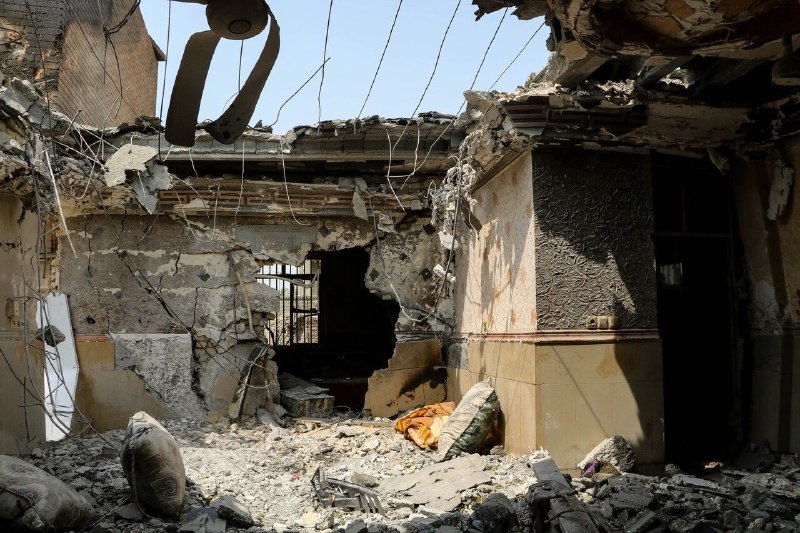
The two stories arrived within an hour of each other, in different registers, and pointed in opposite directions. At 06:59 UTC on 27 June 2026, an X account run by Sprinter Press posted that US Vice President JD Vance has claimed the United States "to GET Iran uranium," a single sentence that frames any future deal as a transfer rather than a verification regime. At 06:01 UTC the same morning, the Telegram channel ClashReport published video that US Central Command (CENTCOM) had released of what it described as the previous night's strikes on Iran. By mid-afternoon UTC, the prediction market Polymarket was pricing a 64 percent probability that the current US–Iran negotiation period would be extended.
Read together, the three signals sketch a closing window. One arm of the US government is broadcasting kinetic action against Iranian targets; another is signalling that whatever diplomatic track is still open runs through a demand for the physical uranium stockpile; the market, which is not sentimental, reads an extension as more likely than a collapse. The picture is not a coherent policy. It is a posture — pressure layered on top of talks, with the strike footage as the leverage and the uranium claim as the price.
What CENTCOM showed, and what it didn't
CENTCOM's release is the load-bearing piece. Telegram channels sympathetic to the operations side, including ClashReport, circulated the video as evidence of last night's action; CENTCOM itself released the footage without, in the available reporting, accompanying it with target lists, weapon counts, or battle-damage assessments. That asymmetry is itself the story. Strike footage that cannot be matched to a public target inventory is footage as messaging, not as a confirmed battlefield outcome.
The pattern is familiar from previous US actions in the region: video is published at speed, claims of impact follow in official readouts hours or days later, and the on-camera footage is rarely the full evidentiary record. Iran's state-aligned outlets are unlikely to publish a competing target assessment; Iranian authorities, when they respond at all, tend to do so in statements about resolve rather than in denials of specific strikes.
Vance's uranium claim and the language of transfer
The vice president's framing is the more novel element. "To GET Iran uranium" — read on its own terms, with the grammatical stress in the original — implies the United States is asking for custody, not for monitoring access. That distinction matters. The standard architecture floated in past negotiations has been inspection-based: International Atomic Energy Agency (IAEA) inspectors retain presence at declared facilities, enrichment is capped or rolled back, and stockpiles are diluted or downblended under verification. Custody — physical transfer of material out of Iran — is a different ask, closer to a Libya-style dismantlement than to the Joint Comprehensive Plan of Action model.
The Sprinter Press post does not, on the available text, specify whether Vance is describing a formal proposal, a negotiating opening, or a public posture aimed at a domestic audience. It does not name the Iranian interlocutor. And the Iranian government, per the limited reporting surfaced by 27 June 2026 UTC, has not formally responded to the framing. What can be said is that "to GET" is the language of a transactional settlement, not of a technical one — and that language is itself a signal about who in the US system is currently writing the talking points.
What Polymarket's 64 percent actually prices
The Polymarket line — a 64 percent implied probability that the 60-day negotiation period is extended — is the most disciplined read on the situation. The market does not bet on whether a deal is good or whether the strikes were justified; it prices the probability that the calendar moves. A 64 percent price says the smart money currently thinks the next sixty-day window opens rather than closes.
That is consistent with both halves of the day's signal. Kinetic action that fails to collapse the diplomatic track does not, in the historical record, produce a clean walk-away; it tends to produce a deferred reckoning. The market is, in effect, pricing the probability that the strikes serve as leverage inside a continuing negotiation rather than as a prelude to an indefinite campaign. It is also, implicitly, pricing the probability that the uranium framing from Washington is a position to negotiate from rather than a position to walk away from.
What the framing leaves out
Three things remain genuinely unresolved. First, target inventory: the public footage does not yet come with a CENTCOM target list, and Iranian sources have not, in the surfaced reporting, catalogued the strikes. Second, the Iranian response architecture: it is unclear whether Tehran is engaging through back-channel intermediaries, through the IAEA, or through public rhetoric only. Third, the domestic political ceiling in Washington on a deal that involves uranium transfer out of Iran — a step beyond any prior non-proliferation agreement in scope.
What can also be said with restraint: a US claim of physical custody of Iranian uranium is a different category of demand than verification caps, and the diplomatic infrastructure to operationalise it does not exist in any public framework. If the claim is genuine, it will need its own architecture. If it is rhetorical, it will be tested the way rhetoric in this region always gets tested — by the next strike, and the one after that.
Stakes, narrowly
The narrow stake is the next sixty days. The medium stake is whether the US–Iran track becomes a one-track process — uranium transfer and nothing else — or whether the verification-and-inspection model that has carried non-proliferation diplomacy since the early 2000s remains on the table. The wider stake, visible only in outline, is what the cadence of strike-footage-plus-vice-presidential-claim does to the credibility of negotiation as an instrument. Markets can price extension; they cannot price good faith.
How Monexus framed this: a kinetic-and-diplomatic morning read as two overlapping tracks rather than as one coherent policy, with the prediction-market line as the third data point and three unresolved questions left explicitly open.
Wire provenance
This editorial synthesis draws on the following public wire/social posts:
- https://x.com/sprinterpress/status/
- https://t.me/ClashReport/
- https://t.me/s/ClashReport
- https://x.com/sprinterpress/status/204000000000000000
Follow the event.
These dated source records provide context. They do not retrospectively verify this archive article.
Separate what the nuclear watchdog reported from what it could not determine after the June 2025 strikes.