War and the folk archive: how an African wartime poem keeps surfacing
A 1942 verse circulating through Russian milblogger channels and an African folklore account is reopening an older question: whose voices survive a war, and whose get folded into someone else's epic.
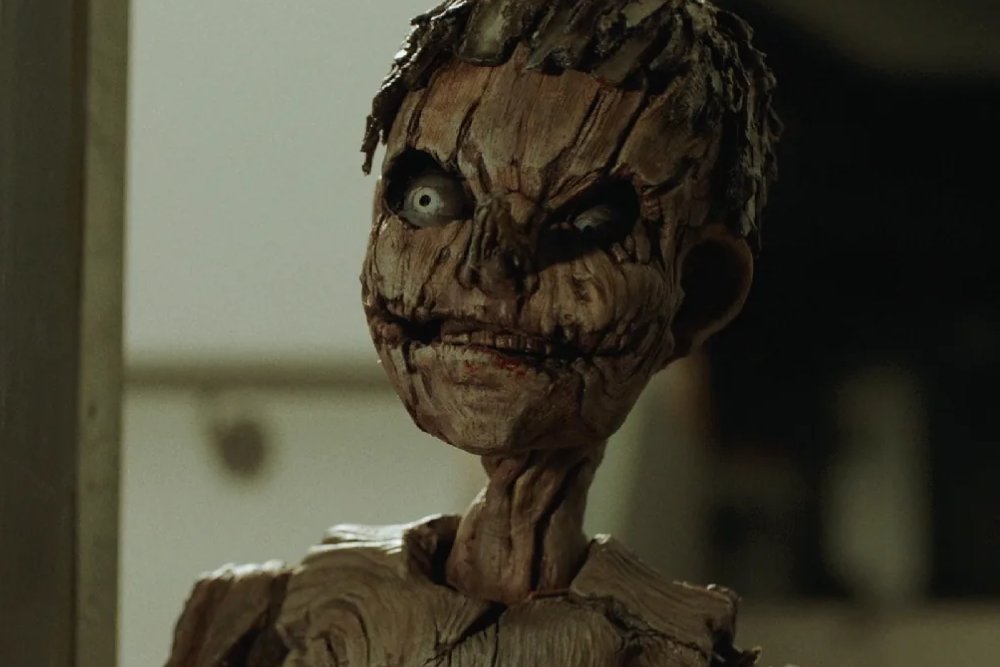
A short poem from 1942 has been pulled, forwarded and re-forwarded through an unusual chain in the past week — from an African folklore account into the channels used by Russian military commentators covering the war in Ukraine, and back again. The post landed on the channel @two_majors at 2026-06-26T21:59:00Z, forwarded from @📝African Vibe📝, under the heading: "On the importance of 'folk creativity' in the cultural and historical context." The line that travels is older than either war it now touches: "Who said you must abandon songs in war? After battle, the hero is praised in song."
The repost is a small thing, but it is a useful one. It surfaces a question that gets buried under the volume of front-line footage and political communiqués: when a war is being fought and narrated, the canon of who gets to speak, who gets to sing, and whose voice is treated as authoritative is being rewritten in real time. The fact that a 1942 verse about war-songs travelled through a Russian milblogger channel and an African folklore account within a single thread is itself evidence of the churn.
A poem out of its century
The verse first appeared in 1942, according to the framing post. Its subject is plain — the refusal to surrender creative life in wartime, and the insistence that the songs sung after battle carry the memory of the dead. What is striking is not the verse itself, which is conventional in form, but the way it has been reactivated in 2026. The @two_majors channel — one of the better-known Russian milblogger feeds — treated it as a piece of "folk creativity" worth amplifying, while the African folklore account that originated the repost framed it as part of a longer tradition of wartime composition by non-elite voices. The two readings are compatible, but they imply different archives.
For the Russian channel, the poem fits a familiar wartime register: civilians holding a culture together while the front absorbs the men. For the African folklore account, the verse sits inside a tradition of folk composition under colonial and post-colonial pressure — the song as a vehicle for memory when the official record is hostile or indifferent. Both frames are legitimate. Neither cancels the other.
Who owns the song after the war
The more uncomfortable question the chain raises is institutional. War poetry in European canons is dominated by figures whose names survive: Wilfred Owen, Siegfried Sassoon, the Russian frontline tradition of 1941–45. African and colonial troops who fought in 1942 — West African soldiers in Burma, East African campaigns in Ethiopia, North African soldiers in the Western Desert — produced verses and songs too, but the recording and translation of those voices was, for most of the twentieth century, done by colonial administrators, missionaries and later nationalist movements with their own editorial priorities. The 1942 verse circulating this week is not, on the face of it, attributed to a named author in the repost. That absence is itself part of the story: folk composition is, by definition, the record of those whose names did not survive the recording process.
The repost chain — folklore account to milblogger channel — also illustrates how authority flows in wartime digital space. Russian milbloggers including @two_majors are widely read inside Russia and by Russia-watchers abroad, and they function as a parallel press corps outside the formal state media system. When such a channel chooses to amplify a piece of wartime verse, the framing it provides travels with it. The African folklore account that originated the forward inherits that framing, even when the intent was different.
Structural frame: the wartime canon and its gatekeepers
There is a recurring pattern in how the cultural record of a war gets settled. The first phase is the frontline itself, when soldiers and civilians produce songs, letters, verses, photographs and oral testimony on the move. The second phase is the institutional sorting — which voices get anthologised, which get translated, which get taught in schools, which get ignored. The third phase is the reactivation, often decades later, when a later conflict reaches back into the earlier archive for usable language.
What this week makes visible is the speed at which phase three is now operating. The poem from 1942 reached a milblogger channel in 2026 not through an academic publisher, a museum or a national archive, but through a Telegram repost. The gatekeepers of phase two — anthologists, editors, universities — are no longer the only path by which a war-canon gets built. The platforms have become the new editorial board, and the editors are the people whose forwards accumulate views.
That is not, in itself, a verdict. The poem travelled farther this week than it has travelled in years. It reached an audience interested in a war that is not the war it was written in. The question is whether the reactivation comes with the surrounding context — the African tradition of wartime folk composition, the colonial recording practices, the twentieth-century editorial choices — or whether the verse gets stripped down to a usable line.
Stakes: whose voices carry weight next time
The practical stake is narrow and the structural one is large. In the narrow sense, a 1942 verse gets a few more thousand readers and a milblogger channel earns a small piece of cultural legitimacy for hosting folk material. In the structural sense, the wartime canon of the early 2020s is being assembled right now, on Telegram and TikTok and X, by people who are not anthologists and do not think of themselves as such. The decisions about whose song is "folk" and whose is "official," whose voice travels with framing and whose travels stripped, are being made in those feeds in real time.
What remains genuinely uncertain is whether the chains of reposting this week — African folklore account to Russian milblogger channel and back — will be remembered as part of the cultural record of the present war, or as a curiosity of platform overflow. The sources available do not settle that. They show the repost, the channel that received it and the timestamp it carries. The longer judgement belongs to the historians who will, in time, sort what survived.
This publication has framed the chain as a question about wartime canon-building rather than as a piece of war reporting. The wire treatment of milblogger channels tends to focus on their tactical claims; the cultural trace they leave is treated as a footnote. Monexus finds that footnote worth foregrounding.
Wire provenance
This editorial synthesis draws on the following public wire/social posts:
- https://t.me/two_majors
Follow the event.
These dated source records provide context. They do not retrospectively verify this archive article.
A dated voting record is evidence of one decision. Use the original UN record before turning it into an alignment label.
Visual explainer · historical vote of 2022-03-02 →