Twenty years on, the 2006 World Cup's last holdouts head into 2026
A 2006 World Cup photograph now shows how few careers survive two decades of professional football — and what it tells us about the tournament that follows.
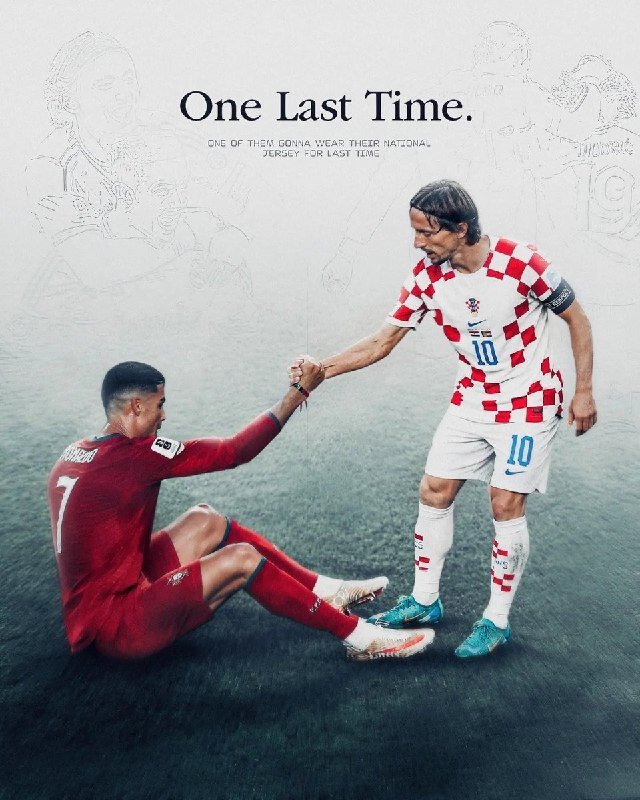
On 27 June 2026, the football data outlet Transfermarkt circulated a portrait of an era almost gone: the players from the 2006 World Cup in Germany still on a professional pitch as the 2026 edition in the United States, Canada and Mexico approaches. The image is a small piece of sporting archaeology, and a useful one. It documents how brutally a top-level career consumes itself.
For a tournament that ended in the famous Zinedine Zidane head-butt in Berlin and a triumphant Italy squad, two decades on the survivor list is short and slightly surreal. The 2006 World Cup was the first to be held after the Premier League's mid-2000s broadcasting boom matured, the first in which the standard club-and-country calendar looked roughly like the one played today, and the last before the European Union's 2007 Bosman ruling refinements reshaped cross-border movement again. Most of the players in the 2006 squads retired long ago. The few who did not are the kind of late-career curiosities that the modern game treats as anomalies.
What the photograph actually shows
Transfermarkt's 27 June post does not catalogue every participant of the 2006 finals in Germany; it isolates the named players who remain under contract at a senior club as of mid-2026. The cut-off alone tells a story. Twenty years is the rough upper bound for an elite career, and the page makes clear how rare it is to extend even close to that. The headline framing — "the only survivors" — is a reminder that the working life of a professional footballer is, in actuarial terms, closer to a gymnast's than to a tennis player's.
Why so few, and what the pattern hides
The scarcity is structural rather than incidental. Outfield players peak earlier than they used to, with clubs across Europe's top five leagues now routinely letting players go in their early thirties. Squad-registration rules, marquee-signing economics and the rise of position-specific conditioning have compressed the value of veteran minutes. A goalkeeper, a centre-back built for a low block or a forward willing to drop into a substitute role can extend; an attacking midfielder with a high-metabolism pressing brief almost cannot. The handful of 2006 survivors on Transfermarkt's list skew heavily toward the first category — and several are now in second- or third-tier leagues, not the Champions League spotlight they once occupied.
There is also a question of selection. The 2006 tournament was 32 teams and 736 registered players. Twenty years later, the survivor denominator has been narrowed by injury, by choice and by an increasingly unforgiving transfer market. A 26-man squad registered for the 2026 finals is unlikely to contain a single player who featured in 2006, because national-team coaches have been quietly retiring the cohort for the better part of a decade.
How ESPN is grading the eliminated teams
Separately on 27 June, ESPN published its running grades for every team knocked out of the expanded 2026 World Cup. The format change — 48 teams, 12 groups of four — means more exits arrive earlier and in tighter succession, and more national federations will leave North America with a verdict to issue. The publication's approach is to score each campaign against pre-tournament expectation, distinguishing the disappointments (favourites bounced in the group stage) from the over-achievers (minnows who reached the round of 32). That distinction matters now in a way it did not before: with the field enlarged, the gap between a creditable group-stage exit and a wasted one is narrower, and federations will weigh coaching decisions against it before the next cycle begins.
The stakes for the survivor cohort
For the small number of players who do bridge the two tournaments, the prize is symbolic rather than competitive. A 2026 squad place would mark twenty years between World Cup appearances — a record unlikely to be approached again given how the sport's calendar is tightening. For federations, the calculus is colder: a sentimental pick costs a roster spot that the expanded format makes more expensive than ever. For the clubs still paying the wages, the question is simply whether the minutes justify the contract. Most of the time, by the time a player reaches the second decade of his career, the answer is no.
The Transfermarkt image is, in the end, less a prediction of the 2026 tournament than a measurement of what the previous twenty years of professional football have cost in human terms. Each survivor is a counter-example to the rule. The rule itself — that a top-level career lasts roughly a decade, that injuries and tactical obsolescence trim it further, and that the tournament cycle outruns even durable bodies — is what the photograph quietly confirms.
The wire led with transfer rumours and injury bulletins. Monexus reads the same week as a study in career length: what the 2006 cohort can still tell us about the 2026 one.
Wire provenance
This editorial synthesis draws on the following public wire/social posts:
- https://t.me/transfermarkt
- https://t.me/s/espn