Araghchi lands in Baghdad as Iran presses Iraq to condemn US strikes
Iran's Abbas Araghchi lands in Baghdad to press Iraq for a public condemnation of the US strikes that killed Ayatollah Khamenei, but Sudani's room to move is narrower than Tehran's readouts suggest.
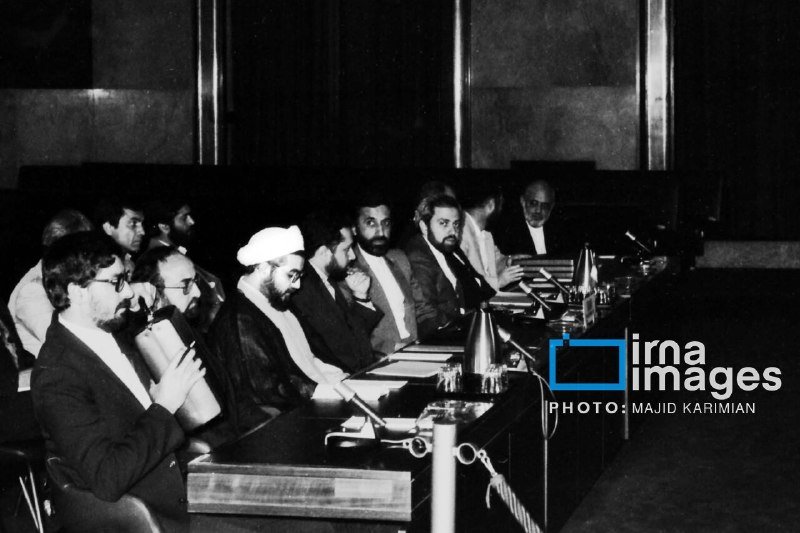
Iranian Foreign Minister Abbas Araghchi landed in Baghdad on 28 June with a single, narrowly defined ask: that Iraq's government formally denounce the United States for the strikes that killed Supreme Leader Ayatollah Ali Khamenei. The trip, carried live by Iranian state outlets, amounts to a diplomatic pressure test on a neighbour that hosts both US forces and large Shia political movements deeply loyal to Tehran. It also exposes a fault line inside Iraq's own coalition, where Prime Minister Mohammed Shia' al-Sudani has spent the past year balancing Washington's security relationship against the Iranian-aligned blocs that put him in office.
Araghchi's Baghdad outreach lands inside a wider escalatory sequence. On 30 June, reporting attributed to the Wall Street Journal stated that US President Donald Trump had held multiple discussions with Secretary of War Pete Hegseth and Chairman of the Joint Chiefs of Staff General Dan Caine on the possibility of returning to full-scale war with Iran. That same day, Iranian outlets relayed Araghchi's claim that Iraq was preparing what he called a magnificent funeral procession for Khamenei, language that frames the strike's political afterlife as a shared Shia cause rather than as an Iraqi sovereign decision. Within hours, shooting was reported in Baghdad's central al-Khadra district, and a drone repeatedly targeted the US embassy compound in the capital, according to Iranian-aligned channel al-Alam and other regional outlets. The Green Zone was placed under alert as residents attempted to shoot down an unmanned aircraft, footage published by the War Field Witness account showed.
What Tehran is asking for
The public ask is the condemnation, but the underlying demand is broader. Araghchi's Baghdad visit sits inside a familiar Iranian diplomatic pattern: use a regional capital that already absorbs Iranian political signalling, and convert sympathy into formal language the Arab League, the Organisation of Islamic Cooperation, and the UN General Assembly can later be asked to echo. Iraqi sovereignty is not the friction point. The friction point is whether Sudani, who governs with the support of the Coordination Framework bloc led by former prime minister Nouri al-Maliki, is willing to spend political capital on a public break with Washington.
Iranian state framing of the visit has been deliberately elevated. Tasnim and IRNA, two of the Islamic Republic's largest news agencies, carried Araghchi's comments in real time, with his remarks about the funeral ceremony placed alongside coverage that treats Khamenei's killing as a martyrdom rather than a wartime casualty. The Iranian readout positions Iraq not as a foreign government making a calculation but as a co-mourner preparing to take part in a historic Shia commemoration. That rhetorical work matters because it pre-commits Baghdad, in public, before Baghdad has agreed to anything.
Iraq's box
Baghdad's room to move is narrower than the Iranian readouts suggest. Iraq still hosts US forces under a bilateral framework negotiated after 2011 and renegotiated under both the coalition mission and bilateral US-Iraq security talks. The Iraqi dinar, the central bank's foreign reserves, and the country's electricity supply from Iranian gas imports all run through the same dependent relationship that has constrained every Iraqi government since 2003. Issuing a formal condemnation of US strikes, even a qualified one, would put Sudani on a collision course with the US Treasury, with State Department aid pipelines, and with the US training and advisory mission that operates outside formal coalition labels.
Iranian outlets have separately suggested that Sudani's office was preparing to attend or send a high-level delegation to the funeral in Tehran. The Iraqi government has not, as of this writing, published its own readout of Araghchi's meeting. That gap is itself a signal. Baghdad knows that any phrase it chooses will be quoted back at it in Washington, in Tehran, and at home by Muqtada al-Sadr's movement, which has oscillated between pro-Iranian and nationalist positioning for two decades. The safest Iraqi posture, given those cross-pressures, is procedural: receive the Iranian request, receive the US ambassador's parallel request, and produce a statement dense enough with multilateral language to satisfy no one and irritate everyone equally.
The escalation running underneath
The diplomatic scramble is taking place over an active security picture. The drone attack on the US embassy in Baghdad and the shooting reports from al-Khadra came within the same 24-hour window as the WSJ reporting on potential US planning for a return to open war. Satellite imagery circulated by MintPress and attributed to open-source analysts showed extensive damage at the US Fifth Fleet naval base at an unspecified location, damage the imagery attributed to Iranian precision strikes. The Pentagon has not, in material carried by these wires, released a public battle damage assessment. The combination of embassy-targeted drones in Baghdad, a strike on a major US naval facility, and active high-level Washington debate about re-entering open war with Iran is the most direct US-Iranian exchange since the 12-day war of 2025.
The Iraqi government sits inside this corridor, not beside it. The same Shia-majority political infrastructure that produced Sudani's coalition was also the infrastructure that produced the political pressure Iran is now converting into diplomatic asks. If the embassy drone was launched by an Iran-aligned militia, the Iraqi state's inability or unwillingness to respond visibly would itself be a data point the Iranian readouts will collect. If it was launched by a faction Baghdad can plausibly disclaim, the incident gives Sudani cover to be seen doing something without endorsing Tehran's preferred narrative.
What to watch next
Three signals will tell us whether Araghchi's Baghdad visit produced a substantive Iraqi response or a managed postponement. First, whether the Iraqi foreign ministry publishes its own statement, however tersely worded, and whether that statement uses the word condemnation, the word violation, or the more elastic language of concern and calls for restraint. Second, whether an Iraqi delegation, of whatever rank, travels to Tehran for the funeral, and how prominently that travel is announced. Third, whether the US embassy-targeted drone attack produces a public US readout attributing the strike to a specific militia, or whether Washington continues to treat the incident as a backdrop to the larger planning conversation reported by the WSJ.
Each of those three signals is also a forward indicator of whether the next 30 days run through escalation, restraint, or managed ambiguity. Iran's press strategy has already produced the rhetorical floor: Khamenei as martyr, Iraq as co-mourner, the US strikes as something to be condemned. The remaining question is whether the Iraqi government decides that alignment serves its own coalition arithmetic or whether the cost of US friction makes the same alignment unaffordable.
The Tehran readout is already in the world. Baghdad's is still pending.
Sources
- IRNA English (Telegram), "Araghchi: Iraq is preparing to hold magnificent funeral procession ceremony for Martyr Ayatollah Khamenei", 30 June 2026
- Tasnim News English (Telegram), "The sound of shooting was heard in the 'Al-Khadra' area of Baghdad", 30 June 2026
- War Field Witness (Telegram), "Footage shows the moment people attempt to shoot down an alleged unidentified unmanned aircraft flying over the green zone in Baghdad", 30 June 2026
- Press TV (Telegram), "A drone repeatedly targeted the US embassy in the Iraqi capital, Baghdad", 30 June 2026
- War Field Witness (Telegram), "WSJ: Trump has considered a return to full-scale war with Iran", 30 June 2026
- al-Alam Arabic (Telegram), "Iranian Foreign Minister: Iraq is preparing to hold a solemn public funeral ceremony for our martyred Imam", 30 June 2026
- MintPress News (X), "New Satellite Imagery Reveals Enormous Destruction From Iranian Strikes On US Military Targets", 30 June 2026
- Tasnim News English (Telegram), coverage of Araghchi's Baghdad visit, 28-30 June 2026
Desk note: Monexus framed this visit through Tehran's request and Baghdad's constraints, rather than through either capital's preferred narrative. Iranian state outlets are cited as primary carriers of the foreign ministers' words; Iraqi government confirmation will be added when Baghdad publishes its own readout.
Follow the event.
These dated source records provide context. They do not retrospectively verify this archive article.
Separate what the nuclear watchdog reported from what it could not determine after the June 2025 strikes.