Clarke walks. England stay. The last-16 picture sharpens at the 2026 World Cup.
Steve Clarke resigned within an hour of Scotland's elimination, while England advanced and Iran's World Cup ended in last-minute administrative heartbreak.
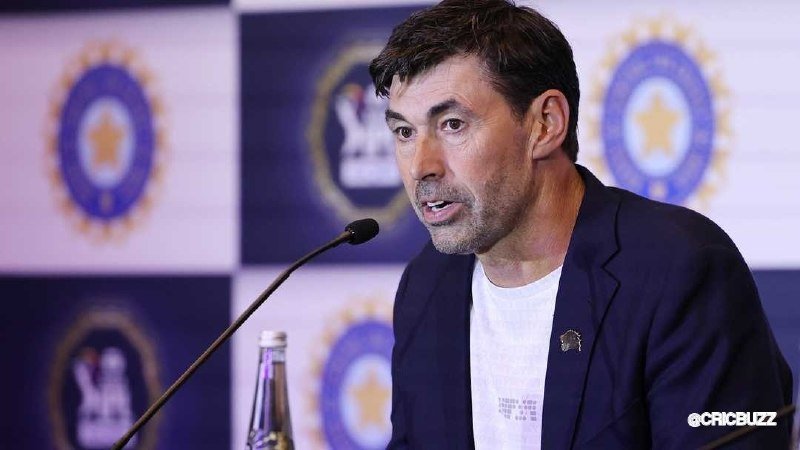
Steve Clarke's reign as Scotland head coach ended the way World Cup tenures so often do — not with a plan, but with a confirmation. Within an hour of Scotland's elimination being sealed at the 2026 tournament, the Scottish Football Association announced that Clarke had tendered his resignation, and that it had been accepted. The speed of the decision, less than 60 minutes between elimination and announcement, was itself the story.
Clarke had taken Scotland to successive European Championships and, for the first time in a generation, to a World Cup. The reward for that historic qualification was a group that asked the hardest possible questions of a squad short on elite-level depth. When the answers came back negative, the manager concluded that he had taken the team as far as his cycle could carry them. The SFA agreed.
A cycle that ran its course
Clarke departs with credit in the bank and a clear-eyed reading of his own ceiling. The qualifying campaign was, in the understated language of the BBC's reporting, a triumph of organisation and set-piece discipline over a pool of attacking talent that has thinned since the peak years of the early 2020s. Reaching North America was the prize; competing once there was always the harder ask.
His successor inherits the same structural problem. Scotland's player base remains heavily concentrated in the Scottish Premiership and the English Championship — tiers that produce functional internationals but not match-winners at World Cup level. Until the talent pipeline shifts decisively toward the Premier League and the Bundesliga, the next manager will arrive at the same tournament with the same thin margins. Clarke's resignation is a personal verdict; the diagnosis is collective.
England advance, and the bracket tightens
While Clarke was packing his office, England confirmed their passage through the group and into the knockout rounds. The performance was workmanlike rather than stirring — the kind of result that satisfies the federation's tournament arithmetic without settling the argument about whether this squad has the attacking variety to win four consecutive elimination matches. The midfield questions that followed England into the tournament remain, on the evidence so far, unresolved.
What the result does do is map the road. The last-16 picture now points England toward a bracket congested with the kind of opposition — pace out wide, defensive discipline, set-piece threat — that has historically unsettled Gareth Southgate's successors as much as it unsettled Southgate himself. The next 90 minutes will tell the public more about Thomas Tuchel's ceiling than the group stage ever could.
Iran, and the cruelty of football administration
The other headline from the day belonged to Iran, whose tournament ended not with defeat on the pitch but with a last-minute administrative ruling that denied them a place in the knockouts. Live coverage carried by the Guardian's World Cup blog on 28 June 2026 described the sequence of results and tiebreakers that, in the final accounting, went against Team Melli. The cruelty of the format — goal difference, fair-play points, the lottery of disciplinary tallies — has been a feature of recent World Cups and is again this time around.
For Iran, the political backdrop always risked overshadowing the football. Coverage in European outlets leaned heavily on questions of player protests, jersey politics and federation messaging. The on-field merit, by contrast, was straightforward: Iran were organised, competitive, and within a single tiebreaker of progression. That is the more durable fact, and the one that should frame any reckoning in Tehran.
What the next 72 hours will decide
Three things now sit on the clock. First, the SFA must identify Clarke's successor, with the early names likely to be drawn from the existing staff and from managers currently operating in the Scottish league. Second, England's last-16 opponents will be known within 48 hours, and the tactical conversation will harden accordingly. Third, Iran's federation will have to decide whether to retain or refresh its coaching staff ahead of the next cycle — a debate that will unfold in two registers, sporting and political, and that may be harder to manage than any group-stage opponent.
The temptation in coverage of any Scotland exit is to reach for elegy — the romantic-national story of a small nation returning to the world stage. The cleaner read is colder. Clarke qualified a team that could compete in qualification but not in the tournament. The job of his successor is to find the extra half-step of quality that turns the next qualification into a group-stage foothold rather than a brief visit. That is a recruitment problem, a development problem and, ultimately, a politics problem — one that no resignation announcement, however dignified, can resolve on its own.
— Monexus framed this as a structural story about managerial cycles and tournament depth rather than a tearful Scotland farewell. The Clarke departure is the headline, but the more durable news is the gap between qualification achievement and tournament competitiveness — a gap that survives the manager.