Home as horizon: why the domestic novel is having a moment
A new wave of novelists is treating the kitchen, the bedroom and the school run as sites of world-historical consequence — and finding readers willing to follow them there.
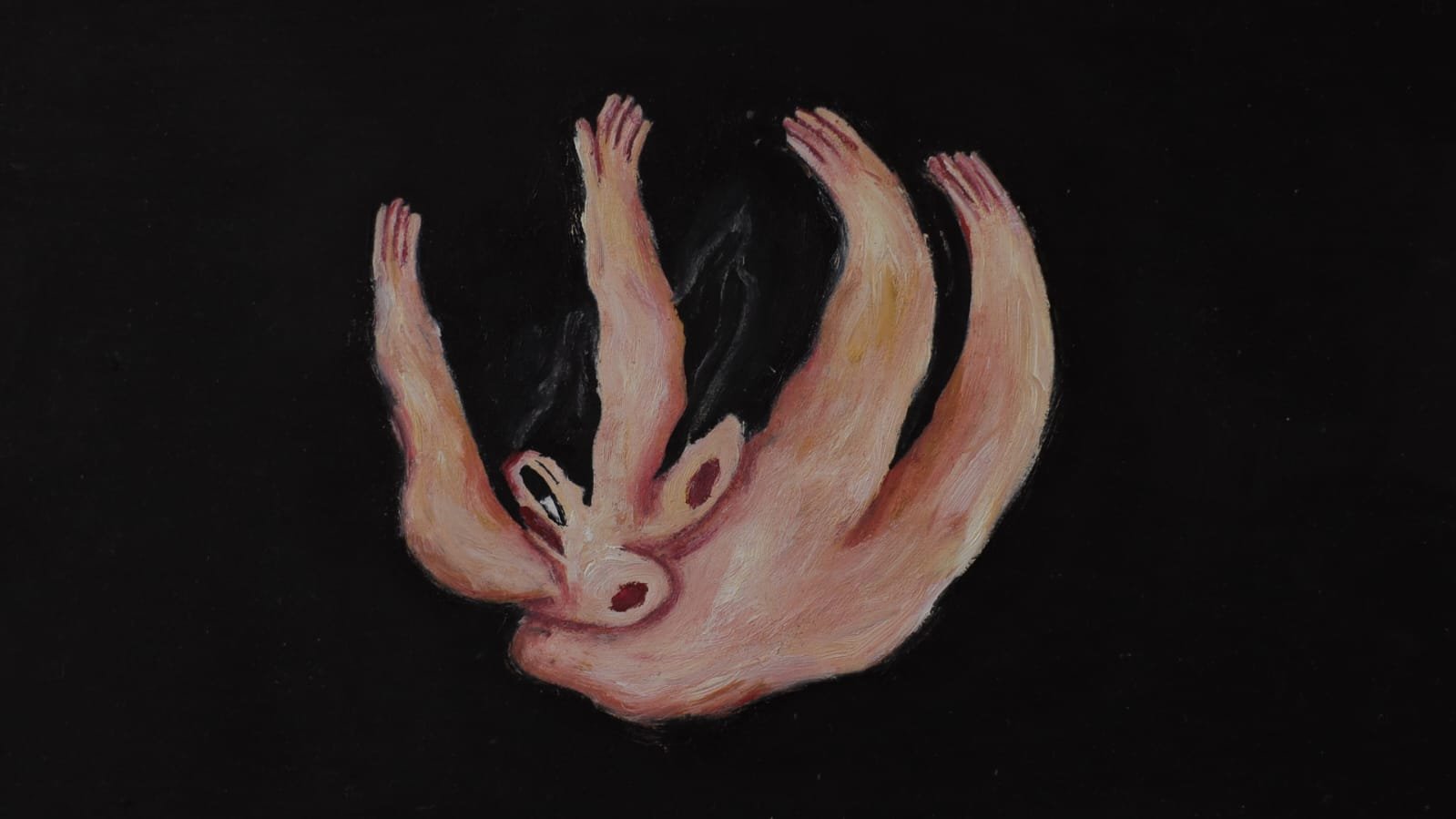
For decades the literary novel treated the interior of a house as a minor setting — somewhere to stage a phone call before the character left for a war, a boardroom or an affair. The rooms were useful as atmosphere. They were not the point. That hierarchy is being quietly inverted. A cohort of novelists writing in English and in translation is producing books that stay inside the home on purpose: long, formally ambitious, sometimes hallucinatory works in which a single domestic life — its meals, mortgages, infidelities, griefs, hormonal fluctuations, neighbourhood disputes — is treated as the densest material a novelist can get their hands on.
The argument is no longer that home is humdrum. It is that home is where most of the actual living happens, and that a literature serious about contemporary life has to take that seriously.
The Guardian's 28 June 2026 essay on the rise of the "epic domestic novel" frames the trend through a writer who has spent a recent book inside her own house. The headline — Home is where the art is: the rise of the epic domestic novel — draws a direct line from the contemporary wave back to doorstop novels of the recent past: Ducks, Newburyport, Lucy Ellmann's 1,020-page stream of consciousness set in Ohio, and All Fours, Miranda July's 2024 novel about a woman who turns a motel into a month-long experiment in solitude. To those the essay adds the author's own forthcoming or recently published work, Natural Disaster, as a third exhibit. The thesis: the domestic is no longer the prose equivalent of easy listening. It is where the most formally ambitious writing is happening.
The shape of the form
What links the books in the Guardian's reading list is not subject matter — one is a working mother's interior monologue, one a road-trip-with-the-dog story, one a memoir-adjacent novel about rebuilding a life in the family home — but method. Each treats scale as a moral choice. Length is not filler; it is the author's argument that the texture of an ordinary life will not compress. Ducks, Newburyport runs more than a thousand pages largely as an unpunctuated interior voice; All Fours builds its comedy and grief out of the granular calendar of a single woman arranging, and failing to arrange, her own desires.
The Guardian piece is written in close collaboration with the author of Natural Disaster, who is positioned throughout as both subject and reporter. The result is partly an essay, partly a piece of advocacy. The argument being advanced is that the domestic novel has historically been undervalued because the institutions that decide what counts as literary — prize juries, broadsheet review desks, the literary supplements — have tended to assume that weight and seriousness require a setting of public consequence. Wars, courtrooms, boardrooms, the corridors of power. A novel that stays in the kitchen is, in that logic, a smaller book.
The contemporary wave rejects that logic. A single afternoon of childcare, followed by a parent trying to write an email, followed by a sleepless night, is treated by these writers as worthy of the same stretched-out, syntactically daring treatment that the 19th-century novel reserved for the battlefield or the parliament. The move is not new — Virginia Woolf, Toni Morrison, Clarice Lispector did earlier versions of it — but the current commercial and critical reception is. All Fours was a bestseller. Ducks, Newburyport was widely reviewed as a serious formal achievement even by reviewers who did not finish it.
The counter-case
The counter-case is also worth making. A novel set entirely in one home, or in one mind, can become an airless object: admired by a small literary class, unread by everyone else, and celebrated for length rather than insight. There is a version of the domestic epic that is technically virtuosic and politically vacant — a writer performing scale because they have not found a subject that would justify it on its own terms. The Guardian essay does not really engage with this risk; it is too busy being persuaded by its author-interviewee to weigh the failure mode against the success case.
There is also a structural critique. If the household is the locus of the contemporary novel, who gets to be the novelist? The books currently being celebrated are written overwhelmingly by women, many of them mothers, several of them white, several of them from comfortable professional backgrounds. The "domestic" in these novels is not a generic category; it is a specific class-and-gender position, and the literature of confinement has a long history of being read as universal when it is, in fact, particular. A novel about a woman managing a household in suburban Ohio is not the same kind of "domestic" as a novel about a domestic worker, or about a household organised around forced or underpaid labour. The Guardian essay gestures at this distinction but does not quite make it.
Why now
The timing is not accidental. The years in which these books were written and broke through — 2019 through 2025 — coincided with a period in which the physical home was forced on millions of people as workplace, school, sickbay and place of mourning simultaneously. Lockdowns did not invent the domestic novel, but they did something subtler: they collapsed the distance between the public and the private for a whole cohort of readers who had previously experienced that distance as normal. Once you have done a board meeting from the kitchen table, the literary distinction between "public" and "private" subject matter looks less like a law of nature and more like a habit of attention.
The economic structure of literary publishing reinforces the moment. Long, formally strange novels are harder to serialise for streaming, harder to option, harder to sell as "content." They live or die on prize attention, review coverage and word of mouth among serious readers. The current literary ecosystem — fewer mass-market book pages in the press, more long-tail online review culture, more independent bookshops doing the curatorial work — has room for these books in a way that earlier media ecologies did not. Ducks, Newburyport needed a publisher willing to print 1,020 pages and a readership willing to buy it; both conditions now exist, in part because the audience for ambitious fiction has migrated to channels that reward ambition over accessibility.
What is at stake
The stakes are not small. A literary culture that takes the household seriously as a setting is a literary culture that takes its readers' actual lives seriously — their boredom, their labour, their griefs, their small daily negotiations with other people in confined space. The risk is the opposite: a literary culture that mistakes the in-group signifiers of a particular kind of domestic life for the universal condition, and that rewards length and formal daring without asking whether the book has anything to say about the world beyond its front door.
What remains contested is whether the current wave of epic domestic novels has a politics at all, or whether it is a politics-free zone in which the household is treated as a self-contained subject. The Guardian essay does not adjudicate this. The authors of the books it discusses — Ellmann, July and the writer of Natural Disaster — are clearly interested in private life as a moral and aesthetic problem, not just as a setting. Whether that interest adds up to a critique of how households actually function under contemporary capitalism, or whether it is a refined form of interior tourism, is the question the next decade of the form will have to answer.
This piece sits on Monexus's culture desk. Where a wire treatment might treat the rise of the domestic novel as a soft lifestyle trend, the analysis here reads the trend as a contested literary-cultural shift — formally ambitious, politically uneven.