Israeli platoon commander killed in southern Lebanon ambush as border fighting grinds on
The IDF confirmed the death of a Golani Brigade platoon commander in a clash with Hezbollah in southern Lebanon on 28 June 2026, the latest in a slow-burn ground campaign that has stretched through the year.
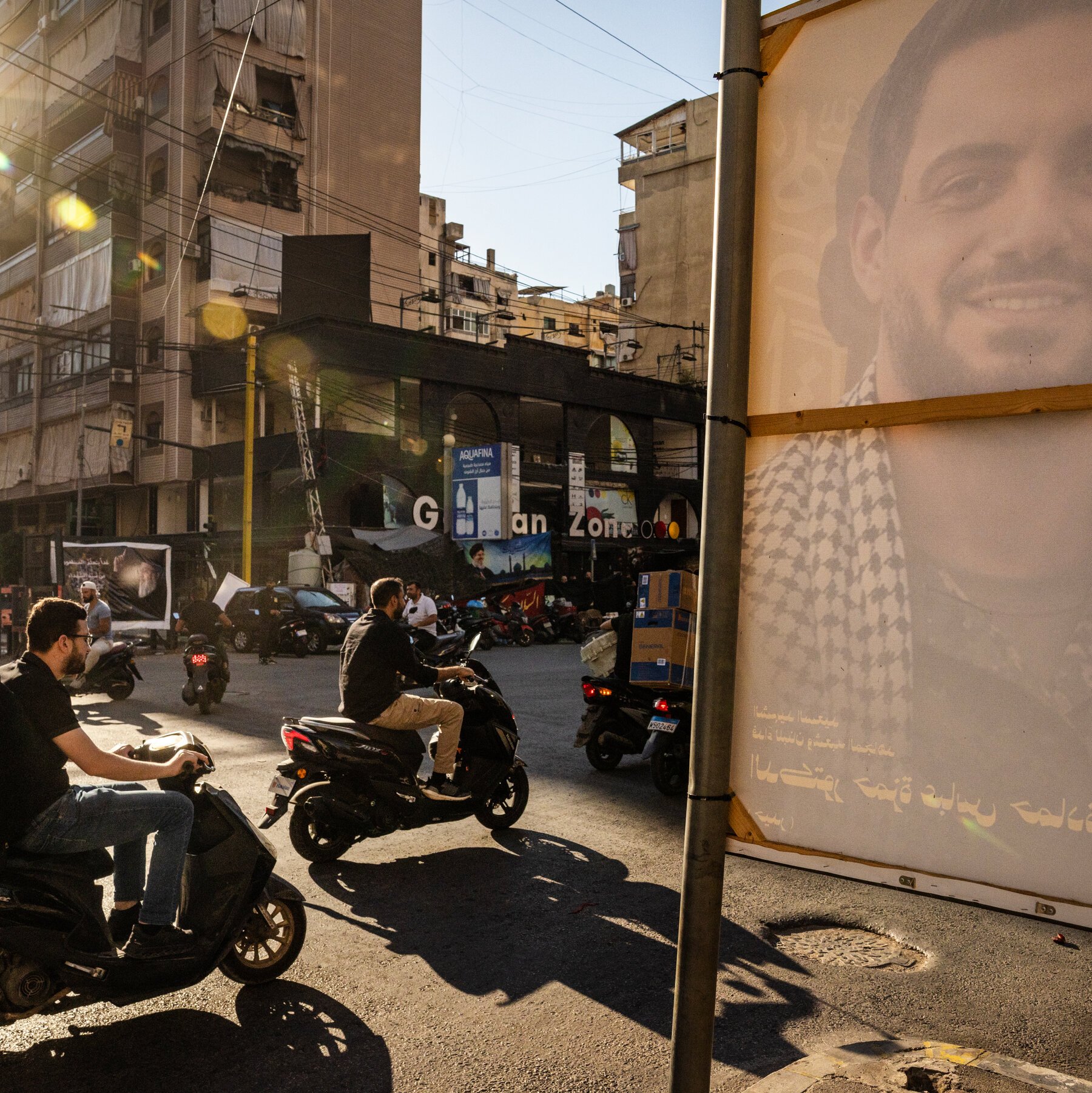
The Israel Defense Forces confirmed on 28 June 2026 that a platoon commander from the Golani Brigade's 12th Battalion was killed in a clash with Hezbollah fighters in southern Lebanon, the IDF Spokesperson's office said in a statement carried by Israeli Telegram channels. The announcement, posted at 11:11 UTC, came hours after a Hezbollah-aligned account reported that the group had ambushed an Israeli patrol unit in the same area and that one soldier was assumed dead with multiple others wounded. The killing extends a grinding pattern of platoon- and squad-level engagements along the Israel-Lebanon frontier that has produced a steady cadence of officer casualties throughout the spring and early summer.
The death is not, on its own, a turning point in the northern campaign. It is a data point inside one. What makes it worth pausing on is what the cluster of sources around it reveals about how the fighting is being fought, narrated, and absorbed — by the IDF, by Hezbollah's media apparatus, and by the Israeli public that has been living with this front for the better part of a year.
What the announcement says, and what it doesn't
The IDF Spokesperson's statement is spare: a name, a unit, a place, and the traditional Hebrew benediction for the dead. The English-language channels that carried the release — English Abuali and Abuali Express, both closely tracking IDF communiqués — published essentially the same wording within minutes of one another on the morning of 28 June. The geographic specificity was limited to "southern Lebanon," and no operational detail — the size of the Hezbollah force, the duration of the engagement, whether the patrol was on a clearing operation or a targeted raid — accompanied the casualty notice.
This is the standard register the IDF has used throughout the northern campaign: a tight, formulaic release that allows the dead soldier's family to be informed and the public record to be updated, without handing Hezbollah a tactical post-mortem. The restraint cuts both ways. It preserves operational security in a theatre where small-unit fights are fought at close quarters and the next patrol will walk into similar terrain. It also means that the public reconstruction of any single incident depends almost entirely on the other side's account.
The Hezbollah read
That account arrived first. At 09:41 UTC on 28 June, the Telegram channel RNIntel — a Hezbollah-aligned outlet that has become one of the faster Arabic-language mirrors of cross-border incident claims — posted that Hezbollah had "ambushed an IDF patrol unit in southern Lebanon early this morning" and that one Israeli soldier was "assumed dead, with multiple others injured." The post framed the engagement as an ambush rather than a meeting action: Hezbollah chose the ground, chose the moment, and the IDF walked in.
Hezbollah's media arm has invested heavily in this register since the autumn of 2023. The group is not, on most days, fighting the kind of war that produces dramatic territorial headlines. It is fighting a war of cumulative attrition along a blue line: roadside strikes, anti-tank teams, ambushes of foot and vehicle patrols, and the slow grinding-down of an Israeli armoured and infantry presence inside Lebanese border villages. The narrative Hezbollah wants to project — and the narrative its aligned channels reliably transmit — is that of an Israeli force being bled one platoon at a time, on Hezbollah's terms.
The IDF's confirmation that a platoon commander was killed roughly six hours after the Hezbollah-aligned claim suggests the two accounts are, on the central fact, compatible. That matters. When Israeli and Hezbollah-side accounts converge on the outcome of a specific engagement, the temptation to read the incident as either a Hezbollah propaganda win or an Israeli information-management exercise fades. What remains is a plain event: an experienced officer, commanding a rifle platoon in one of the IDF's most storied infantry brigades, died in a close-quarters fight south of the Litani.
Why a platoon commander's death registers differently
Israel does not release a casualty figure for every engagement. The loss of a company or platoon commander is, however, almost always formally announced and almost always named once next of kin have been informed, because the IDF's casualty notification system treats the deaths of officers above a certain rank as matters of public record in a way that lower-enlisted losses are not.
The Golani Brigade in particular carries a particular weight in Israeli military culture. Recruited largely from peripheral and working-class towns in the Galilee and the northern periphery, it has been the formation most continuously engaged on the Lebanese border since October 2023, rotating battalions in and out of southern Lebanese villages in a campaign that has been described by Israeli officers as closer to the country's 1980s and 1990s experience of South Lebanon than to the high-intensity air-and-ground operations further south. The 12th Battalion — the unit named in the IDF's release — has been on rotation in this theatre for much of the past six months.
A platoon commander in this formation is, in most cases, a captain in his mid-to-late twenties, often with several years of operational service behind him. He is the officer who leads the assault, who decides in seconds whether to clear a house or withdraw from a kill-zone, and whose loss is felt both in the unit and in the small-town social networks from which the brigade is largely drawn. In a war of attrition, these are the casualties that compound: each one removes institutional knowledge from a force that is, by design, operating in a sparsely populated and unforgiving terrain.
What the sources don't settle
The Telegram traffic around the 28 June incident leaves several questions open. The IDF statement does not name the Hezbollah unit involved, the location of the engagement, or whether the patrol was on a deliberate clearing mission, a routine presence patrol, or a response to an earlier detection. The Hezbollah-aligned channel's claim of an ambush is not independently corroborated in the thread context; the only contemporaneous counter-source is the IDF's casualty notice, which confirms the death but does not concede the tactical framing. The number of additional Israeli wounded — described as "multiple" by RNIntel — is not addressed in the IDF statement.
That asymmetry is itself worth noting. The IDF's communications doctrine around this front has consistently privileged operational security over narrative control. Hezbollah's aligned channels have consistently privileged speed and framing over verifiable detail. Readers looking for a single, authoritative account of any given engagement will not find one in the open-source record on the day it happens. They will find two accounts that point in the same direction and disagree about who shaped the fight.
Stakes
The northern campaign is not, at this stage, a question of breakthrough or collapse. It is a question of tempo: how many platoon commanders, how many rifle companies, how many local residents displaced, how many villages reduced — and over what period. The 28 June killing of a Golani platoon commander does not change that arithmetic. It is one entry in a ledger that is being written one engagement at a time, on both sides of the blue line, by forces that have settled into a pattern neither has the incentive to break and neither has the capacity to end.
For the Israeli public, the steady drumbeat of named-officer deaths from a single brigade in a single front is the most legible measure of what the campaign is costing. For Hezbollah, the same drumbeat, reported as ambushes and kill-counts, is the most legible measure of what the campaign is buying. Both readings are partial. Both are also, in their own way, accurate.
Desk note: Monexus has limited this dispatch to the four Telegram sources covering the incident on 28 June 2026. We have not embellished the casualty account with figures, locations, or operational details beyond what those sources state; the IDF announcement and the Hezbollah-aligned claim are presented side by side, with the asymmetry between them noted rather than resolved.
Wire provenance
This editorial synthesis draws on the following public wire/social posts:
- https://t.me/englishabuali/
- https://t.me/abualiexpress/
- https://t.me/rnintel/