Israeli soldier killed in southern Lebanon ambush as border tempo holds steady
Captain David Hazutt, 21, a Golani Brigade platoon commander, was killed in southern Lebanon on 28 June 2026, the IDF confirmed, in the latest fatal engagement on a frontier that has run hot for most of the past two years.
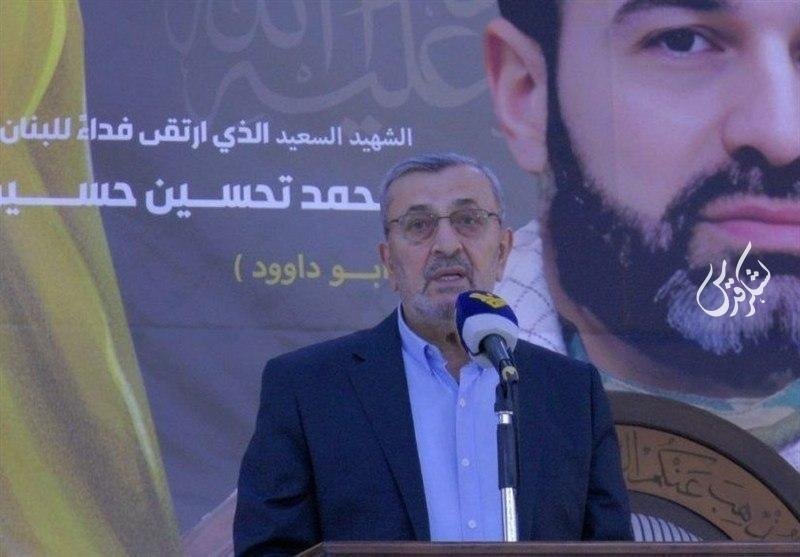
The Israel Defense Forces on Sunday 28 June 2026 confirmed the death of Captain David Hazutt, a 21-year-old platoon commander in the 12th Battalion of the Golani Brigade, from Ashkelon, killed during combat in southern Lebanon. The announcement followed initial Hebrew-language reporting overnight and was carried by Israeli correspondents and wire aggregators within hours. Israeli media cited by the Iran-aligned PressTV channel said at least one soldier had been killed and several others wounded in what it described as a Hezbollah ambush. The IDF has not, as of the time of writing, published a tactical account of the engagement.
The killing is the latest in a series of fatal incidents on the Israel-Lebanon frontier, where ground activity, anti-tank fire and standoff engagements have continued to register periodic Israeli casualties despite the formal cessation arrangement that took effect in late 2024. It also underscores the persistence of what Israeli planners euphemistically call "operational friction" on the northern border — friction that has, over the past year, eaten steadily into the manpower of frontline infantry units stationed along the frontier.
The incident and what is known
The first Hebrew-language identifications of the fallen soldier began circulating on Israeli military correspondents' channels shortly after 09:00 UTC on 28 June, with the IDF Spokesperson's unit publishing a formal notice naming the deceased once next of kin had been informed. Channel 12 and Channel 13 correspondents, as relayed by the Telegram channel of journalist Amit Segal, identified the soldier as Captain David Hazutt, 21, of Ashkelon, a platoon commander in the 12th Battalion, Golani Brigade. The PressTV relay, citing "Israeli media," reported that at least one soldier was killed and several others wounded in what it characterised as a Hezbollah resistance ambush. The IDF has not disputed the casualty count in its initial statement, and has not issued a unit-level after-action read-out.
The Golani Brigade — one of the IDF's premier infantry formations, with deep roots in northern Israel and a combat record stretching back to the 1948 war — has borne a disproportionate share of the ground-tempo burden along the Lebanese frontier. The 12th Battalion, in particular, has been a recurring presence in casualty notices since operations intensified in late 2023. The Hazutt family notification followed standard IDF protocol: a 24-hour blackout from the time of death until the family was informed, with publication of the name cleared only thereafter.
The counter-narrative, and why the framing matters
Reporting from Iran-aligned and Lebanese outlets, including the PressTV account carried in Sunday's thread, uses the language of "ambush" and "resistance" to frame the engagement. The framing places the action inside a longer Hezbollah narrative of attritional defence of Lebanese territory, in which Israeli ground incursions are cast as occupation and Hezbollah strikes as legitimate defence. This is not an idiosyncratic reading; it is the canonical framing in Iranian, Syrian and much of the Arab press for cross-border incidents on this frontier.
Israeli and Western wire coverage, by contrast, frames the same incident inside the language of counter-terrorism and border defence: Hezbollah as a designated terrorist organisation, its forces as the aggressor, Israeli operations as defensive. Both framings rest on a real underlying asymmetry — the IDF does not, in the public record, dispute that its soldiers were operating inside southern Lebanon at the time of the engagement, and Hezbollah does not, in the public record, claim responsibility for every specific incident. What changes between the two readings is not the sequence of events but the legal and political universe the sequence is placed inside. For Western and Israeli audiences, the operative universe is that of a hostile non-state actor on a recognised border; for Iranian, Lebanese and much of the broader regional press, the operative universe is one of occupied land and armed return. The fact-pattern is contested at the level of meaning before it is contested at the level of fact.
Structural frame: the slow grind of a frozen-but-active frontier
The Hazutt killing is best read not as a discrete event but as a data point in a long, grinding pattern. The November 2024 cessation arrangement paused the most active phase of the Israel-Hezbollah war, but it did not demobilise the frontier. The IDF has retained a forward operating posture in southern Lebanon; Hezbollah, weakened by the war, has retained the capacity to mount small-unit engagements, lay anti-tank squads, and detonate roadside charges. The result is a border that is officially quiet and operationally active, where soldiers rotate through positions and casualties accrue at a tempo that does not produce headlines in the way that a convoy strike or a rocket salvo would, but that nonetheless hollows out junior-officer ranks over months.
The structural pattern here is one that has played out before, in different form, on other frozen-but-active frontiers: casualty accumulation without strategic resolution, operational tempo without political off-ramp. For the IDF, the cost shows up in family notifications and in the readiness indicators of battalions like the 12th Golani. For Hezbollah, the cost shows up in the dwindling reserve of trained cadre willing to cross the line of withdrawal and accept the retaliation that follows. Both sides absorb losses; neither side has a political pathway visible to outsiders to convert those losses into a settlement that would stop the accumulation.
Stakes and the road ahead
The immediate stakes are narrow and human: a 21-year-old platoon commander from Ashkelon, a family in mourning, a battalion now minus a junior officer. The next of kin have been notified; the IDF will publish a fuller operational read-out in due course; the border tempo will continue.
The medium-term stakes are wider. Each fatal engagement of this kind tightens the political constraint on any Israeli government considering further reduction of forces in southern Lebanon, and tightens the corresponding constraint on any future diplomatic exchange that would trade ground for quiet. The Hezbollah leadership, for its part, faces a strategic dilemma familiar from earlier attritional phases: small-unit engagements keep the frontier visible, but each one also reduces the organisational depth the group would need to mount a larger operation if the cessation arrangement were to collapse. The incident is unlikely, on its own, to change the trajectory of the frontier. It is, rather, a reminder that the trajectory is still running.
What remains genuinely uncertain is the operational specifics: how Captain Hazutt's unit made contact, whether the engagement was initiated by an improvised explosive device, an anti-tank missile, or a direct-fire ambush, and how many other soldiers were wounded. The sources available to this publication at the time of writing do not specify. The IDF after-action read-out, when it comes, will be the first authoritative account; until then, the dominant framing rests on initial Hebrew-language reporting and on the Iran-aligned relay of that reporting in the regional press.
— Monexus desk note: this piece leads with Israeli and Western-wire sources for the identification and unit assignment, and explicitly weights the Iran-aligned PressTV framing as one of two contested readings rather than as a stand-alone factual basis, in line with the publication's standing compass on Israel-Lebanon coverage.
Wire provenance
This editorial synthesis draws on the following public wire/social posts:
- https://t.me/amitsegal
- https://t.me/ClashReport
- https://t.me/presstv