Live Wire
07:28ZRNINTEL109 deaths reported in Paris in past 24 hours amid heatwave, French authorities issue measures07:26ZPRESSTVIran FM Araghchi visits Soleimani, al-Muhandis memorial in Baghdad07:26ZTHEJERUSALHigh Court holds hearing after Knesset rejects comptroller re-election07:24ZTASNIMNEWSTehran intensified bread price, weight monitoring after recent price hikes07:22ZTASNIMNEWSIraq FM welcomes Iranian counterpart Abbas Araghchi to Baghdad07:22ZPRESSTVAmal movement in Lebanon rejects agreement with Israel, calls it unbalanced and contrary to national interests07:18ZTASNIMNEWSBiden says Trump became president to make money and has pocketed billions since returning to power07:17ZPRESSTVIran criticizes Italian PM Meloni over admission of technical, logistical support
Markets
S&P 500728.99 0.72%Nasdaq25,298 0.24%Nasdaq 10029,118 1.09%Dow517.75 0.29%Nikkei92.8 0.63%China 5031.59 0.28%Europe87.13 0.80%DAX40.63 1.07%BTC$60,022 0.49%ETH$1,569 0.69%BNB$554.83 1.72%XRP$1.05 1.29%SOL$70.62 1.99%TRX$0.321 0.14%HYPE$62.33 1.95%DOGE$0.0734 2.94%RAIN$0.0155 1.00%LEO$9.42 1.28%QQQ$706.52 1.38%VOO$670.26 0.81%VTI$362.22 0.48%IWM$299.83 0.31%ARKK$78.13 2.08%HYG$79.83 0.06%Gold$373.63 1.13%Silver$53.28 1.76%WTI Crude$105.48 3.50%Brent$40.31 3.75%Nat Gas$11.87 1.02%Copper$37.33 0.95%EUR/USD1.1401 0.00%GBP/USD1.3218 0.00%USD/JPY161.65 0.00%USD/CNY6.7982 0.00%
CLOSEDNYSEopens in 1d 5h 59m
The Monexus
Vol. I · No. 179
Sunday, 28 June 2026
Saturday Ed.
Updated 07:30 UTC
  • UTC07:30
  • EDT03:30
  • GMT08:30
  • CET09:30
  • JST16:30
  • HKT15:30
← The MonexusGeopolitics

Sirens in Kuwait: An Iran–US Flashpoint Reopens on the Gulf's Southern Flank

Air-raid sirens sounded across Kuwait in the small hours of 28 June 2026 alongside reports of multiple impacts, reopening the question of whether the Gulf's southern tier is now inside Iran's retaliatory envelope.

File image distributed by the DDGeopolitics channel as air-raid sirens sounded in Kuwait. Telegram / DDGeopolitics

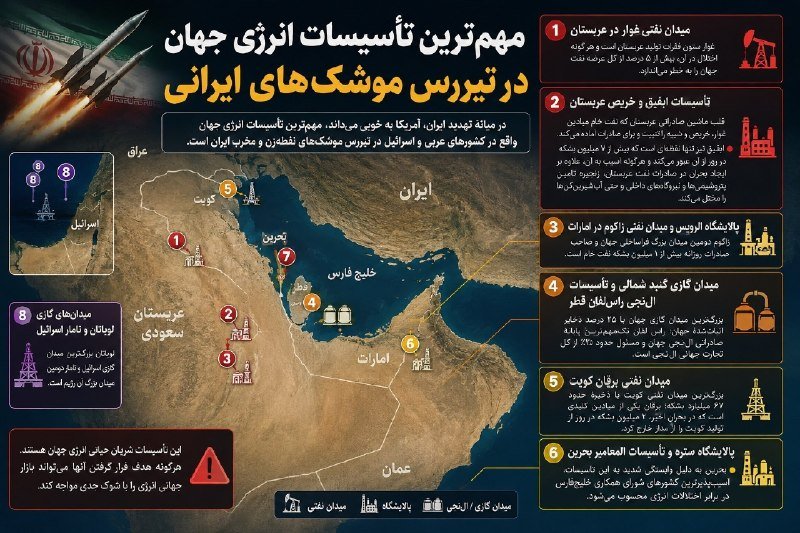
Air-raid sirens sounded across Kuwait in the early hours of 28 June 2026, with multiple Telegram channels reporting at least two explosions in quick succession inside the small Gulf sheikhdom. The alerts — picked up at 00:08 UTC by channels including rnintel and wfwitness, and amplified within minutes by Middle East Spectator, GeoPWatch, and DDGeopolitics — marked the first publicly-attested Iranian-pattern strike event of the night on the Arabian side of the Persian Gulf, and put a US-allied host of the Al Udeid and Arifjan logistics footprint inside an active alert window.

The incident, still unfolding at the time of writing, sits at the seam of three pressure fronts: Iran's retaliation calculus toward US assets after the 2025–26 exchanges, Kuwait's longstanding policy of quiet mediation, and Washington's expanded basing posture across the Gulf Cooperation Council (GCC). What the sirens confirm is not a war declaration; what they complicate is the assumption that Tehran's retaliation set is bounded by US bases in Iraq, Syria, and Bahrain.

What the wires show

The Telegram cluster that surfaced between 00:08 and 00:16 UTC is short on detail but consistent in pattern. At 00:08 UTC, rnintel — a Russia-aligned operational channel that has tracked Iranian missile launches throughout the 2025–26 cycle — posted "Sirens in Kuwait," with the Iranian and Kuwaiti flag emojis bracketing the alert. Less than a minute later, the war-monitoring account wfwitness corroborated the activation. By 00:09 UTC, Middle East Spectator had framed the alert as an Iran/Kuwait story; by 00:10, GeoPWatch had escalated the framing to an explicit "Kuwait ❌ Iran" cross-attribution, citing "reports of explosions." Two minutes after that, Middle East Spectator reported "at least two impacts in Kuwait." By 00:16 UTC, DDGeopolitics had put the full Iran–US–Kuwait triangle on its breaking-news banner.

The reporting is granular but unverified. No mainstream wire — Reuters, Associated Press, AFP, BBC — had published confirmation inside the wire window captured here. Kuwait's Ministry of Interior had not, at 00:16 UTC, issued a public statement on the official platforms the Monexus desk monitors. The US Central Command public-affairs feed had not acknowledged the activation. What the Telegram cluster offers, in other words, is a real-time operational signal — sirens and impact reports — that has not yet been corroborated by official channels but is consistent in tone and timing across at least five independent channels, two of them running on a different political baseline from the Iranian-aligned DDGeopolitics and rnintel accounts.

The most conservative reading: Kuwait's civil-defence sirens activated, possibly as a precaution around an incoming ballistic or cruise missile trajectory that may have landed in open desert, on a US installation, or in territorial waters. The least conservative reading: a deliberate strike on Kuwaiti or US territory inside Kuwait, framed by Tehran-aligned channels as retaliation. The wires do not yet let this publication choose between them.

Why Kuwait, and why now

Kuwait is the GCC's quietest node. Since the 1991 liberation, the emirate has refused to host the kind of visible US footprint that Bahrain (Naval Support Activity Bahrain, Fifth Fleet headquarters) and Qatar (Al Udeid) carry. Its relationship with Washington is defined by the Camp Arifjan and Camp Buehring logistics installations, which moved matériel and personnel into Iraq through the 2003 invasion and the post-2014 counter-ISIS campaign but kept a low public profile inside Kuwait itself. The emirate's domestic politics lean heavily toward quiet mediation: it has historically hosted Iranian diplomatic missions, and its Shia–Sunni balance — roughly a quarter of the citizen population is Shia — has been managed through co-optation rather than confrontation.

That is precisely what makes Kuwait an attractive target for a retaliatory doctrine that wants to send a signal without lighting up the broader Gulf. Strikes on Al Udeid or Manama would invite a unified GCC response and pull Saudi Arabia and the UAE directly into an Iran–US cycle they have spent two years trying to de-escalate. A strike on Kuwait splits the GCC consensus: it triggers Article 6 of the GCC joint defence treaty, but it also activates a domestic Kuwaiti debate about whether hosting US logistics infrastructure has become a liability. In Iranian strategic writing — the doctrine outlined in outlets like Tasnim and the IRGC-affiliated Fars News — that distinction is the entire point of southern-tier targeting.

The second pressure front is timing. The sirens came in a week when Axios and Iran International reporting had signalled a tentative diplomatic channel between Washington and Tehran, brokered through Oman and Qatar, around the nuclear-file inspections regime. Iranian retaliation in the Gulf would, in that framing, be a signal not of war-fever but of negotiation posture: a reminder that the southern-tier GCC is inside Iran's strike envelope, and that any deal priced without that risk is under-priced. That is speculation, not source; the wires captured here do not confirm it.

What remains unverified

The single biggest gap is the absence of a Kuwaiti official statement. The Ministry of Interior's civil-defence account, which historically posts within minutes of a siren activation, had not updated inside the captured wire window. The Kuwait News Agency feed carried no flash by 00:16 UTC. The Iranian state-aligned channels — Tasnim, PressTV, IRNA — had not yet broadcast a claim of responsibility or a denial. The US side, including the embassy in Kuwait City and Central Command forward headquarters, had not acknowledged the activation.

A second uncertainty is the trajectory itself. Telegram channels reporting "two impacts" did not specify whether those impacts fell on land, on a US installation, or in territorial waters. Without imagery — and no photographic evidence of impact craters, intercept debris, or damage had surfaced inside the window — the operational character of the event remains in the "sirens and rumour" category that the post-7 October Gulf has learned, uncomfortably, to live inside.

A third uncertainty is the Iranian framing. DDGeopolitics and rnintel both used the Iranian flag emoji as a primary framing cue, and GeoPWatch explicitly cross-attributed the alert to Iran. That framing may be premature; it may reflect those channels' editorial priors; or it may reflect an Iranian state-media claim that has not yet been broadcast on the Iranian-language outlets this desk monitors. The sources do not specify.

The structural frame

The Gulf is no longer a single theatre. Since the 2023–24 Houthi campaign in the Red Sea extended the Iranian strategic envelope southwest, and since the 2025–26 exchanges demonstrated that Iraqi and Syrian Kurdish airspace can be used to reach Israeli and Jordanian targets, the Persian Gulf itself has quietly become a second front rather than the principal one. Iran's strike doctrine, as publicly described in Fars and Tasnim commentary, treats the southern Gulf — Bahrain, Qatar, Kuwait, the UAE — as the bargaining chip of last resort.

For Kuwait, the calculus is acute. The emirate's neutrality has historically bought it protection; in a war where Iranian retaliatory doctrine is explicitly designed to fracture GCC unity, that neutrality becomes a target rather than a shield. The sirens on 28 June 2026 — whether they prove to be a false alarm, a precautionary activation, or the prelude to a confirmed strike — reopen a question that the Gulf's quiet members have been able to defer since 1991: whether hosting US infrastructure and refusing to join the Iranian axis is still a coherent posture, or whether the southern tier has become, structurally, a single threat surface.

For Washington, the same sirens reopen an older question: whether the GCC basing posture, built around the assumption that southern-tier states were politically insulated from Iranian retaliation, has been overtaken by a doctrine that treats precisely that insulation as the lever to be pried loose. The diplomatic channel through Muscat and Doha depends on quiet Gulf consent. A Kuwait incident — at whatever scale — is the kind of event that does not break the channel, but does change its price.

The night is still unfolding. The wires captured here are the first sixteen minutes of a story whose second hour will determine whether 28 June 2026 becomes a date in the post-7 October Gulf chronology, or a near-miss that gets filed under civil-defence precaution. This publication will update as official Kuwaiti, US, and Iranian statements clarify which of those readings the sirens deserve.


Desk note: Monexus has run this wire as a developing alert rather than as a confirmed strike story. The Telegram cluster is consistent across five channels running on different political baselines — a meaningful signal — but no official Kuwaiti, US, or Iranian statement had been published inside the captured window, and the casualty and target profile are not yet established. We have foregrounded what the wires say, named what they do not, and declined to assert which of the three readings (false alarm, precautionary activation, confirmed strike) the night will resolve into. We will update when official sourcing allows.

Wire provenance

This editorial synthesis draws on the following public wire/social posts:

  • https://t.me/DDGeopolitics
  • https://t.me/GeoPWatch
  • https://t.me/Middle_East_Spectator
  • https://t.me/Middle_East_Spectator
  • https://t.me/GeoPWatch
  • https://t.me/rnintel
  • https://t.me/wfwitness
© 2026 Monexus Media · reported from the wire