Tehran walks away from the table: what Iran's pullout from technical talks really signals
Iran has cancelled its participation in technical negotiations, an official told state TV on 28 June 2026. The withdrawal exposes how thin the channel between Tehran and Washington has become — and how a 20% market on another blockade is no longer the outlier bet.
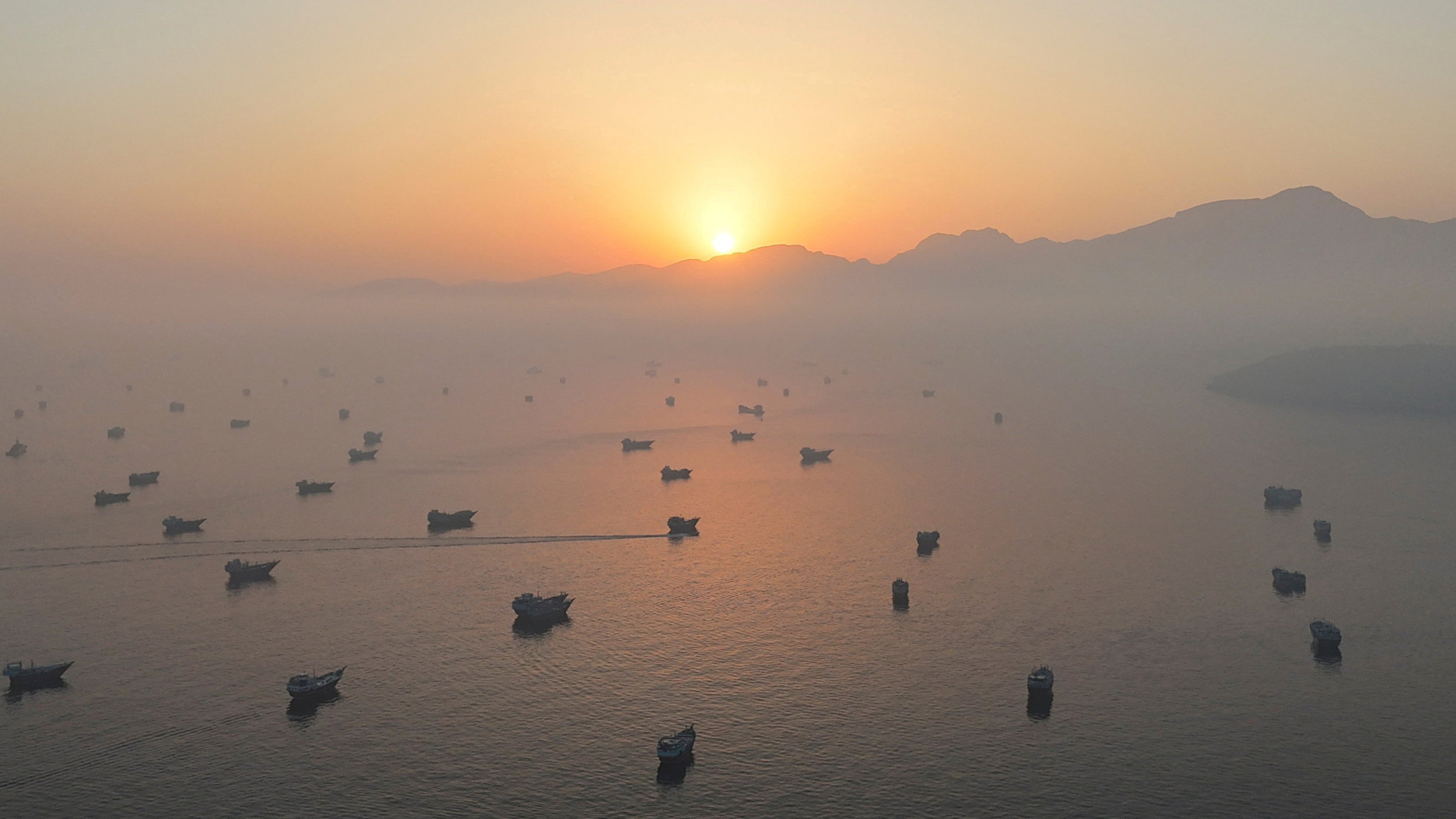
Tehran cancelled its participation in a round of technical talks with Western interlocutors on 28 June 2026, an official told Iranian state television, citing recent attacks as the trigger. The walkout, reported by Reuters at 20:10 UTC, did not specify which forum was abandoned or which counterparty had been expecting Iranian delegations at the table. What it did was narrow a diplomatic channel that had already been reduced to a sliver, and it converted that sliver into a question of escalation rather than a question of substance.
The substance, after two decades of stop-start engagement, is whether Iran and the United States can coexist without the conversation collapsing back into coercion. The Iranian decision to pull its technical teams — the lower-tier officials who do the slow work of sequencing sanctions relief, escrow arrangements, and verification protocols — signals that the political tier above them has run out of patience. Tehran is not, on the available evidence, breaking off high-level contact. It is removing the floor underneath it.
What was cancelled, and what wasn't
The Reuters report from 20:10 UTC on 28 June identified no specific venue. Iranian state television carried the framing that the pullout was triggered by "recent attacks" — a phrase that, in Tehran's public vocabulary over the past eighteen months, has covered Israeli strikes on Iranian military and nuclear-adjacent infrastructure, cyber operations attributed to Western intelligence services, and the periodic seizure of Iranian-flagged tankers in the Gulf of Oman. The cancellation of technical talks is the working-level expression of a political decision already taken in another room.
This matters because technical talks are the part of the diplomacy that is supposed to survive political weather. They are where the granular questions get answered: which sanctions snap back under which trigger, what counts as an enriched-uranium stockpile, which centrifuge models are out of bounds, which IAEA inspectors get which access. When the technical channel goes quiet, the political channel is left to negotiate over headlines rather than over text. That is the regime in which miscalculation is cheapest.
It is worth saying plainly what the sources do not say. The thread does not specify which third country hosted or mediated the technical round. It does not name the Iranian official who confirmed the cancellation, nor the outlet beyond Iranian state TV. It does not record a US, European, or International Atomic Energy Agency response. Monexus is reporting a single, dated, sourced event: an Iranian decision, communicated through state media, to withdraw from a technical process whose exact composition is not disclosed in the source material.
The blockade market and the priors it encodes
On the same day, at 14:17 UTC, the prediction market Polymarket listed a contract pricing a 20% probability that the United States would announce a new blockade of Iran by the end of the following month. A fifth-chance wager in a market of this kind is not a fringe bet. It is the consensus view of informed liquidity that another round of maritime strangulation is more likely than not over the near term, with a non-trivial probability of an imminent announcement.
The two data points — the cancellation and the blockade price — sit on the same line. Each measures, in its own register, the market's and Tehran's read on whether the current US administration is willing to substitute economic warfare for the diplomacy it nominally still pursues. Blockade is the bluntest instrument short of strikes: it is the policy of last economic resort, applied when sanctions have run out of additional marginal reach and when the regime has decided that the cost of a resumed nuclear programme outweighs the cost of an open confrontation at sea. A 20% probability is not a forecast of blockade; it is a forecast that blockade has become a live option rather than a contingency.
For Iranian negotiators, that price is itself the negotiating environment. Walking out of technical talks is the only leverage Tehran can deploy against a counterpart that has demonstrated, twice in the recent past, a willingness to close the Strait of Hormuz to traffic by inspection, seizure, and designation. The walkout is therefore not the cause of escalation. It is the symptom of an escalation already priced in.
Water, fuel, and the domestic floor
Iran does not negotiate from a position of strength. This bears saying because the Western wire line frequently elides it. The country is mid-sentence in a water crisis that has moved from periodic to chronic. A widely circulated image from 28 June, posted by the Telegram channel @IRIran_Military, shows Isfahan — one of the driest major cities in the country, sitting on the Zayandeh Rud basin — under conditions the channel characterises with the sarcastic formula common to Iranian opposition and diaspora accounts: "they say Iran has no water and is dying of thirst." The image is not evidence in itself of policy failure, but it is evidence that the domestic baseline against which Tehran's foreign-policy room for manoeuvre is set is contracting.
The structural point is this: when a state is short on the resource that makes ordinary life possible, its negotiating posture hardens. Sanctions pressure on a hydrocarbon exporter squeezes the budget; drought pressure on an agricultural economy squeezes the household. Both pressures feed the same political appetite — for a deal that delivers relief fast, or for a posture that makes relief visible enough to be electorally useful at home. Tehran's walkout can be read as the second posture winning, for now, over the first.
The Iranian counter-frame, voiced regularly through outlets including PressTV, Tasnim, and the Foreign Ministry briefings that Western wires rarely lead with, holds that the United States is not a serious negotiating partner when it maintains maximum-pressure sanctions during talks, deploys blockade as a routine tool, and supports Israeli operations that Tehran classifies as attacks on its sovereignty. From that vantage, technical talks are a performance the Iranian side has been asked to underwrite while the conditions for their success are removed. The walkout, in this reading, is the overdue refusal to keep performing.
What a structural reading of the moment looks like
Step back from the headline. Two things have happened in the past eighteen months that this cancellation completes. First, the legacy architecture of the Joint Comprehensive Plan of Action — the 2015 multilateral deal — has been replaced not by a successor deal but by a sequence of episodic, mostly bilateral arrangements in which Iran trades specific constraints for specific, time-limited sanctions relief. The centre has not held; the edges have not cohered. Second, the instruments of coercion have multiplied. Sanctions, designations, tanker seizures, cyber operations, and strikes on Iranian assets in Syria and elsewhere now sit alongside the negotiating table rather than behind it. The table itself has become one tool among several.
What this configuration produces is what an older vocabulary used to call a hegemonic transition in slow motion: the incumbent order — US sanctions architecture, IAEA verification norms, dollar-cleared oil markets — is still in place, but its credibility as a settlement framework is eroding. The successor arrangement is not yet visible. What is visible is the procurement race: Iran buying time with Russian and Chinese economic engagement, China buying discounted crude, the Gulf states buying insurance in the form of détente with Tehran, the United States buying nothing because the price of a genuine settlement has, in Washington's own accounting, exceeded the price of management-by-pressure.
This is the structure within which a 20% blockade probability and a technical-talks walkout on the same day are not coincidental. They are the two readings of the same ledger.
Stakes, and what to watch next
The losers in this trajectory, on the available evidence, are the working-level diplomats on both sides whose careers consist of trying to make technical sense of a political problem. They are also the Iranian population, whose water crisis is the operational fact of daily life and whose negotiating position is being conducted over their consumption. They are the European and Asian importers of Iranian crude, who have spent the last three years building compliance architectures for a trade that may now face renewed interdiction at sea.
The winners are narrower and clearer. A sanctions-maximising constituency in Washington gets the absence of a deal it never wanted. Hardliners in Tehran get the rhetorical confirmation that engagement with the United States is a concession rather than an exchange. Israeli planners who view any Iranian enrichment programme as an intolerable threshold get, for the moment, a quieter customer for the strike-capable option. None of these winners pays for the cost; the cost is paid in the room below the negotiating table, in the cities where water is rationed, and in the Gulf where shipping insurance premia move with the Polymarket price.
What to watch over the next thirty days is concrete. First, whether the IAEA reports a discontinuity in Iran's declared enrichment stockpile or centrifuge cascade — the verifiable signal that the political decision has already moved downstream into technical fact. Second, whether the Polymarket blockade contract moves above 25% or collapses below 10%; either move will tell us which side of the optimistic-pessimistic line informed liquidity has crossed. Third, whether a third-party mediator — Oman, Qatar, Switzerland, China — announces a resumption of any channel at all. The walkout closes a door; it does not say which door, and it does not say for how long.
The honest end-state of this reporting is uncertainty with structure. The cancellation is sourced and dated. The blockade probability is sourced and dated. The drought image is sourced and dated. None of the three, individually or together, settles the question of whether the next move is a deal or a confrontation. What they settle is that the period in which both were compatible, for a while, has narrowed again, and that the narrowing is now visible to markets, to ministries, and to the officials whose job was to keep the technical work alive long enough for the political work to catch up.
This piece foregrounds the Iranian state framing of the talks cancellation as transmitted by Reuters and the structural read that connects it to the Polymarket blockade contract and to the domestic resource picture. Mainstream Western wires led on the cancellation as a discrete event; Monexus reads it as a node in a tighter pattern.
Wire provenance
This editorial synthesis draws on the following public wire/social posts:
- http://reut.rs/4oQbNAS
- https://t.me/IRIran_Military