IRGC Navy warns of 'hell' for Americans after joint missile and drone exercise near Strait of Hormuz
The IRGC Navy's public-relations arm says naval and aerospace forces carried out a joint missile-and-drone operation between 02:00 and 03:00 local time on 28 June, hours before its commander publicly warned that US 'blind shots' at Sirik would not break Iran's hold on the strait.
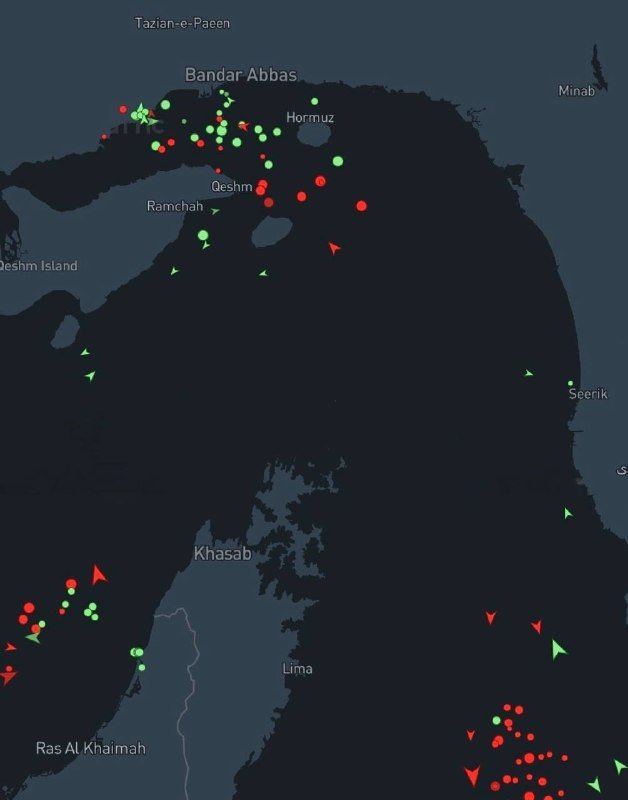
The public-relations arm of Iran's Islamic Revolution Guard Corps announced at 00:39 UTC on 28 June 2026 that IRGC Navy and Aerospace Forces had conducted a joint missile-and-drone operation between 02:00 and 03:00 local time on Sunday morning in the Persian Gulf, hours before the IRGC Navy's commander warned in a televised statement that Americans would "experience hell these days" in response to a US strike on the southern port town of Sirik.
The sequence — drill, then rhetoric, then a hardening of language about US "blind shots" — is the latest in a months-long exchange between Iranian paramilitary commanders and the US Central Command over the narrow waterway through which roughly a fifth of the world's seaborne oil passes. Tehran's chosen framing, delivered across IRGC outlets and Iranian state media, is that any attempt by Washington to loosen Iran's grip on the strait will be met with escalation, not de-escalation. The American side, by Iran's account, is already escalating.
A drill, then a warning
According to a statement from the IRGC's Public Relations office carried by the Middle East Spectator channel and Iranian state outlets, the pre-dawn exercise combined naval and aerospace units and was timed for 02:00–03:00 local time on Sunday — that is, between approximately 22:30 and 23:30 UTC on Saturday 27 June 2026. The statement, addressed to "the noble people of the Islamic Iran," framed the drill as a routine demonstration of integrated capability rather than a response to any single incident.
Within hours, the IRGC Navy's commander used his own channel to address the Sirik strike directly. Statements circulated in parallel by Press TV (English), Fars News, Tasnim News (English) and DD Geopolitics — four channels that share the same Tehran-friendly distribution backbone — carried near-identical text: America's "blind shots at Sirik" would not "solve the mystery of our control over the Strait," but Iranian shots at "the violators" would remind them of that control. The commander added, in the variant published by DD Geopolitics and Tasnim, that "Americans will experience hell these days."
The repetition is itself the message. By publishing through at least four aligned channels within roughly 40 minutes of one another, the IRGC ensured that the warning would travel outside Iran's own media ecosystem into the Telegram aggregators followed by Arab, Pakistani and Indian naval analysts. The English-language variants on Press TV and Tasnim were aimed squarely at an Anglophone wire audience; the Fars and DD Geopolitics versions were aimed at the Persian and pan-Islamic readership.
What is actually known about Sirik
Sirik is a small port in Hormozgan Province on Iran's southern coast, roughly 220 kilometres east of Bandar Abbas across the strait from Oman. It sits inside an arc of small IRGC Navy fast-attack-boat bases that Iranian paramilitary doctrine has used for years to project presence into the central and western Gulf without the heavier footprint of the regular Iranian Army Navy.
The sources available to Monexus at publication do not specify what was struck at Sirik, by which US platform, or with what ordnance. US Central Command has not, in the materials reviewed here, published a strike summary for 27–28 June. The IRGC's use of the phrase "blind shots" implies, but does not confirm, that ordnance was expended on a target inside Iranian territory rather than on a vessel at sea; the commander might also be using the term loosely to describe any kinetic US action in the southern Gulf.
That ambiguity matters. Iranian domestic framing tends to treat even unsuccessful or limited strikes as confirmed attacks on Iranian soil, partly because the regime's own legitimacy narrative depends on presenting Iran as a target of great-power aggression. Western wire reporting, where it has touched similar episodes in 2024 and 2025, has generally described US actions as targeted at Iranian-linked dhows or missile-launch sites, not at populated areas. The IRGC's choice of the word "blind" is calibrated to suggest civilian risk without committing to a specific casualty account.
The structural frame: a corridor under competing claims
The Strait of Hormuz is the world's most consequential single maritime chokepoint. Roughly 20–21 per cent of global seaborne oil — and a much larger share of liquefied natural gas leaving the Gulf — transits its 21 nautical miles of shipping lane. The strait is bordered on the north by Iran and on the south by Oman and the United Arab Emirates; its narrowest point is opposite the Musandam Peninsula. No neutral party polices it.
What we are watching is a contest of deterrent rhetoric layered on top of a real commercial interest. Iran's leverage is geography: even a credible threat to close the strait raises the price of every barrel that does not move through it. The United States' leverage is force projection: the Fifth Fleet, headquartered in Manama, Bahrain, has run maritime-security operations in the Gulf continuously since 1948, and US Central Command maintains a layered presence of carrier strike groups, littoral combat ships, P-8 maritime patrol aircraft and shore-based missile defences across the region.
The IRGC's choice to publish a warning immediately after a joint drill, rather than before it, is itself a doctrinal habit. Tehran uses exercises to anchor its threat in evidence — "we did this, and we can do this again" — and then layers the rhetoric on top. The pattern is familiar from the IRGC Navy's seizure of commercial tankers in 2024 and from its drone and missile exchanges with US forces during the spring 2025 escalation cycle.
What remains uncertain — and what to watch next
Several questions are not answered by the materials at hand. The sources do not specify whether the 02:00–03:00 local-time operation used live ordnance or simulated launches, whether any vessel or aircraft transited the strait during the window in question, or whether the Sirik strike preceded or followed the drill. The IRGC's English-language framing of "blind shots" is not, on the public record, matched by a US military readout confirming what was targeted and why.
For readers tracking the situation, the near-term indicators are concrete: any change in the US Fifth Fleet's public sortie rate out of Manama; any rerouting of commercial tanker traffic away from Hormuz; any companion readout from the Omani or Emirati foreign ministries, which have historically preferred quiet de-escalation; and any second-order statement from the IRGC's Aerospace Force, which has a separate command structure from the IRGC Navy and would normally be quoted independently if its platforms were directly involved in a strike. A second televised address from the IRGC Navy commander within 48 hours would suggest Tehran intends to keep the temperature elevated; silence, by Iran's pattern, would suggest the message has been delivered and the cycle is pausing.
Monexus will update this article as primary-source confirmation arrives from US Central Command, the Iranian Foreign Ministry, or one of the Gulf states.
— Desk note: Monexus treated the four parallel Telegram publications (Press TV English, Fars News, Tasnim English and DD Geopolitics) as a single coordinated IRGC messaging event, while noting that the underlying claim about a US strike at Sirik is not yet corroborated by US or independent wire reporting in the source set.
Wire provenance
This editorial synthesis draws on the following public wire/social posts:
- https://t.me/Middle_East_Spectator
- https://t.me/presstv
- https://t.me/presstv
- https://t.me/farsna
- https://t.me/tasnimnews_en
- https://t.me/DDGeopolitics