After the truce: Israel widens strikes in southern Lebanon as Hezbollah ambush kills soldiers
Three days after a framework deal was meant to end the fighting, the Israeli military and Hezbollah are trading lethal blows in the Nabatieh district, exposing how thin the November truce has become.
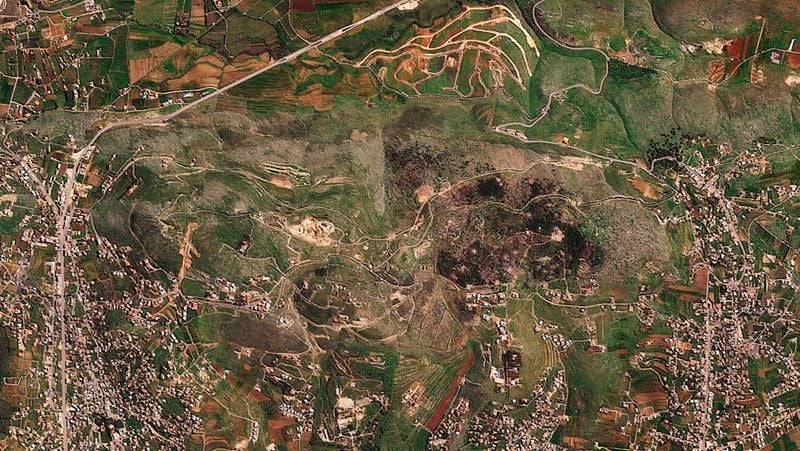
At 08:57 UTC on 28 June 2026, Israeli media reported that at least one Israel Defense Forces soldier had been killed and several others wounded in a Hezbollah ambush in southern Lebanon, according to a Press TV wire of the Hebrew-language reporting. Eight minutes later, Reuters moved a separate item quoting the Israeli military saying it had killed Hezbollah militants and struck a launcher in the Nabatieh area. The two dispatches, posted within minutes of one another, are the clearest indication yet that the framework agreement signed on Friday to end the fighting is not holding on the ground it was meant to cover. FRANCE 24 reported on the same Sunday that, despite the new deal, "fighting has continued in Lebanon" — a phrase that, in the careful vocabulary of the French public broadcaster, means the truce is more text than terrain.
The pattern is now familiar. A diplomatic announcement, a few hours of quiet, and then the small arms and the airstrikes resume. The question is no longer whether the November framework collapsed on contact with the villages of south Lebanon. It is who inside the Israeli and Lebanese command chains benefits from keeping it nominally alive while operations continue, and what the regional cost will be once the pretense gives way.
What the wires actually say
Reuters, citing the Israeli military, says troops killed Hezbollah fighters and attacked a launcher in the Nabatieh district. The Reuters item, timestamped 09:05 UTC on 28 June, carries no casualty figure from the Israeli side and does not specify whether the launcher was a rocket system, an anti-tank position, or an observation post. The wire is short, declarative, and sourced to the IDF spokesperson — the kind of read-out that Western wires clear quickly because it is short on contested detail.
The Press TV item, timestamped 08:57 UTC and citing Hebrew-language Israeli media, gives the counter-image: a Hezbollah ambush that killed at least one IDF soldier and wounded several others. Press TV is Iranian state media and presents the ambush through the language of "the resistance," a framing that Israeli and Western outlets do not adopt. But the underlying claim — that Israeli soldiers came under fire and took casualties — is consistent with the Reuters item's description of an ongoing engagement, and is the kind of casualty report that, when it surfaces in the Israeli press within hours, is usually accurate in its bones even if the political packaging around it is not.
FRANCE 24's Sunday report makes the political weather explicit: a "new framework agreement" was signed on Friday, the fighting was supposed to wind down, and it has not. The broadcaster does not name the mediators or the text of the framework, which is itself a tell. If the agreement had clear enforcement teeth, French public-service journalism would describe them. The absence of detail suggests the document is closer to a statement of intentions than to a binding ceasefire.
Why Nabatieh, again
Nabatieh is one of the four governorates of southern Lebanon and the one that has, since the late 1990s, been the focus of Israeli counter-Hezbollah operations whenever a truce begins to fray. The district sits north of the Litani line that UN Security Council Resolution 1701 identified as the area into which armed forces other than the Lebanese state should not deploy. The launcher struck on Sunday is, on the Israeli account, exactly the kind of capability that 1701 was meant to keep out of the border zone.
Hezbollah's own media arm, Al-Manar, did not post a claim of responsibility for the ambush in the items available to this publication at the time of writing. The ambush is reported through Israeli media via Press TV. That asymmetry matters. Western wires will only confirm the IDF death once the Israeli military publishes a name and a hometown. The Reuters item does not do so, and Press TV does not provide it either. What is verifiable, on the public record at 28 June 09:05 UTC, is that both sides claim to have inflicted casualties and both sides' claims are consistent with there having been a real firefight in the district.
The structural point is straightforward. Every previous round of Israel-Hezbollah fighting — 2006, the 2015 Shebaa Farms exchange, the 2019 border skirmishes, the 2023-2024 escalation triggered by the Gaza war — has produced a diplomatic product whose lifespan is measured in weeks. The current framework, signed on Friday 26 June, has not made it to the end of its first weekend.
The mediation question no one is naming
The wires do not name the mediators of the Friday agreement. That silence is itself a story. The 2024 arrangement was brokered in part through US and French channels with Qatari and Egyptian back-channels, and produced a sequence of position papers that the public could read. The 26 June framework appears to have no equivalent paper trail that the wires consider publishable. When mediators are visible, the deal has political costs the mediators are willing to absorb. When they are invisible, the deal is closer to a stop-gap designed to allow all parties to claim something without committing to anything.
That reading fits the pattern of the last eighteen months. Hezbollah has been weakened — by the loss of senior commanders in the 2024 exchanges, by the degradation of its precision-missile programme through Israeli strikes on Syria-bound convoys, and by the broader squeeze on Iran's regional network. But weakened is not defeated. The ambush on Sunday is the kind of operation a degraded but still-capable force runs to demonstrate that its remaining edge is real. Israel, for its part, retains the air supremacy and the intelligence reach to keep killing launchers in the Nabatieh area. The framework is, on this reading, a coordination mechanism that lets both sides continue to fight while reducing the risk of a single incident escalating into a wider war.
What the next 72 hours will tell
Three things are worth watching. First, the IDF's formal casualty notification. If the military confirms the death reported in Israeli media via Press TV, the domestic political temperature in Israel rises and the pressure on Prime Minister's Office and the Northern Command to escalate — or to demand a meaningful deal — increases. If the military does not confirm, the ambiguity itself becomes a political fact.
Second, the Lebanese government's response. Beirut has, since 2024, tried to keep a careful distance from the border fighting while exercising what sovereignty it can south of the Litani. If the Lebanese army positions troops in the Nabatieh district in the next 48 hours, the framework still has a backbone. If it does not, the framework is, in practice, a bilateral Israeli-Hezbollah understanding that does not extend to the sovereign whose territory the fight is happening on.
Third, the Iranian reaction. Tehran's public posture over the last week has been calibrated — restrained enough not to give Washington a pretext, pointed enough to signal that Hezbollah remains inside the wider deterrence envelope. If Iranian state media escalates its language after the Sunday ambush, the framework's ceiling lowers. If the language holds, the framework has, at minimum, an external backstop.
The honest summary at 09:30 UTC on 28 June is this. A framework was signed on Friday. It did not survive the weekend. The fighting is happening in the same governorate it has happened in for two decades. The wire reports from Reuters, Press TV and FRANCE 24 agree on the fact of continued combat and disagree, predictably, on who is winning each engagement. Until a mediator puts a name and a date on what the framework actually obliges, the truces in south Lebanon will continue to be what they have been since 1701: pauses of varying length between rounds of a contest that neither side is prepared to end and neither side is prepared to admit it is still fighting.
This publication treats the Israel-Lebanon border as a single contested story with two competing wire frames: the Israeli military's operational read-out, carried by Reuters and the IDF spokesperson, and the Iranian / Hezbollah-aligned counter-read, carried by Press TV and Al-Manar. Both are reported here; neither is endorsed as the whole truth. The framework of 26 June is treated as a diplomatic fact whose enforcement is, on present evidence, partial.
Wire provenance
This editorial synthesis draws on the following public wire/social posts:
- http://reut.rs/4g5RvBh
- https://t.me/presstv/