K. Bhagyaraj and the quiet reinvention of Tamil screenwriting
The writer-director-actor who reshaped Tamil cinema's narrative grammar has died in Chennai at 73, leaving a body of work that fused folk idiom with mainstream stardom.
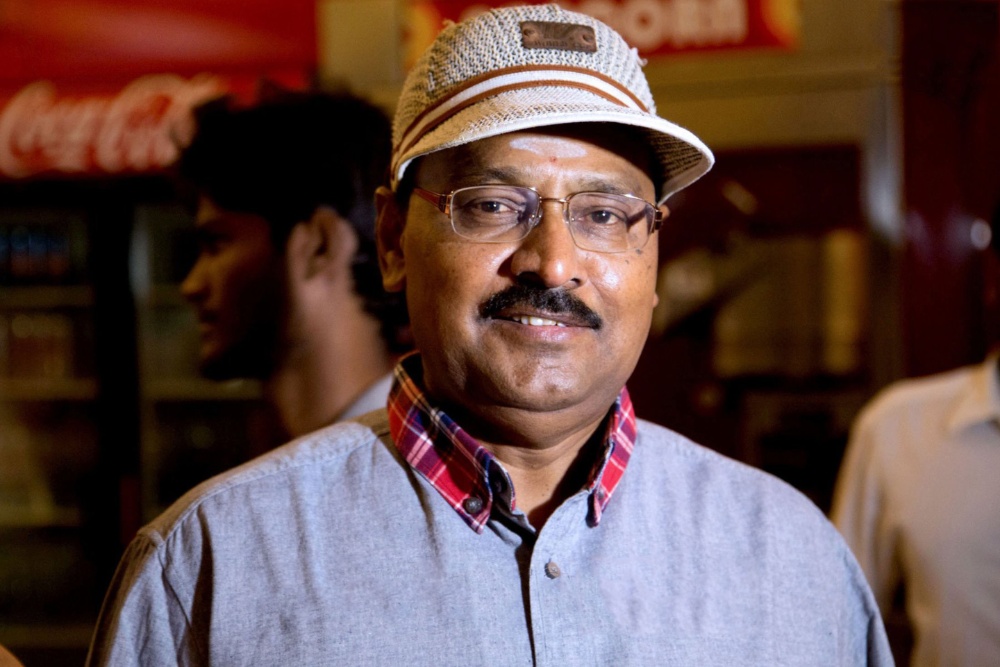
K. Bhagyaraj died at 73 on Saturday, 27 June 2026, in Chennai, after a cardiac arrest. The Tamil Nadu Chief Minister's office confirmed the death the same day, according to Variety's obituary. For four decades, Bhagyarj had been one of the most consequential creative voices in south Indian cinema — a writer-director-actor whose films were both crowd-pleasers and quietly formal experiments, fusing village idiom, middle-class aspiration and a spare, dialogue-heavy narrative grammar that younger Tamil filmmakers would later claim as inheritance.
His death closes a chapter that began in the late 1970s, when Tamil cinema was still defined by the muscular star vehicles of Rajinikanth and Kamal Haasan, and when a screenwriter with a structural sensibility could rewrite the rules of what a hit looked like. Bhagyaraj did not overturn that star system; he rerouted it. The films he wrote and directed carried mass appeal without abandoning interiority, and they did so in a register that regional audiences immediately recognised as their own.
A screenwriter's screenwriters
Variety's obituary frames Bhagyaraj as a writer-director-actor — an ordering that mattered to him. Acting supplied the stardom; directing supplied the canvas; but writing, by his own account of his career, was the engine. The Tamil cinema of his formative years leaned on folk melodrama and choreographed spectacle. Bhagyaraj layered onto that template a quieter mode: extended domestic sequences, conversation as plot engine, and small-town protagonists whose ambitions were modest but legible. The Variety obituary notes his standing as one of Tamil-language cinema's defining creative figures, a phrasing that captures how the industry has long read him — less a star than a craftsman whose fingerprints sit on the genre.
What made the work durable was its refusal to choose between accessibility and craft. A Bhagyaraj film could open to packed theatres on a Friday and still repay close reading on a Sunday. That tension — popular form with formal discipline — is the throughline the industry's younger generation has spent the past two decades trying to extend.
The mainstream that absorbed him
It is tempting, in an obituary, to frame a figure like Bhagyaraj as an outsider who bent a hostile industry to his sensibility. The record is messier and more interesting. He worked inside the Tamil star system; he cast the biggest names of his era; he delivered returns. The Variety tribute notes his prolific output, and the absence of controversy in his public reputation is itself a marker of how completely his mode of filmmaking was absorbed. By the time the 1990s arrived, the dialogue-forward middle-class drama he had made his signature was no longer a Bhagyaraj speciality. It was the air Tamil cinema breathed.
That is the unusual shape of his legacy. He did not become canonical through a small body of revered late-period works. He became canonical through the erosion of the distinction between his sensibility and the mainstream itself.
A regional industry, a national footprint
The Variety obituary situates him within Tamil-language cinema rather than Indian cinema in the aggregate, and that framing is worth holding. South Indian film industries have, for decades, run on a different commercial logic than the Hindi belt — longer theatrical runs in regional markets, a tighter bond between screenwriter and star, and a screenwriting culture that has historically given writers more leverage over final cut than the equivalent in Bombay. Bhagyaraj operated inside that system and exemplified it.
National and international audiences met his work unevenly. The industry's recent global moment — led by the export of Tamil, Telugu and Malayalam productions through streaming platforms — has produced a wave of retrospectives that position earlier figures as forerunners. Bhagyaraj's death will likely accelerate that work, but the substance was already there: a regional cinema with its own internal canon, its own hierarchies of influence, and a writer-director-actor at its centre.
What the record cannot settle
Obituaries, by convention, settle accounts. This one should be read as opening one instead. Variety's report establishes the death, the age and the institutional response from the Tamil Nadu Chief Minister's office. It does not catalogue the full filmography, weigh the late-career work against the 1980s peak, or address the gaps in available English-language coverage of south Indian film history. Readers looking for a granular assessment of which films will endure and which will fade will have to wait for the retrospectives and the long-form criticism that serious regional careers usually draw out — a process that, in the Tamil case, has often taken a decade or more.
The deeper uncertainty is structural. Tamil cinema is in the middle of a transition: theatrical economics are tightening, streaming platforms are reshaping distribution, and the writer-director as an authorial figure is competing with a more fragmented, algorithmically mediated audience. Against that backdrop, Bhagyaraj's career reads less like a relic than a benchmark. The question his death puts to the industry is whether the conditions that produced him — a regional screenwriting culture with real autonomy, a star system willing to be redirected by a strong writer, audiences who rewarded dialogue as much as spectacle — still obtain.
Saturday's death is a biographical fact. What it means for the cinema he helped shape is a question the next several years of Tamil filmmaking will answer, in the only language the industry has ever trusted: the films themselves.
This obituary follows the Tamil film industry's own framing of its creative figures — privileging the regional industry over pan-Indian aggregation — and treats Variety's report as the lead wire while flagging the limits of English-language coverage of the south Indian screen.