Crude is back where it started, but the rerouting of Middle East oil isn't
Even with crude back near pre-conflict levels, refiners and traders say the structural pull away from Gulf barrels is now embedded — and US strikes on Iranian military facilities this weekend are unlikely to reverse it.
Crude oil prices have effectively round-tripped. Roughly three weeks after the opening of the US–Iran conflict pushed benchmarks sharply higher, front-month Brent and WTI have settled back near the levels printed in the days before the first strike, according to Nikkei Asia reporting dated 26 June 2026. That price recovery is real, and it is also, on its own, misleading: traders and refiners interviewed across Asia and the Gulf describe a market that has structurally decoupled from Middle East barrels in ways that will outlast any single ceasefire or de-escalation cycle.
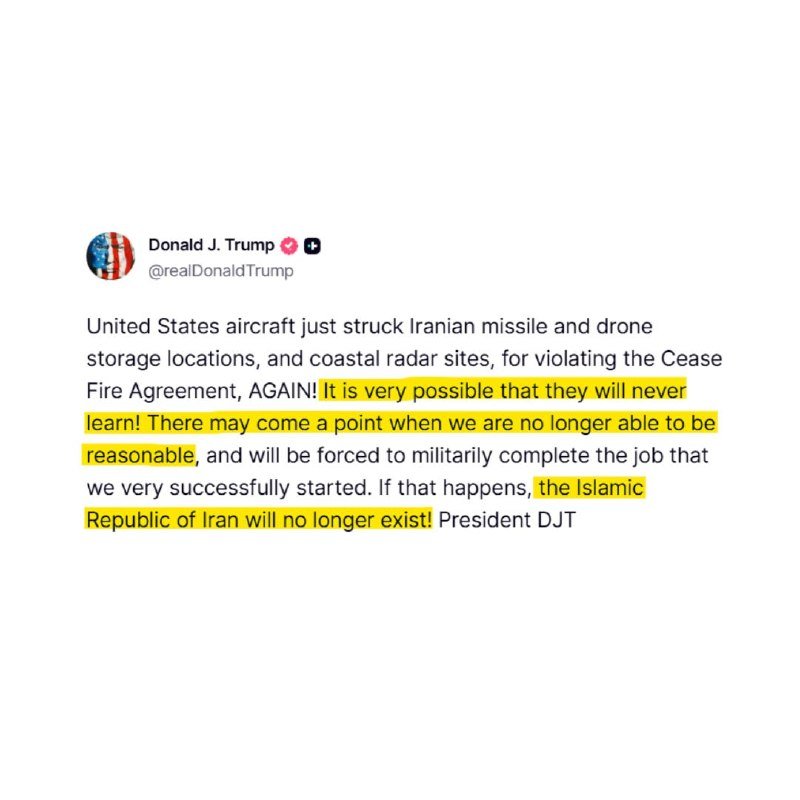
The story is not that the war changed the price of oil. The story is that the war changed who is willing to ship it, insure it, refine it, and underwrite the credit that pays for it — and those changes have already locked in. The 27 June 2026 reporting from Ukrainian and Western wires that the United States struck fresh targets at Iranian military facilities, dated 23:14 UTC, only sharpens the point. Even if the kinetic phase cools from here, the rerouting that began during the hot weeks is not being undone.
What the price recovery actually shows
The headline read across Western trading desks in the final week of June is straightforward: physical supply held, spare capacity in Saudi Arabia and the UAE absorbed the shock premium, and demand-side jitters proved less durable than the initial fear. Nikkei's 26 June dispatch frames the return to pre-conflict benchmarks as a vindication of Gulf spare-capacity credibility — the Saudi posture of holding roughly two million barrels a day of swing capacity on standby did what it was designed to do.
But the same dispatch is at pains to note that the price recovery is not a return to the previous market. Insurance underwriters have repriced war-risk premia for tankers transiting the Strait of Hormuz. Several Asian refiners — long the marginal buyers of Middle Eastern medium-sour crude — have signed term contracts pulling volumes from the Atlantic Basin, West Africa, and the US Gulf for delivery through the second half of 2026. Chinese state refiners have leaned more heavily on Russian and Brazilian supply, a tilt visible in shipping flows tracked through the Indian Ocean and around the Cape.
In other words: the same barrels are not moving along the same routes to the same customers. The price tag on a barrel of Dubai medium sour may look like May, but the chain of custody is different.
Why the rerouting sticks
Three structural shifts, all visible in the Nikkei reporting and corroborated by shipping-flow data, explain why this decoupling persists even as the price signal normalises.
First, insurance and credit have repriced asymmetrically. War-risk hull and machinery policies for tankers operating in or near Iranian waters, and by extension the broader Gulf, were renewed in May and June at multiples of pre-conflict premia. Even if conflict risk recedes, those policies are typically annual. Refiners who absorbed the cost in Q2 have no incentive to switch back mid-cycle and re-trigger the underwriting event; they will run the cheaper, safer paper through to renewal.
Second, refinery slates have been physically re-optimised. Medium-sour Gulf crude and light-sweet Atlantic Basin crude are not drop-in substitutes at the refinery gate. A complex Korean or Indian refinery that rebalanced its slate toward, say, US Eagle Ford or Brazilian Buzios in May cannot simply revert in July without margin loss. The crude diet has changed, and diet changes are sticky.
Third, the political risk premium now sits with the seller rather than the buyer. Iranian crude, in particular, carries a sanctions-overlay dimension that the conflict has not eliminated. Several large Asian buyers that paused Iranian liftings during the strikes have not signalled a firm return date, and European insurers remain cautious on any cargo with documented Iranian origin regardless of destination waivers.
The strikes and the ceiling
The 27 June US action against additional Iranian military facilities, reported on the TSN wire at 23:14 UTC, slots into a familiar pattern: calibrated escalation rather than campaign-level expansion. The strikes appear designed to degrade specific capabilities — air defence nodes, drone production, missile storage — without producing the kind of infrastructure damage to oil-export infrastructure that would justify a sustained price spike.
The market read, again per the Nikkei framing, is that this is ceiling-setting behaviour. By demonstrating willingness to hit new targets without crossing the export-infrastructure threshold, the US keeps the pressure on Tehran while preserving the conditions under which Gulf allies can credibly maintain spare-capacity commitments. That is a coherent strategy for the price; it is also, for the same reason, a strategy that perpetuates the insurance-and-credit rerouting. The very fact that the ceiling is being set — that strikes are happening at all — is what locks in the war-risk premia for another renewal cycle.
The alternative read — that this is escalation that will, in due course, force a broader Iranian retaliation, draw in regional actors, and produce a genuine supply disruption — cannot be ruled out. The sources do not specify targeting details with sufficient granularity to confirm either frame. What can be said is that the market is currently pricing the calibrated-escalation read, and that price will react if that read is falsified.
Stakes and time horizons
The practical consequence, over the next two to four quarters, is a more bifurcated crude market than the one that existed in early 2026. Atlantic Basin light sweet gains structural share in Asian refining slates. Russian and Brazilian barrels consolidate their position in Chinese and Indian state-refiner diets. Iranian crude, even if sanctions enforcement loosens politically, faces a commercial headwind from repriced insurance and wary credit committees. Gulf producers retain pricing power on the barrels that do move, but volume discipline becomes more important than headline price.
For consumers, the relief at the petrol pump is real but partial. Refining margins in Asia have widened because the crude diet has changed more than the retail price reflects, and some of that margin pressure shows up in product prices downstream. For policymakers in Washington, Riyadh, and Tokyo, the strategic signal is sharper than the price chart suggests: energy security in 2026 and 2027 is increasingly a question of route diversity and refining flexibility, not of whose flag flies over the largest reserve base.
What remains uncertain
The reporting does not specify the precise scale or targets of the 27 June US action, nor does it confirm whether the Iranian response has been limited to rhetoric or has included concrete retaliatory moves. The Nikkei dispatch frames the rerouting as durable but does not provide quantitative estimates of how many barrels have permanently shifted origin. The insurance data, while directionally clear, is partial — underwriters do not publish premia in real time, and the inference that premia are sticky is built on trader interviews and shipping-rate proxies rather than disclosed policy terms. Monexus will update this picture as wire reporting firms up the targeting details and as Q3 term-contract volumes are published.
Desk note: Monexus has framed this as a structural supply-chain story rather than a price story. Wire coverage on the day tends to lead with the benchmark return; the rerouting, which is the more durable development, sits deeper in the same dispatches. Both frames are accurate; only one will still be true in a year.
Wire provenance
This editorial synthesis draws on the following public wire/social posts:
- https://t.me/NikkeiAsia
- https://t.me/nikkeiasia
- https://t.me/TSN_ua