No Anchorage, No Deal: Putin's Denial Rewrites the Map of Diplomacy in a Fourth Year of War
Vladimir Putin's flat denial that any agreements were reached at Anchorage collapses the diplomatic scaffolding the Trump administration has been selling for weeks. The road from Anchorage now runs only toward Moscow.
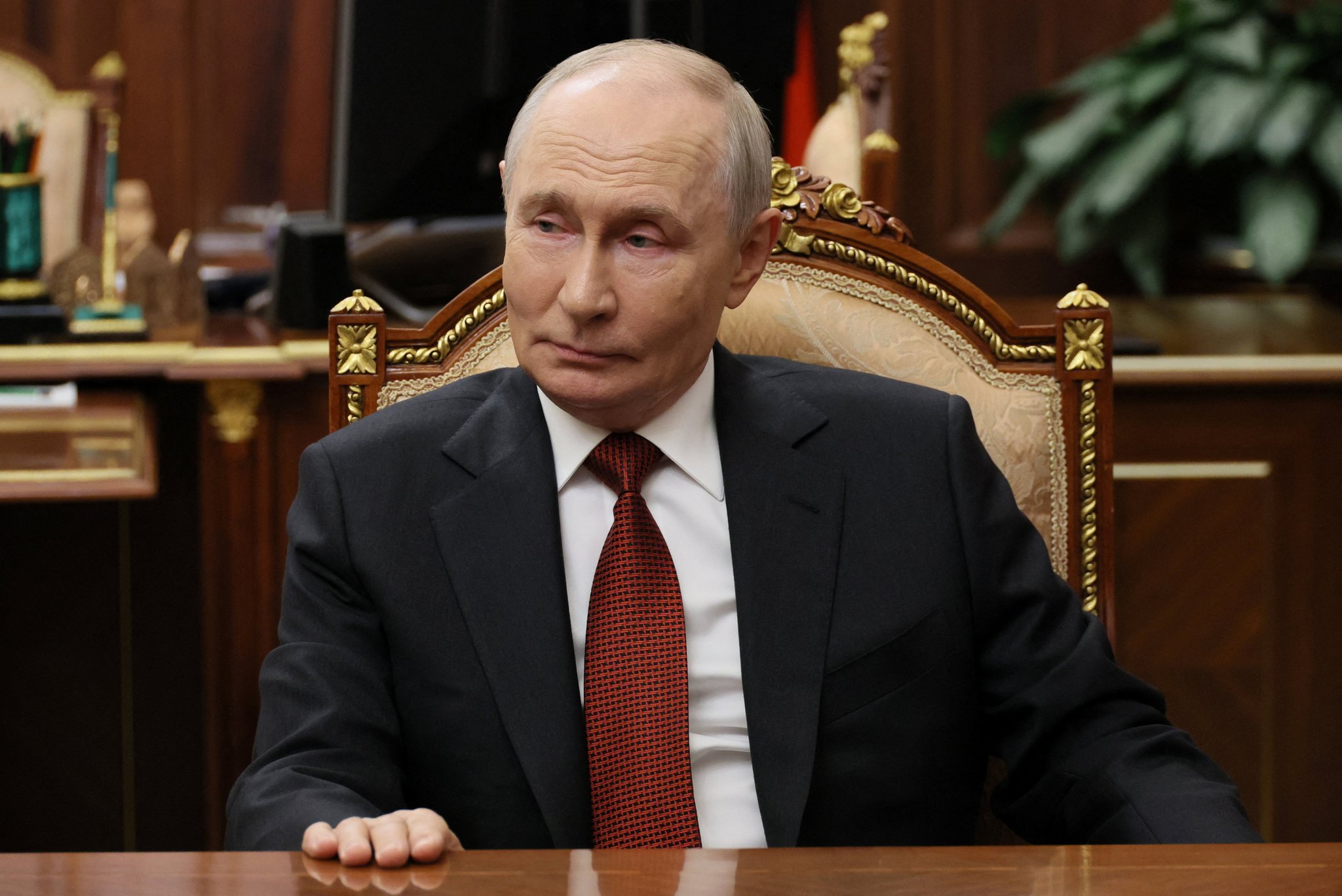
On 28 June 2026, at 19:35 UTC, Russian state-aligned channels began carrying a single line in their nightly headlines. "There really were no agreements in Anchorage," Vladimir Putin told an interviewer, according to reporting aggregated by Euronews and translated into English by the open-source feed WarTranslated within minutes. The phrasing was not a footnote. It was a demolition charge. After more than two months of patient, optimistic signalling from Washington that the United States and Russia were on the verge of a structured settlement to the war in Ukraine, the man whose consent is the binding constraint on any such settlement said, in public, that the talks in Anchorage had produced nothing.
It is difficult to overstate how much the diplomatic choreography of the spring rested on the premise that Alaska was a turning point rather than a photo opportunity. A deal at Anchorage would have given the Trump administration the foreign-policy trophy of the year and a credible claim to having ended the bloodiest war in Europe since the 1990s. Putin's flat denial punctures that claim in real time. The road from Alaska, on this reading, runs only one way — back to Moscow, and back to the battlefield.
What was actually said
The line that moved the wires at 19:35 UTC on 28 June was a sentence-level claim, not a policy address. WarTranslated, the volunteer translation desk that has become one of the most-watched open-source feeds on the Russia–Ukraine file, flagged the Putin quote within minutes. Euronews's breaking-news desk pushed the same phrasing at 19:38 UTC, almost simultaneously, drawing on the same Russian-language source pool. The redundancy is the news: two independent monitoring chains converged on the same wording within minutes, which is the editorial condition for treating a Russian-leader utterance as confirmed rather than contested.
The substance is straightforward. Putin, addressing the camera in his now-familiar long-table setting, said that the Anchorage meeting produced no binding commitments and no shared text. He did not say talks had failed. He did not say future talks were impossible. He said, in effect, that anyone selling Anchorage as a breakthrough had been selling something that did not exist.
That distinction matters. A failed summit implies a process that has stalled and might resume. A non-existent summit implies a process that has been, at best, staged. The diplomatic literature has a name for the latter — declaratory diplomacy without substance — and Russia's record of running it is long. What is unusual is for the host of the performance to admit, mid-act, that the curtain has not gone up.
Why the Trump administration was invested in Anchorage having meant something
The Anchorage meeting, hosted in mid-May 2026 by the Trump White House as the centrepiece of a renewed push for a Russia–Ukraine settlement, was framed by senior US officials as the moment when the war moved from the battlefield to the negotiating table. The implicit theory was that personal diplomacy between the two leaders could produce terms that staff-level talks, and four years of grinding contact-line warfare, had not.
That theory carried weight in Washington for three reasons. First, the White House had staked substantial political capital on the proposition that only the president could deliver an end to the war, and a working Anchorage framework was the evidence on which that proposition rested. Second, European allies, sceptical from the outset, had accepted US-led talks on the working assumption that the United States would not waste months on a process the Russian side was treating as performance. Third, Ukraine itself — and specifically the Office of the President in Kyiv — had agreed to engage with the Anchorage track on the understanding that it would either produce a real negotiation or expose the absence of one. Putin's 28 June statement confirms the second outcome.
It is worth being precise about what the administration has been claiming. The working narrative in US press coverage, and in some of the friendlier European commentary, was that Anchorage had produced at least the scaffolding of a deal: an exchange-of-territory conversation, a sequencing of sanctions relief, a tacit understanding on the future security architecture of eastern Europe. Putin's denial does not address each of those threads individually. It dismisses them collectively. "There really were no agreements," as quoted by Euronews, is a one-line repudiation of the whole edifice.
The Russian counter-frame
Coverage of the Putin statement in Western wires has, predictably, focused on the diplomatic damage. That is the right place to start, but it is not the only place to look. Russian state media and the longer-form commentary on Russian-aligned Telegram channels have spent the past 48 hours constructing a different read of the same words, and the structural reasons for that read deserve airtime.
The Russian framing runs roughly as follows. Anchorage was a contact, not a contract. The United States came to Alaska seeking a Russian concession on Ukrainian territorial questions in exchange for sanctions relief. Russia came to Alaska seeking a recognition that the war's root causes — NATO's post-1997 expansion, the security architecture of the Black Sea region, the legal status of the territories Moscow now treats as part of the Russian Federation — were non-negotiable preconditions for any settlement. When the two agendas failed to align, no deal was possible, and the honest answer to the Western press is that no deal was reached. Putin's 28 June statement, on this reading, is not a provocation. It is a clarification.
That framing has weaknesses. It treats the war's root causes as fixed in 2014 rather than as something Moscow itself has escalated through four years of full-scale invasion, the forcible transfer of children documented by international monitors, and the systematic bombing of Ukrainian civilian infrastructure. It elides the difference between a negotiation and a surrender demand. And it treats the absence of an Anchorage deal as a neutral fact, when the diplomatic cost of that absence is borne primarily by Ukraine and by the European allies now having to recalibrate their security posture without American cover.
But the framing also has a point, and it is one that some of the more credulous Western coverage of the Anchorage track had airbrushed out. The United States did arrive in Alaska with a partial agenda. Sanctions relief for Russia was on the table in a way that it had not been under the previous administration. The question of NATO's future relationship to Ukraine was, by all reporting, treated as a live topic rather than a closed file. If the Russian side is now saying — with justification — that none of that produced a shared text, that is not propaganda. It is, at most, an admission that the diplomatic transaction Washington was offering was thinner than the White House was claiming.
What this does to the battlefield
Diplomatic news from Moscow has an immediate operational echo in Ukraine. When Putin says there are no agreements, two things happen inside Russian military planning. The first is that the constraints on targeting — to the extent that any constraints existed during the spring — loosen. Russian long-range strikes against Ukrainian energy infrastructure in June had already increased from the May baseline, according to monitoring by several Ukraine-based and international outlets. A confirmed absence of a political off-ramp is permission, in Russian military logic, to raise the cost of continued Ukrainian resistance.
The second is that the timeline for any future negotiation resets. The Anchorage track, such as it was, was being run on a White House electoral clock. With the mid-term cycle approaching and the Trump administration's foreign-policy claims coming under sharper scrutiny, the political value of declaring the war over was declining. Putin's 28 June statement reads, in that light, less like a tactical manoeuvre and more like a refusal to be locked into a settlement process whose terms he does not control.
For Ukraine, the implication is sober. The window in which a negotiated end to the war was thinkable has narrowed, perhaps closed. The military arithmetic, which has run roughly stable on the contact line for the past two months, is unlikely to shift in Ukraine's favour without a sustained increase in Western matériel. The diplomatic arithmetic has now shifted against Kyiv, not because of anything Ukraine did at Anchorage — Ukraine's delegation was, by every account, not present at the substantive track — but because the United States ran a process on Ukraine's future without Ukraine at the table, and the Russian side has now refused to honour the result.
The structural read
Larger forces are at work beneath the surface of the day's headlines. The collapse of the Anchorage narrative is the second time in eighteen months that a US-led Russia–Ukraine process has been declared imminent and then dissolved. The pattern itself is the story. It tells us something about the gap between American electoral incentives — where a foreign-policy win has independent political value — and the structural incentives on the Russian side, where time is still on Moscow's side and a bad deal is worse than no deal.
It also tells us something about how the information environment around the war is being managed. The most-quoted lines from Anchorage, in the weeks after the meeting, came from senior US officials briefing friendly outlets. The Russian side's read of those same talks was always more sceptical, but it travelled less because there was no equivalent Western appetite for it. Putin's 28 June statement is, among other things, a delayed correction — the Russian account of the meeting, finally transmitted at sufficient volume to penetrate the Western information cycle.
That the correction took the form it did — a flat denial rather than a counter-offer — is itself diagnostic. Russia is not currently in the business of making counter-offers on Ukraine. It is in the business of waiting for the political weather in Washington and European capitals to shift, on the working assumption that the next round of pressure on Kyiv will come not from Moscow but from Western publics grown tired of the war. Putin's Anchorage denial is calibrated for that audience. It is not aimed at Kyiv, and it is not aimed at the front line. It is aimed at the chancelleries of Europe and at the editorial pages of the American press, on whom the next round of Ukraine support depends.
What the next 72 hours look like
Three near-term moves are likely. First, the White House will need to decide whether to publicly contest Putin's account or to let it pass. Contesting it requires producing a written record of the Anchorage talks that does not, on the available evidence, exist. Letting it pass concedes the diplomatic narrative without a fight. Either choice is a loss; the choice is between a louder loss and a quieter one.
Second, the European allies — Poland in particular, given its position as both a NATO frontline state and the logistical hub for Ukrainian matériel flows — will press for a clarification of what, if anything, the United States is still willing to guarantee. Polish officials have spent the past three months publicly sceptical of the Anchorage process in a way that proved, in retrospect, well-calibrated. That scepticism is now vindicated, and Warsaw will use it.
Third, Kyiv will adjust its public posture. The Office of the President has been disciplined in not publicly breaking with the Anchorage track, even when the substance of that track did not serve Ukrainian interests. That discipline has a cost, and it is about to come due. Expect, in the next week, a sharper Ukrainian line on what Kyiv will and will not accept in any future negotiation — a line that does not depend on Washington having first produced one of its own.
What remains uncertain
The 28 June Putin statement, as transmitted by WarTranslated and Euronews, is unambiguous in its wording. What it does not specify is the Russian counterfactual. Were talks to resume, on what terms? Is Moscow's working assumption that the war continues through 2026, or is it that a new US administration in 2029 will offer better terms than the current one? The sources do not answer these questions, and there is no public Russian document — short of a presidential decree, which has not been issued — that does.
What is also uncertain is whether the Anchorage denial will hold, or whether it is the opening move in a renewed negotiation in which Putin is signalling a higher price. Russian diplomatic behaviour in recent years has included both flat denials followed by long silences and flat denials followed, within weeks, by substantive talks. The 72-hour window is the test.
What can be said with confidence is that the diplomatic scaffolding the Trump administration built between mid-May and late June has now been knocked down by the man whose cooperation the scaffolding was built to obtain. The White House can rebuild it, but only with the cooperation of a Russian side that has just demonstrated, in public, that it has no intention of cooperating on the previous terms. The default trajectory, from here, is not negotiation. It is the war continuing, with the diplomatic weather worsening for Kyiv and for Europe's eastern flank with every week that passes.
Desk note: Monexus treated the 28 June Putin statement as a breaking-diplomacy event rather than as a battlefield story, on the working assumption that the diplomatic line will shape the operational line over the next fortnight. The Russian counter-frame is reported in the body, not relegated to a footnote, because the structural read of the moment requires it.
Wire provenance
This editorial synthesis draws on the following public wire/social posts:
- https://t.me/wartranslated/
- https://t.me/euronews/
- https://t.me/osintlive/
- https://en.wikipedia.org/wiki/Russo-Ukrainian_war
- https://en.wikipedia.org/wiki/Anchorage,_Alaska
- https://en.wikipedia.org/wiki/Ukraine
- https://en.wikipedia.org/wiki/Russia
- https://en.wikipedia.org/wiki/Vladimir_Putin