Pakistan launches ground and air operations along the Afghan border, claims 29 militants killed
On 28 June 2026, Pakistan's military announced kinetic operations along its western frontier, killing at least 29 fighters in combined ground and air action. The framing — and the silence from Kabul — tells its own story.
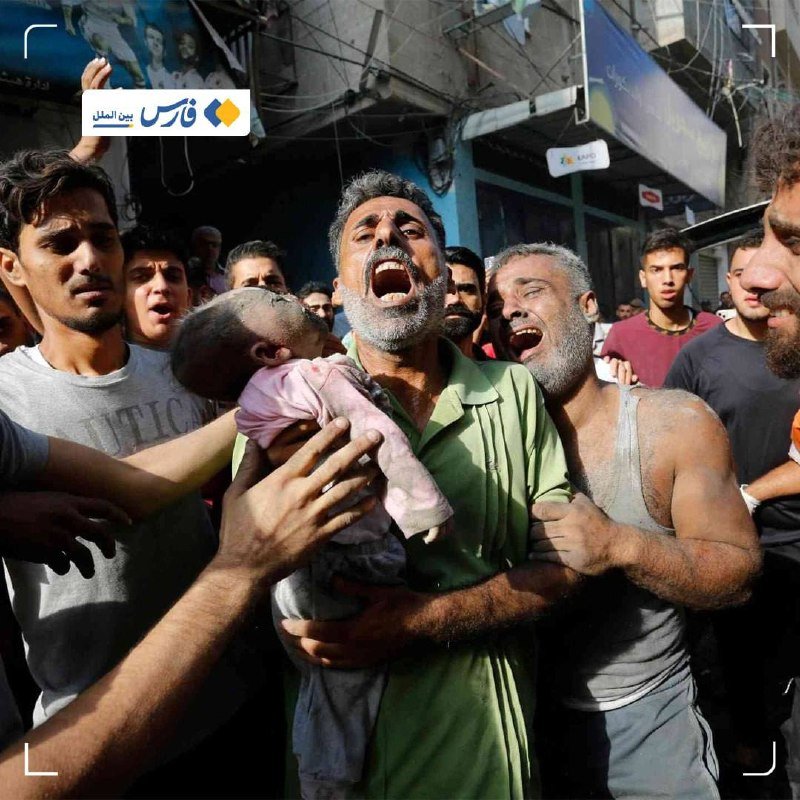
At 23:15 UTC on 28 June 2026, Iranian state-aligned outlets began moving a single line of news with unusual speed: Pakistan's army had launched combined ground and air operations in border areas with Afghanistan, killing at least 29 militants. Within minutes, three separate Telegram channels — Fars News International, Farsna, and Al-Alam — had carried the same claim, in English and Farsi, framing the action as Islamabad's answer to a cross-border threat that has festered for the better part of two years.
The story is small in surface detail and large in what it does not yet say. Pakistan's Information Ministry has not, on the evidence available, confirmed the operation in its own voice. The Taliban government in Kabul has not responded on the record. The 29-fighter figure, repeated across all three Iranian channels, traces back to a single Pakistani military source — and the geography of the action, which border district, which air assets, which militant network, remains unspecified.
What we know, and from whom
The reporting trail runs through three Iranian state-adjacent outlets. Fars News International, an agency long read as a bellwether of the Islamic Republic's regional framing, posted first at 23:15 UTC. Farsna, its Arabic-language service, followed within three minutes. Al-Alam, the Iranian state broadcaster's Arabic channel, replicated the claim by 23:16 UTC. All three attribute the figure — 29 militants killed — to the Pakistani army. None cites a Pakistani spokesperson by name; none links to an ISPR (Inter-Services Public Relations) release or a Twitter/X post from a verified military handle.
That sourcing pattern matters. Pakistan's military is one of the most media-disciplined institutions in South Asia, and operational announcements of this scale normally flow through ISPR or the Prime Minister's Office before they reach foreign wires. The absence of that primary voice, combined with the speed at which Iranian channels are carrying the story, suggests one of two things: either Pakistan is signalling to a specific audience — Tehran, the Taliban's backers, the domestic public — and chose Iranian channels as the conduit, or Iranian outlets have picked up a Pakistani field briefing and amplified it before Islamabad formalised the line. Either reading is plausible; neither is settled.
The pattern underneath
Pakistan's western frontier has been the country's most consistent security liability since the Taliban's return to Kabul in August 2021. The Pakistani Taliban (TTP) and affiliated networks have used Afghan soil as a sanctuary for cross-border attacks into Khyber Pakhtunkhwa and Balochistan. Islamabad has accused the Taliban government of harbouring those networks; Kabul has accused Islamabad of conducting incursions and of forcibly deporting Afghan refugees. The relationship has degraded in slow, visible increments — through 2023 and 2024 with tit-for-tat airstrikes and the expulsions of late 2023 that pushed roughly 1.4 million documented and undocumented Afghans back across the border, and through 2025 with a series of attacks on Pakistani security posts that the military publicly attributed to TTP direction from Afghan territory.
Into that pattern, an announcement of combined ground and air operations is not unusual in kind. It is unusual in disclosure. Previous rounds of action were either denied or quietly acknowledged weeks later. This time the framing is being broadcast, and broadcast through channels whose editorial line is sympathetic neither to Pakistan nor to the Taliban — sympathetic, rather, to a regional equilibrium in which both are problems.
Why Iranian outlets, why now
Tehran's interest in the Pakistan–Afghanistan frontier is older than the current crisis. Iran shares a long, porous border with both countries — particularly with Pakistan's Balochistan province and with Afghanistan's western provinces — and has its own running disputes with the Taliban over water rights on the Helmand and over the treatment of Afghan Shia and Hazara communities inside Afghanistan. Iranian outlets covering a Pakistani operation against militants along the Afghan frontier are not acting as neutral wires; they are flagging a regional event in a way that signals Iranian awareness and, implicitly, Iranian tolerance. That is itself a data point.
It is also a reminder that the regional information ecosystem is not symmetric. A Western wire reading the same set of Telegram posts would likely lead with "Iran reports Pakistan strikes in Afghanistan" and treat the 29-fighter figure with explicit caveat. The Iranian channels lead with the Pakistani claim as fact. Monexus's read is closer to the Western wire standard: the action is real — Pakistan has conducted cross-border strikes before and would do so again — but the framing is curated, and the headline number is a single-source claim that has not yet been independently corroborated.
Stakes and what to watch
The immediate stakes are bilateral. If the Taliban's interim government responds publicly — through its own channels, or via a statement carried by Al Jazeera or Reuters — the diplomatic temperature will rise quickly, and the 29-fighter figure will become a contested statistic on either side of the Durand Line. If Kabul stays silent, the operation will be read in Islamabad as a successful signal that Afghan soil will not remain a free-fire zone for anti-Pakistan networks, and in Tehran as confirmation that both Pakistan and the Taliban are problems to be managed rather than partners to be trusted.
Over a longer horizon, the more durable pattern is the one that has held since 2021: Pakistan and Afghanistan do not have a working diplomatic channel, and the absence of one is what makes ground and air operations the default mode of communication. Until that changes — through a mediator, through a regional compact, or through a Taliban government that credibly disarms TTP — the next announcement of this kind is a question of when, not whether.
This article will be updated when ISPR releases a primary statement, when the Taliban government responds on the record, or when an independent wire confirms or revises the 29-fighter figure. Until then, the sourcing record stands: three Iranian state-adjacent channels, one unnamed Pakistani source, no on-the-ground confirmation available to Monexus at the time of writing.
Wire provenance
This editorial synthesis draws on the following public wire/social posts:
- https://t.me/FarsNewsInt
- https://t.me/farsna
- https://t.me/alalamfa