Putin's Crimea fuel pledge lands as Russia scrambles to reassure a war economy
On 28 June 2026 the Russian president insisted Crimea's fuel needs would be met and damaged energy facilities restored 'with a large margin of safety.' The messaging points to a deeper strain on the peninsula's logistics and on Moscow's domestic credibility.
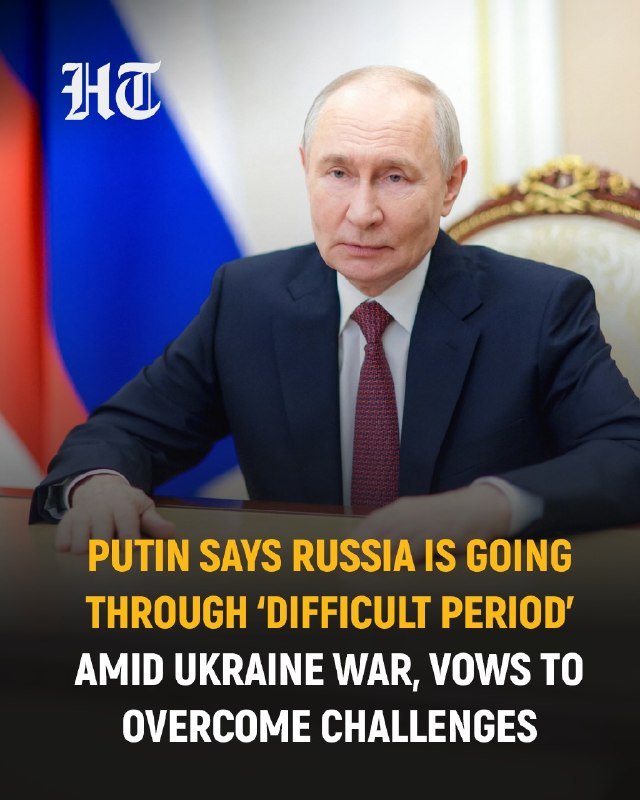
At 19:07 UTC on 28 June 2026, Vladimir Putin used a televised meeting to declare that Crimea's fuel needs would be met and that the peninsula currently held "a several-day supply," according to text posted by the Telegram channel ClashReport within minutes of the remarks. A minute later, the same channel published a second line: "All damaged energy facilities in Russia are being restored quite quickly, and everything is operating with a large margin of safety." By 19:08 UTC the messaging had been sharpened into a single sentence — that fuel deliveries to Crimea would be increased "by land and by sea" — and Euronews's Telegram account had reposted the headline framing: "The fuel shortage in Russia is not critical."
The pattern is familiar and worth naming plainly. When a head of state insists, twice in the span of minutes, that a problem is being resolved, that supply is sufficient, and that damaged infrastructure is operating "with a large margin of safety," the headline is not the policy. The headline is the anxiety underneath it. Russia has spent four years absorbing Ukrainian strikes on refining, pipeline, port and fuel-depot infrastructure, and the public reassurance is itself evidence of the strain it is trying to manage.
What Putin actually said
Three claims were made in the televised remarks, each of them load-bearing. First, that Crimea — annexed in 2014 and supplied since by a combination of the Kerch Bridge, ferry crossings and overland routes from Krasnodar Krai and Rostov — currently holds "a several-day supply" of fuel, an unusually narrow window for a region of nearly two million people that depends on road transport and seasonal tourism. Second, that damaged energy facilities across Russia are being restored "quite quickly" and that the system is operating with "a large margin of safety." Third, and most operationally specific, that deliveries will be increased "by land and by sea," which on a Russian Black Sea coast under periodic Ukrainian naval-drone pressure is a non-trivial commitment.
The Kremlin's strategic-culture feed amplified the political register of the moment separately. At 19:06 UTC, the Strategic Culture Telegram channel published a quote attributed to Putin: "Russia must be a strong and independent country, or there will be NO Russia. They try to remove us as a global power that stands against evil. They will fail this time, they will ALWAYS fail." The juxtaposition of fuel logistics with civilisational framing is not accidental. Moscow's messaging on energy resilience and on national identity is being run through the same channel this week.
The counter-narrative from inside the system
Russian-aligned Telegram channels have themselves reported fuel queues and refinery downtime for months, even as official outlets insist the situation is under control. The reason Putin is publicly re-stating what should be a routine logistical fact — that fuel is moving — is that the routine has broken. The claim of a "several-day supply" is, in effect, an admission that stockpiles are not measured in weeks. A several-day buffer for a peninsula reachable only by a single bridge and a limited ferry capacity is a thin one; it implies that any sustained disruption to a single chokepoint forces an immediate political response from the centre.
The "by land and by sea" formulation is a tell. Russia has repeatedly leaned on the Kerch Bridge as the symbolic and logistical artery of Crimea since 2018, when the first span opened. Adding maritime deliveries as a parallel route does two things at once: it diversifies a vulnerable single point of failure, and it advertises that diversification. The alternative — acknowledging that the bridge alone cannot carry the load — is not a sentence the Kremlin is willing to utter on camera.
Structural frame: a war economy under strike
The deeper story is not about Crimea alone. It is about an economy that has spent the better part of four years under long-range Ukrainian strike pressure on its energy base. Refineries in Tuapse, Ilsky, Slavyansk-na-Kubani and Volgograd have come under repeated attack; export terminals on the Baltic and Black Sea have been disrupted; fuel-price spikes inside Russia have surfaced periodically since 2023. The Kremlin's response has been a combination of price controls, redirected export flows, and increasingly direct public messaging about system stability. The 28 June remarks sit cleanly inside that pattern.
What makes the present moment worth watching is the pairing of two pressures. Inside Russia, refiners and fuel retailers have absorbed margin compression and informal rationing at the regional level; the political cost of queues at filling stations in Rostov or Krasnodar is real, even if under-reported in Western wires. For Crimea specifically, the dependence on a small number of routes means that even a partial interdiction can produce a visible political crisis in days rather than weeks. The phrase "large margin of safety" is therefore less an engineering statement than a piece of domestic political communication aimed at audiences who have good reason to doubt it.
Stakes and what to watch next
The near-term stakes are concrete. If maritime deliveries to Crimea's ports can be sustained through the summer tourism season, the political pressure on the Kremlin eases; if they cannot, the peninsula becomes a recurring news story for reasons Moscow would rather avoid. Either way, the gap between the official line — system operating with a margin — and the underlying admission — "several-day supply" — is the story for now.
There is also a longer arc. Every time the Russian leadership publicly insists that energy resilience is intact, it confirms that the question has risen to the level of presidential attention. That is its own kind of data. The structural read is straightforward: an energy system that did not require reassurance would not be receiving it, and a peninsula that did not depend on a single bridge would not need a parallel sea route announced by name.
How Monexus framed this vs the wire: Western outlets have led on the geopolitical symbolism of Crimea; the Telegram channels cited here lead on the operational detail of supply, queues and routing. Monexus reads both layers together — the political reassurance and the logistics underneath it — and treats the gap between them as the news.
Wire provenance
This editorial synthesis draws on the following public wire/social posts:
- https://t.me/ClashReport
- https://t.me/ClashReport
- https://t.me/ClashReport
- https://t.me/strategic_culture
- https://t.me/euronews