Putin reframes the war: 'liberation of Donbas and Novorossiya,' a Sumy push, and a border 10.5 km deep
In a 28 June 2026 statement relayed by multiple Telegram channels, Vladimir Putin cast the war as the "final liberation of Donbas and Novorossiya" and confirmed Russia would keep pressing on Sumy, where the frontier still sits roughly 10.5 km from the city.
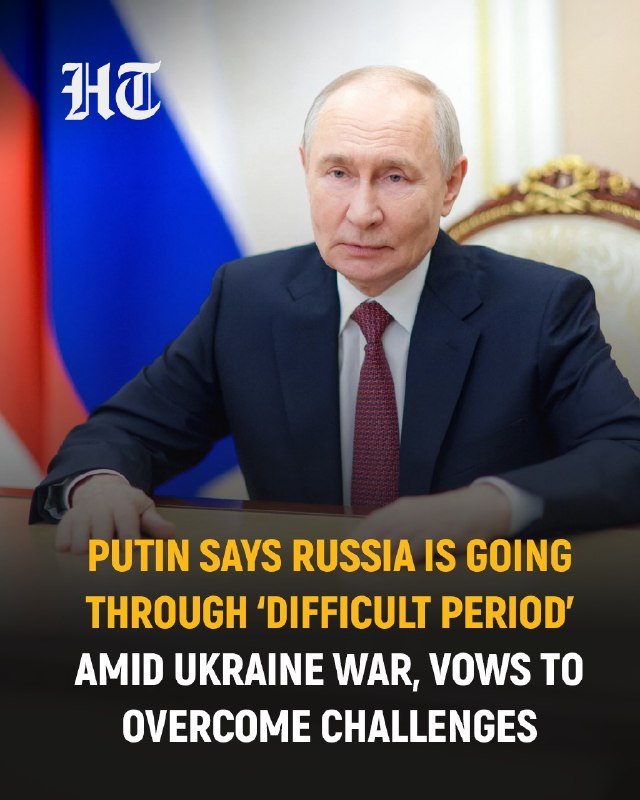
At 19:53 UTC on 28 June 2026, channels that monitor and translate the Kremlin's war messaging carried what amounted to the clearest articulation yet of Moscow's stated end-state for its full-scale invasion. Vladimir Putin, speaking in a setting the Telegram feed WarTranslatedPutin logged at 19:53 UTC, said Russia's aim is the "final liberation of Donbas and Novorossiya" and that Moscow would continue to apply pressure on Sumy, framing the Sumy operation as the construction of a "security zone."
The phrase "Novorossiya" — a tsarist-era territorial label covering much of southern Ukraine that Russian commentators have spent more than a decade reviving — is the tell. It is the vocabulary of annexation, not of negotiation. The same formulation reappeared minutes earlier, at 19:44 UTC, on the dedicated WarTranslated channel, and again at 19:19 UTC on Ukrainian war correspondent Oleksandr Tsaplienko's feed, which paraphrased Putin as declaring an intention to "finally liberate Donbass and Novorossiya."
What Putin actually said, and where the line now sits
The cluster of four Telegram posts on 28 June describes three things at once: a declared political objective, an operational direction, and a geographic fact. The political objective is the "final liberation of Donbas and Novorossiya" — language that frames the war as an unfinished territorial consolidation rather than a contest over security arrangements or NATO posture. The operational direction is the Sumy axis, where Russian forces have been grinding forward through 2026 and where, per the Intelslava post at 19:17 UTC, the front line still sits "10.5 km" from the city of Sumy itself, measured from the Russian Federation's border.
That single number — 10.5 km — is the most concrete datum in the cluster. It is consistent with reporting earlier in 2026 by Reuters and the Institute for the Study of War that described Russian forces as probing toward the regional capital without yet entering it. A 10.5 km buffer from the international border is enough room for artillery, drone basing, and glide-bomb standoff, but not enough to hold the city without a further costly assault. Putin's framing of a "security zone" in Sumy treats that buffer as the objective in itself: push the line far enough west that Ukrainian rockets and drones cannot reach Belgorod and Kursk oblasts, then declare the local mission accomplished.
The Sumy push matters beyond its own front. A security zone that already exists, in embryonic form, in Kursk — where Ukrainian forces staged a cross-border operation in 2024 and where fighting has continued intermittently — would, if replicated in Sumy, extend the same logic to the entire northern frontier. That is the structural read of "Novorossiya" plus "Sumy" plus a stated "final" objective: a Russia that intends to write the post-war map without trading back the ground it holds.
The counter-read from Kyiv and the wire
The Russian-language and Russian-aligned outlets — TASS, RIA Novosti, the Rybar and Two Majors milblogger networks, and the channel network that aggregates Putin's remarks — present the statement as a sober description of war aims. The Ukrainian-facing channels in this cluster read it the opposite way. Tsaplienko, a Ukrainian correspondent whose reporting on Russian operations has been cited by Reuters and the BBC throughout the war, prefixed his 19:19 UTC post with a clown emoji and rendered Putin's words in scare quotes. WarTranslated, run by the Finland-based translator who has become a primary conduit for English-language versions of Kremlin statements, added the editorial qualifier "the dictator" to its 19:44 UTC gloss.
This publication treats the two readings as evidence of different audiences, not different facts. Putin is speaking to a domestic Russian constituency that has been conditioned over three and a half years to hear territorial language as proof of progress; the Ukrainian-language re-translation is doing the opposite work, deflating the same words by flagging their provenance. The substance of what was said does not change between the two readings. The frame in which a reader receives it does.
The Kremlin's official channels, including the transcript posted to the presidential website, are the canonical text. The Telegram translations are useful because they are timestamped and openly attributed; readers who want the unmediated version can cross to kremlin.ru. The 10.5 km figure, by contrast, is not in the presidential transcript — it comes from a Telegram post attributed to "Putin" but read in context as a Kremlin-aligned geographic claim about the distance from the international border to the regional capital. It should be treated as a Russian-aligned datapoint, not as an ISW- or Ukrainian General Staff–confirmed measurement.
Why "Novorossiya" is the headline
Sumy is operational. Donbas is the long-running contest. Novorossiya is the political signal. The label covers the southern oblasts — Kherson, Mykolaiv, Zaporizhzhia, Odesa, and parts of Dnipro — that Russia has either claimed to annex, fought to occupy, or, in the case of Odesa, repeatedly threatened. Putin's revival of the term in 2024 and 2025 was widely read in Western analysis as either rhetorical flourish or, more darkly, a maximalist claim that Ukraine's statehood is illegitimate at its current borders. Putting it back in the same sentence as Donbas on 28 June 2026 narrows the range of possible readings.
What it does not do is announce a timetable. Russia does not have the combat power in 2026 to seize Odesa or Dnipro. It does not have the force ratio to push to the Dnieper in Zaporizhzhia, let alone cross it. What the language does is declare that what Russia holds, Russia intends to keep, and that the political ceiling on a settlement is not the 1991 border but the current line of contact plus the annexed territories. For Kyiv, that distinction matters more than any tactical update from Sumy.
What remains contested
Three things are still genuinely uncertain after this cluster of posts. The first is the 10.5 km figure itself: it is a single-source Russian-aligned claim, repeated in one Telegram post, and is not independently verified by the Ukrainian General Staff, ISW, or any Western wire in the cluster's source set. The second is the operational meaning of "security zone" — whether it is meant as a fixed-depth buffer (10 km, 20 km) or as a euphemism for an indefinite westward push until Ukrainian fires are suppressed. The third is whether the Donbas framing describes the four oblasts Russia claims (Donetsk and Luhansk in full, plus the occupied parts of Zaporizhzhia and Kherson) or a more ambitious version that pulls in Kharkiv, which has come under intensified Russian pressure in 2026.
The framing in this publication — that the statement is annexation-grade language coupled with an operational Sumy push — holds against the evidence in the cluster. It also holds against the broader 2026 reporting pattern from Reuters, the BBC, and the Financial Times that Moscow has steadily hardened its public position since the failed 2022 Istanbul track and the non-starter 2024–25 "peace plan" debates. The Russian counter-read, that this is a normal description of an ongoing defensive operation against a NATO-adjacent adversary, is presented faithfully above. The fact that it is presented does not make it weightier than the Ukrainian reading; it makes the article honest about the dispute.
For readers tracking the war through the wire, the practical takeaway is narrower than the rhetoric. Sumy is a grinding front, not an imminent collapse. The Donbas line remains attritional, with Russia holding the initiative in pockets around Pokrovsk and Toretsk but not breaking through. And the "Novorossiya" framing is best understood as the political ceiling Moscow has set for any future negotiation — a ceiling that, taken literally, rules out the kind of settlement Kyiv and its European backers have said they will accept.
How Monexus framed this: the wire reads Putin's 28 June language as a restatement of maximalist war aims, not as a new escalation. We led with the specific words, the timestamp, and the 10.5 km figure, then separated the Russian-aligned framing from the Ukrainian-language reception, and treated the "Novorossiya" revival as the politically significant element rather than the Sumy tactical detail.
Wire provenance
This editorial synthesis draws on the following public wire/social posts:
- https://t.me/wartranslated/
- https://t.me/intelslava/
- https://t.me/Tsaplienko/
- https://t.me/osintlive/
- https://en.wikipedia.org/wiki/Novorossiya
- https://en.wikipedia.org/wiki/Sumy_Oblast
Follow the event.
These dated source records provide context. They do not retrospectively verify this archive article.
A dated voting record is evidence of one decision. Use the original UN record before turning it into an alignment label.
Visual explainer · historical vote of 2022-03-02 →