Raducanu says she still plans to play Wimbledon, with the draw just days away
The 2021 US Open champion says she intends to take her place in the Wimbledon draw despite a leg problem that has put her participation in serious doubt.
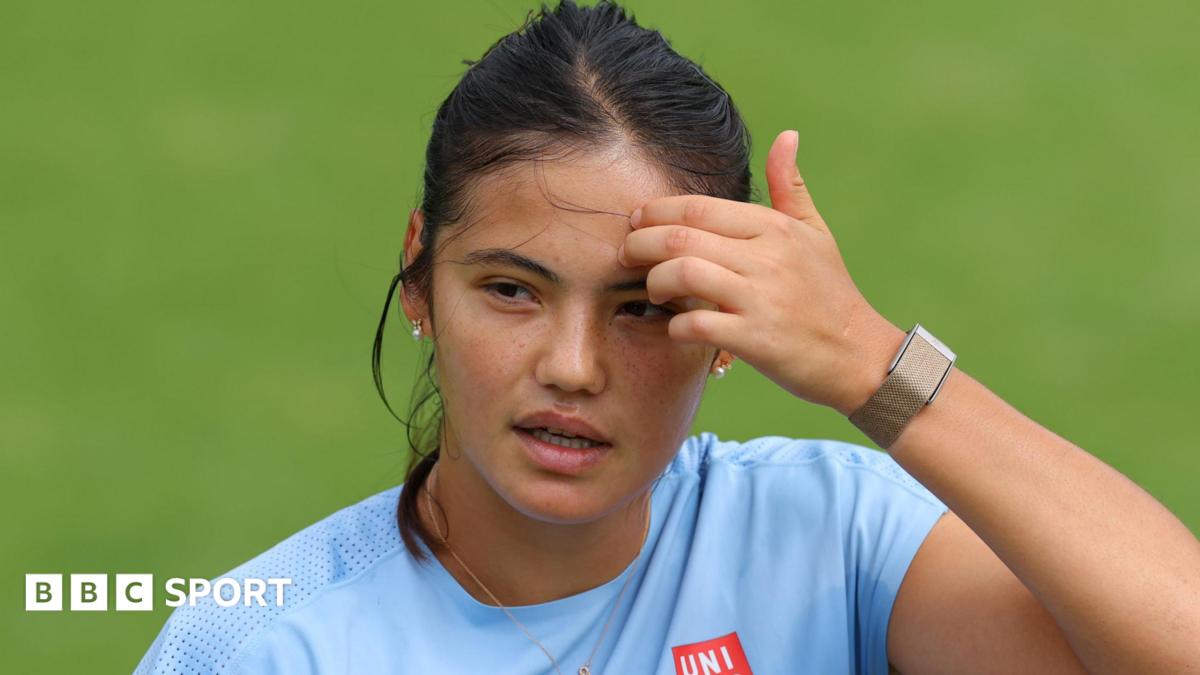
Emma Raducanu has told reporters she "plans to play" at Wimbledon, despite a leg injury that had pushed her participation at this year's Championships into serious doubt. The 23-year-old's status became the dominant storyline of the British grass-court run-up after she withdrew mid-match at the recent Eastbourne event, casting uncertainty over whether she would even be fit enough to take the court at the All England Club when main-draw play begins in early July.
Raducanu's statement, carried by BBC Sport on 28 June 2026, is the clearest signal yet from her camp that she intends to compete rather than default the tournament and protect her ranking on the eve of the US Open summer hard-court swing. It is also a reminder of how thin the margin has become for a player whose career has been defined as much by comebacks as by her 2021 Flushing Meadows breakthrough.
What we know about the injury
The specifics of the leg problem remain limited. BBC Sport reported that the issue forced Raducanu to pull out of her Eastbourne match and triggered concerns about her Wimbledon availability, but the broadcaster did not specify the muscle group involved, the projected recovery window, or whether the issue is a recurrence of a previous complaint. That matters: at this stage of the season, even a soft-tissue strain typically requires at least ten to fourteen days of managed loading before a player is cleared to compete at grand-slam intensity, and grass is the most punishing surface on which to ask a compromised leg to absorb full-length matches.
What is on the record is the player's stated intention. Asked about her Wimbledon status on 28 June 2026, Raducanu said she "plans to play," according to BBC Sport. The phrasing is firm enough to be news — a week out from the draw, tournament organisers need a decision, however provisional, on whether to include her in seedings and scheduling blocks.
The counter-read: caution is still the operative word
"Plans to play" is not the same as "will play," and the gap between the two phrases is doing a lot of work in this story. Raducanu has a documented history of pushing through niggles only to withdraw mid-tournament, and her own medical team will have the final say once she tests the leg on grass in the days before the draw. There is also a ranking argument for pulling out entirely: arriving at the All England Club half-fit, losing in the first round and dropping points is materially worse for her seed at the US Open than a clean withdrawal followed by a two-week rehab block on grass-court surfaces closer to home.
The plausible alternative read is that this is message discipline. By going public with the intention to compete, Raducanu and her camp reclaim the narrative from the Eastbourne withdrawal and reset the price of admission for any future withdrawal — if she does pull out, it becomes a medical event rather than a fitness failure. Either reading is consistent with the available reporting.
The structural frame
Raducanu's career has, at multiple points, turned on a single decision: whether to compete hurt and absorb the consequences, or to withdraw and protect a longer arc. The 2021 US Open run was built on the first of those calculations. Several subsequent injury-interrupted seasons were shaped by the second. The current moment sits inside that same pattern, and the British sporting public has learned to read it as a recurring question rather than a one-off dilemma.
There is also a quieter structural point about women's grass-court tennis in 2026. The pre-Wimbledon calendar is short, the surfaces are demanding, and the players who arrive at the All England Club with momentum tend to be the ones who managed their loads intelligently across the clay-to-grass transition. Raducanu's injury troubles are not unique — they are the modal experience of an elite tour — but the spotlight on her case is.
Stakes and what to watch
If Raducanu plays, the immediate question is whether she can survive three best-of-three-set matches against seeded opposition on a leg that has already cost her at least one Eastbourne appearance. If she withdraws, the question is whether she can be ready for the North American hard-court swing and, by extension, whether her season retains a coherent centre of gravity. The draw itself lands on Friday 3 July 2026; first-round matches begin the following Monday.
The thinner note in this story is uncertainty. BBC Sport has not, in the 28 June report, named the specific injury, the expected recovery window, or the medical team's formal clearance status. Those details will emerge, if at all, when Raducanu next appears on a practice court at the All England Club — and on that evidence, more than on any interview, the eventual decision will turn.
This publication framed Raducanu's statement as a stated intention rather than a confirmed participation, on the basis that "plans to play" and "will play" remain materially different claims and the medical specifics have not yet been disclosed.