Russell ends 112-day wait in Austria as Verstappen's pressure falls short
A controlled drive at the Red Bull Ring gave George Russell his second win of 2026 and his first since the season opener, breathing life back into a Mercedes campaign that had flatlined for 112 days.
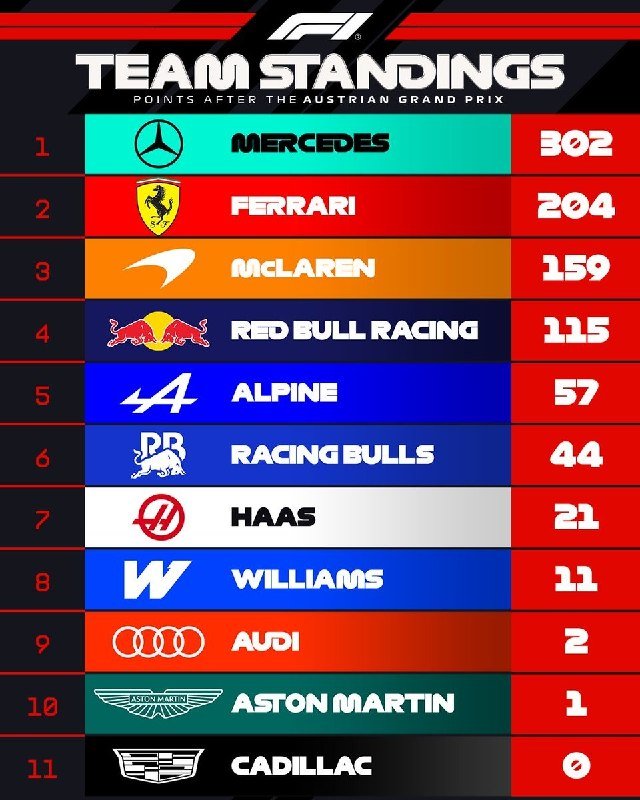
George Russell held his nerve at the Red Bull Ring on Sunday afternoon, fending off Max Verstappen to take the Austrian Grand Prix and end a victory drought stretching back to the season-opening round. The Mercedes driver crossed the line on 28 June 2026 with Verstappen slotting into second, a result that converts Russell's qualifying pace into points and, more importantly for the championship arc, into momentum.
A 112-day gap between wins is the kind of stat that defines a season. For Russell, it had begun to look like the kind of number that defines a career trajectory. The Austrian result does not settle the title fight, but it sharpens the terms on which that fight will be fought from here.
How the race unfolded
Russell controlled the afternoon from the front after qualifying, absorbing Verstappen pressure through the middle stint and managing tyre wear well enough to keep the Red Bull at arm's length in the closing laps. According to BBC Sport's race report published at 14:45 UTC on 28 June, the contest settled into a tense duel rather than a Verstappen procession — a notable departure from the script most observers expected at Red Bull's home circuit.
Sky Sports, in its 14:30 UTC write-up, framed the result as the first reinvigoration of Russell's championship challenge since round one. That language is deliberate: through the spring, Mercedes had looked like a works team running on potential rather than points, with Russell extracting the most from a car that had not always rewarded him. Austria is the first weekend in three months where the machinery and the driver delivered in the same hour.
The Verstappen read
Red Bull's reading of the afternoon is more complicated than the gap suggests. Verstappen pushed, pressurised, and finished second at a circuit where his team historically expects to dominate. ESPN's 16:09 UTC report noted that Verstappen challenged Russell throughout but could not convert the pressure into a passing opportunity — a distinction that matters in the points column more than in the headlines.
The counter-frame here is straightforward: Red Bull still has the car to drag Verstappen onto the podium on circuits where Mercedes' qualifying edge disappears. Austria flattered Russell because pole position on this layout is half the race. On a track where Red Bull's race-trim advantage compounds over stints, Verstappen remains the favourite. The championship is not yet a two-horse race in anyone's model except the most optimistic Mercedes-flavoured one.
What the result does to the standings
A second victory of the season, with Verstappen the only driver to finish within striking distance, recalibrates the title conversation without rewriting it. Russell now has the statistical counter-argument to any suggestion that the opening round was a one-off: two wins, both delivered under pressure, both against the field's strongest car on the day. That is a different driver profile from a points leader who only wins from the front on Sundays where nobody else can reach him.
It also resets the intra-team dynamic at Mercedes. Through the spring stretch, the narrative had drifted toward a team juggling two competitive cars and asking one of them to play team-mate. With Russell scoring maximum points on a weekend when the alternative was a Verstappen cruise, the arithmetic of self-interest has shifted back in his direction.
Stakes and what to watch next
The structural question this result raises is whether Austria was a track-specific fluke or the first sign of a Mercedes upgrade cycle landing at the right moment. The Red Bull Ring rewards front-row starters and clean air, and Russell had both. The next two circuits on the calendar will provide a harder test: layouts where Red Bull's race-pace edge typically reasserts itself, where overtaking is harder, and where Verstappen's tyre-management strengths compound over stints.
For Russell personally, the stakes are equally clear. Drivers who go three months between wins tend to either break back through in their next strong weekend or drift into a quieter tier of the championship. Sunday belongs to the former category. The press will reset around it, the team radio archive will record it, and — most importantly for the title arithmetic — the points ledger will treat it like any other maximum haul.
What remains uncertain is whether Mercedes has closed the underlying performance gap to Red Bull or simply optimised the conditions on a particular afternoon. The sources covering the race did not offer detailed readouts on long-run pace, and Verstappen's body language after the chequered flag — present but not despairing — suggests Red Bull's internal read is that the margin between the two cars remains narrow rather than reversed. The next round will tell.
How Monexus framed this: wires led on Russell's relief and the 112-day stat; this piece treats the number as a useful framing device while reserving judgment on whether Mercedes has actually closed the gap to Red Bull, since the Red Bull Ring's track characteristics flatter front-row starters and the sources do not establish a structural performance shift.