Russia weighs fuel imports as domestic supply tightens, Novak says
Deputy Prime Minister Alexander Novak says Moscow may import fuel and tighten diesel export curbs to stabilise a strained domestic market — a notable reversal for a country that built its budget around being a net exporter.
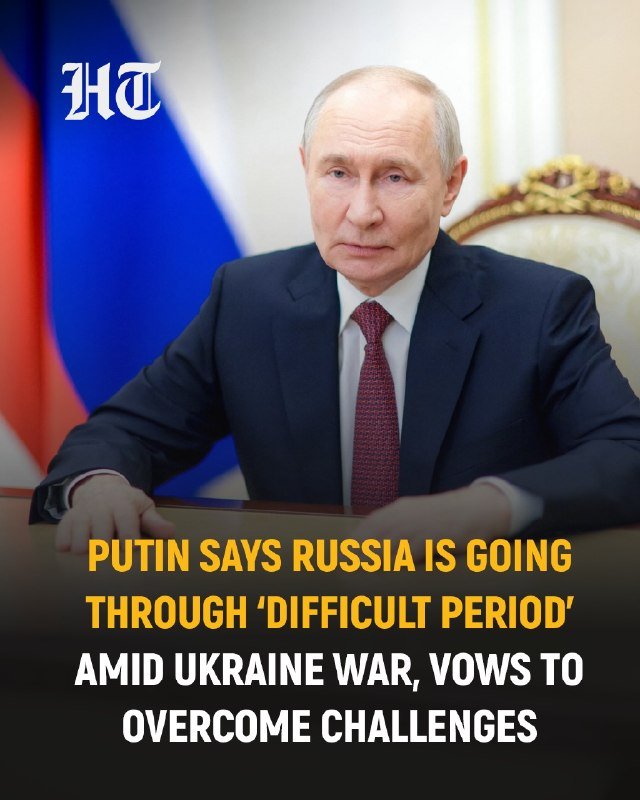
Russia's Deputy Prime Minister Alexander Novak said on 28 June 2026 at 13:26 UTC that the government may begin importing fuel and tighten restrictions on diesel exports to stabilise a domestic market that has come under visible strain in recent weeks, according to a Telegram post by the open-source channel Clash Report.
The remarks — relayed in parallel by the channels WarTranslated and Osintlive in the same hour, citing Novak directly — mark a notable reversal in posture for a country whose federal budget has for years rested on the assumption that it would be a net exporter of refined product. The fact that a senior Russian official is publicly entertaining imports as a remedy tells the reader something the headline alone does not: domestic supply is no longer a settled assumption.
What Novak actually said
Clash Report's 13:26 UTC post frames the announcement as a two-part instrument: imports as a backstop, and tighter diesel export curbs as a brake on outbound flows. WarTranslated's 13:08 UTC post carries the same substance in slightly different language — that Russia "may start importing fuel to stabilise the market" — while Osintlive at 13:20 UTC attributes the same line to Novak and links to a WarTranslated tweet that documents the original statement.
The three posts converge on three concrete elements: the policy tool under consideration (fuel imports), the parallel measure (diesel export restrictions), and the named decision-maker (Deputy Prime Minister Alexander Novak). What the available reporting does not specify — and what the threads do not resolve — is the scale of the prospective imports, the duration of any export curb, or the precise triggers that would activate the policy. Readers should treat the announcement as a policy option under consideration, not as a confirmed order already in force.
Why this matters beyond Russia's borders
For most of the past two decades, Russia has been the world's second-largest exporter of crude oil and one of the largest exporters of diesel, with seaborne flows through the Baltic and Black Sea ports forming a structural pillar of global product supply. A sustained shift in either direction — Russia importing fuel, or Russia throttling diesel outbound — has second-order consequences well beyond its borders.
For European buyers who still receive some Russian product under the carve-outs and price-cap regime introduced after the full-scale invasion of Ukraine in February 2022, the immediate signal is tighter availability and a higher floor on Mediterranean and Baltic loading prices. For buyers in the Global South — India, Turkey, parts of North Africa and the Gulf — who have leaned on discounted Russian barrels and refined product as Western sanctions reshaped trade flows, the same signal translates into renegotiated contracts and a return of the price-premium calculus that the sanctions architecture was designed to suppress.
The diesel sub-market is the more sensitive of the two. Diesel is the fuel that moves trucks, harvests crops, powers generators and runs much of the heavy machinery on which both industrial and agricultural economies depend. When Russia — itself a diesel exporter of significant scale — moves to restrict outbound flows, the effect is not abstract: it tightens an already-finite pool and pushes price formation upward at the margin.
Counterpoint and structural reading
Two readings of the announcement are plausible, and the available reporting does not yet let this publication adjudicate between them. The first is the charitable read: that this is a routine mid-year calibration, a state managing short-term refinery maintenance and seasonal demand swings in the way that any large producer periodically does. The second is the structural read: that this is a tell, and that the underlying issue is sustained — the cumulative effect of sanctions on access to Western refining technology and catalyst supply, the wear on ageing Russian refinery assets, and the diversion of product to front-line logistics associated with the war against Ukraine.
The charitable reading has historical precedent. Russia has, in past cycles, briefly restricted product flows during turnaround seasons at major refineries, only to lift the curbs when maintenance windows close. The structural reading is harder to dismiss out of hand: Russian refinery utilisation has been the subject of sustained analytical attention in industry publications for several years, and the war has redirected a meaningful share of inland product to military logistics, away from the civilian wholesale market.
The honest position this publication can take on 28 June 2026, on the basis of the available reporting, is that the announcement itself is documented and attributed to a named official, and that the underlying cause — whether cyclical or structural — is not yet specified by the three channels that have carried the story. Additional reporting from Russian-language wire services, from industry analysts who track refinery throughput, and from the trade press covering Baltic and Black Sea product flows will be needed to settle the question.
Stakes and what to watch next
If the policy is enacted and sustained, the immediate winners are Russian domestic consumers and the industrial users — farmers, freight operators, mining operators — who have been exposed to price spikes at the pump and at the wholesale rack. The immediate losers are foreign buyers who have come to rely on Russian diesel as a marginal supplier, and who will now face the choice of paying more, sourcing from alternative refiners in the Middle East, India and Southeast Asia, or drawing down strategic inventories.
The watch-list for the coming weeks is narrow and concrete. First, whether the Russian government publishes a formal decree or government resolution codifying the policy, which would move it from signal to instrument. Second, whether Russian railways and pipeline operators begin issuing revised loading notices to shippers and traders, which is the operational signature of a curb taking effect. Third, whether Baltic and Black Sea diesel loadings show a measurable week-on-week decline relative to the rolling average for the previous two months — the empirical signature that would tell us whether the policy is being observed in practice rather than merely announced in principle.
For readers watching the global product market, the takeaway is that the assumption of Russia as an unrestricted net exporter — already heavily qualified by the sanctions and price-cap regime — has now been formally qualified by Moscow itself. That is a small data point, but it is a real one, and it has the structure of an early indicator rather than a terminal event.
Desk note: Monexus treated the announcement as a documented policy option under consideration by a named Russian official, carrying three corroborating channels (Clash Report, WarTranslated, Osintlive) and a primary social-media post by WarTranslated. We have not asserted a cause — cyclical refinery maintenance versus structural pressure from sanctions and war logistics — because the available threads do not specify one. Where Reuters, Bloomberg or industry trade press subsequently confirm or rebut the announcement, this publication will update accordingly.
Wire provenance
This editorial synthesis draws on the following public wire/social posts:
- https://t.me/ClashReport
- https://t.me/wartranslated
- https://t.me/osintlive
- https://twitter.com/wartranslated/status/2071219117168689415