Strait of Hormuz: how a reported drone strike on shipping rewrote a four-day-old ceasefire
A reported Iranian drone attack on cargo shipping in the Strait of Hormuz, followed by US strikes, has collapsed a ceasefire days old — exposing how thin the de-escalation really was.
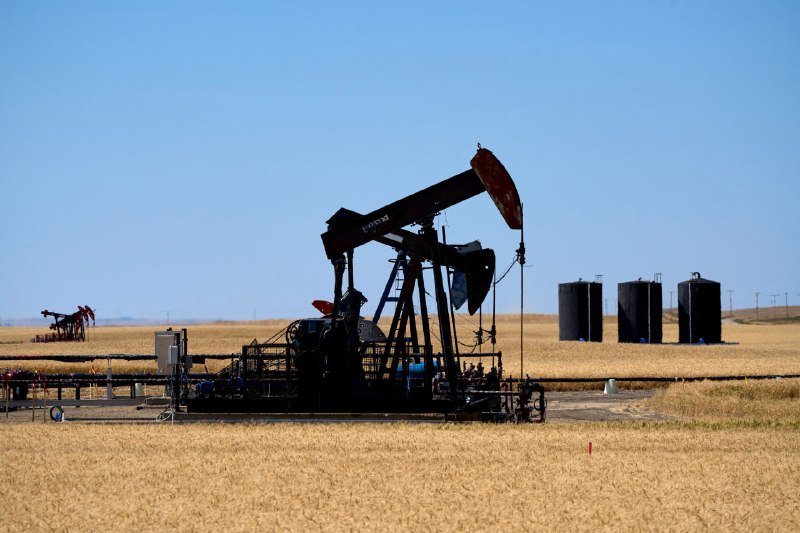
A four-day-old ceasefire between the United States and Iran effectively collapsed on 26 June 2026, when President Donald Trump accused Tehran of launching one-way attack drones at shipping in the Strait of Hormuz. Within roughly 30 hours, US forces were reported to have struck targets in the same waterway, and Iranian state-aligned media were broadcasting that "the enemy's presence" in the strait and the wider Persian Gulf was back at the centre of the confrontation. What began as a reported maritime incident had, by the evening of 27 June, reopened the Gulf corridor as an active military theatre.
The episode is the clearest evidence yet that the de-escalation architecture around the Iran file was built on a thinner foundation than the public statements suggested. It also shows how quickly a single kinetic incident can override a politically convenient truce — and how the corridor itself, more than any negotiating table, sets the tempo.
The 26 June incident, in the language of the wires
According to a Cointelegraph wire carried on Telegram at 16:20 UTC on 26 June, Trump said Iran had launched four one-way attack drones at ships in the Strait of Hormuz, that one drone struck a cargo vessel, and that US forces had intercepted the other three. He characterised the action as a violation of a ceasefire agreement. A separate post on X from Polymarket at 16:08 UTC the same day repeated the framing, quoting Trump accusing Iran of "foolish violations" of the ceasefire. Unusual Whales, also on X, carried the same accusation shortly after, at 16:58 UTC.
The Iranian side has not, on the evidence available to Monexus, confirmed the strike in those terms. Iranian state media — Tasnim, IRNA and others — would normally be expected to either acknowledge or deny an action of this scale within hours. As of 28 June, the only Tasnim-sourced item that has appeared in the thread is a line from Tasnim Plus dated 27 June at 22:08 UTC asserting an "enemy's presence in the Strait of Hormuz and the Persian Gulf," a framing consistent with Iranian messaging that treats US naval activity itself as the provocative act. That asymmetry — a US president naming a strike on camera, an Iranian state apparatus broadcasting a presence-based narrative rather than confirming or denying the specific drone launches — is itself a piece of the story.
The American response, and the ceiling on denial
Just over a day later, on 27 June at 21:38 UTC, the Telegram channel Insider Paper reported that the US military had launched strikes in the area of the Strait of Hormuz. The report was carried as breaking; the post did not, on its face, identify the targets, the units involved, or the platform type. That gap is not unusual at the open of a strike cycle. Initial wire traffic is written for speed, and the precise target set usually emerges in the following 12 to 36 hours through Pentagon briefings, CENTCOM releases, and confirmation from independent journalists with regional contacts.
What is already clear is the structural fact: a US administration that had been arguing, days earlier, that a ceasefire was holding now found itself conducting strikes inside one of the most sensitive maritime corridors on Earth, against a country with which it had publicly claimed to be in de-escalation mode. The political cost of that sequence — regardless of which side fired first — falls disproportionately on the side that claims the higher diplomatic standing, because it is the side that built the framework and then had to publicly dismantle it.
Why this corridor matters more than the communiqués
Roughly a fifth of global seaborne crude passes through the Strait of Hormuz in normal conditions; that share rises during periods when alternative routes through the Red Sea or around the Cape of Good Hope are constrained. Any sustained disruption transmits into insurance war-risk premia, tanker freight rates, and the prompt-month prices of Brent and Dubai benchmarks within hours, not days. That transmission is the reason both Washington and Tehran have historically treated incidents in the strait as escalatory events rather than tactical nuisances — even when each individual incident can be plausibly described as a misunderstanding.
This is also why a ceasefire around the Iran file, even one described as "holding," is structurally fragile. The diplomacy tends to be built around nuclear sites, sanctions architecture, and prisoner exchanges — items that can be checked off a list. The maritime domain is different. Naval presence is continuous, the rules of engagement are exercised in real time, and the difference between a routine intercept and a hostile act is often a judgement call made by a captain on a bridge, not by a negotiator in a hotel ballroom. A ceasefire that is observed in Geneva and Vienna but tested every hour in the strait is, at best, a partial ceasefire.
What the framings on each side actually say
The American framing — as expressed by Trump in the Cointelegraph and Polymarket items of 26 June — is straightforward: Iran broke a deal, and the United States responded. It is a narrative that sits comfortably inside a domestic political frame in which the president projects both strength and dealmaking credibility. The Iranian framing — as expressed by Tasnim Plus on 27 June — is the inverse: the United States is the constant military presence in the Gulf, Iranian territory and waters are the object of that presence, and any incident is downstream of that posture rather than of Iranian intent. Neither framing is wrong in its internal logic; both are selective about which facts they elevate.
A neutral reading of the available material has to hold three things together at once. One, the US president has, on the public record, named a specific Iranian action — four one-way attack drones, one cargo vessel hit, three intercepted — and that specificity carries weight because it is the kind of detail that invites easy refutation if false. Two, Iranian state media has not, on the evidence currently in the thread, either confirmed or denied that specific action, which is itself a posture. Three, US strikes followed within roughly 30 hours, and the Insider Paper wire describes them in the area of the strait without naming the targets — a description that is consistent with either a proportionate response to a maritime incident or with a wider operation that had been queued regardless.
What remains contested, and what does not
The factual record is uneven. It is established, on the public record, that Trump publicly accused Iran of a drone attack on shipping on 26 June. It is established that US strikes were reported in the same waterway on 27 June. It is established that Iranian state-aligned media framed the situation around US naval presence. It is not established, from the sources in front of Monexus, which specific Iranian unit or proxy launched the drones, whether the cargo vessel that was reportedly struck suffered casualties, what the target set of the US strikes was, or whether any third-party navy — Omani, Emirati, French — was involved in either intercepting drones or coordinating deconfliction. The thread also does not contain an Iranian government statement specifically denying or confirming the 26 June action.
A serious account of this episode has to acknowledge that the evidentiary base, at this moment, is dominated by American political statements and by an Iranian state-media framing of presence rather than action. Independent verification — AIS tracking of the affected vessels, satellite imagery of strike craters or damage, statements from the cargo ship's flag state, footage from the bridge — would be needed before any of the more dramatic claims harden into history.
Stakes over the next two weeks
The immediate stakes are maritime and economic. Insurance war-risk premia for the strait will rise; some tanker operators will reroute via the Cape of Good Hope, adding 10 to 14 days to voyage times and tightening tonnage supply on other routes; benchmark crude prices will move in proportion to the perceived probability of sustained closure. The political stakes are larger. A US administration that markets itself on dealmaking has now had a deal publicly fail inside a week; an Iranian government that cannot afford a conventional military contest with the United States has nonetheless retained the ability to set the tempo in the strait, where its drone and fast-boat capabilities are most credible. The diplomatic stakes are subtler still: any future ceasefire will be negotiated in the shadow of this collapse, and the terms any Iranian negotiating team can credibly accept have narrowed.
The structural lesson is the one that has applied to the Gulf since at least the 1980s: the corridor is the constant. Communiqués are temporary. The next 72 hours will tell whether the 27 June US action was a discrete response to a discrete provocation, or the opening of a longer cycle in which the Strait of Hormuz returns to being the centre of the Iran–US relationship by default.
Desk note: Monexus framed this as the collapse of a four-day ceasefire rather than as an isolated maritime incident, because that framing — grounded in the dated sequence of public accusations on 26 June followed by reported strikes on 27 June — is what the wire evidence supports. The Iranian state-media presence-based framing is reported in its own terms rather than paraphrased into Western wire language, and the limits of the current source set are stated openly rather than papered over.
Wire provenance
This editorial synthesis draws on the following public wire/social posts:
- https://t.me/tasnimplus
- https://t.me/insiderpaper
- https://x.com/unusual_whales/status/
- https://t.me/cointelegraph
- https://t.me/cointelegraph
- https://x.com/polymarket/status/