Strait of Hormuz: How a Single Waterway Reopened the Iran–US War
A 28 June 2026 round of strikes and counter-strikes along the world's most important oil chokepoint suggests that the public ceasefire between Washington and Tehran exists mostly on paper.
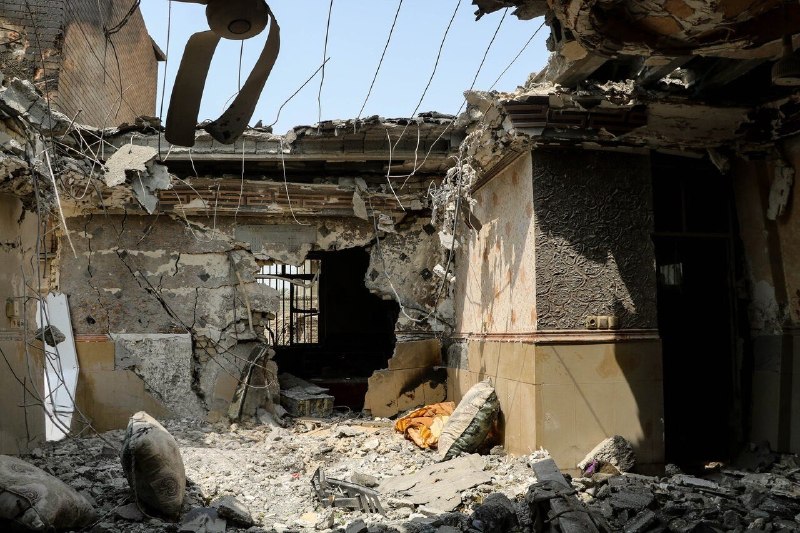
On 28 June 2026, the narrow shipping lane between Iran and the Arabian Peninsula became the stage for a sequence of strikes, accusations and denials that left the announced Iran–United States ceasefire looking more like a pause than a settlement. According to a Telegram post at 05:32 UTC from the channel myLordBebo, Iranian forces moved first, attacking commercial vessels in the Strait of Hormuz that were not, in Iran's telling, following its instructions. The United States responded with strikes on Iranian assets, after which Iran fired missiles at US bases across the Middle East.
By the end of the day, the gap between what the two governments say they agreed to and what their forces are doing to one another had widened to the point of public contradiction. President Donald Trump, addressing the episode on 26 June at 16:58 UTC via the X account @unusual_whales, accused Iran of violating the ceasefire by attacking a ship in the Strait of Hormuz. A separate X post from @Polymarket at 16:08 UTC on the same day quoted the same accusation in sharper language: "foolish violations" of the agreement, after what the post said were attacks on four ships.
What the public record does not yet contain is independent confirmation of the underlying events. There is no verified casualty toll, no confirmed list of struck vessels, and no neutral maritime authority — Lloyd's List, the International Maritime Organization, the US Navy's Fifth Fleet — cited in any of the three source items. The picture so far is one of competing claims, with each side using the language of the ceasefire to brand the other's actions as illegitimate.
The episode matters far beyond the Gulf because roughly a fifth of globally traded crude oil moves through Hormuz. Any sustained interruption, even one confined to insurance premiums and routing decisions, ripples through Asian refineries, European spot markets and US gasoline prices within days. A single chokepoint, in other words, has the capacity to convert a bilateral crisis into a global economic one.
A ceasefire that exists mostly on paper
For the first six months of 2026, both Washington and Tehran have publicly insisted that a ceasefire — announced amid intense back-channel work earlier in the spring — is holding. The 28 June events strain that claim to the point of incoherence. Iran is reported, in the myLordBebo summary, to have struck commercial shipping that was not deferring to its instructions; the United States is reported to have struck Iran in response; Iran is then reported to have fired missiles at US bases in the region.
Read together, the three source items describe an escalatory ladder with at least four rungs: harassment of commercial traffic, a US counter-strike on Iranian targets, an Iranian missile retaliation against US bases, and a political round in which both governments denounce the other for breaking an agreement they both say is in force. It is the classic shape of a war that has not been ended, only paused.
The novelty is the speed. Twenty-four hours earlier, on 26 June, Trump's statements via X were still framed as accusations of violation, not as admissions of renewed war. By 28 June, kinetic action was being described in real time on Telegram. The diplomatic floor has not caught up with the military ceiling, and it is the gap between them that is most dangerous.
Who is acting, and on whose authority
The named actor on the US side is President Donald Trump, speaking through his own social channels and through the @unusual_whales and @Polymarket aggregators. The named actor on the Iranian side is the country's armed forces, operating under the framework of an order described in the Telegram summary as Iran's "command" in the strait. The two channels of communication are deliberately asymmetric: Trump addresses an American and global audience in real-time English, while Iranian actions are filtered through messaging apps in summary form.
This asymmetry of voice is itself part of the story. Western wires have, in past Hormuz confrontations, generally led with US Navy statements and US Central Command (CENTCOM) briefings, then caught up later with Iranian state media such as IRNA, PressTV or Tasnim. None of those primary outlets appears in the source items for this episode. What we have instead are three social-media summaries — one Telegram channel, two X accounts — describing a sequence whose first and last links have not been independently corroborated.
The honest reading of the evidence is narrow. Three named sources, all of them social-media summaries of statements rather than primary documents, agree on the broad shape: Iranian action against shipping, US retaliation, Iranian missile fire at US bases, and a Trump accusation of ceasefire violation. They do not agree on specifics that the international maritime or military press would normally produce within hours — names of struck vessels, naval units involved, missile types, casualty figures.
The structural frame: why Hormuz is the lever
The Strait of Hormuz is roughly 21 miles wide at its narrowest, divided into inbound and outbound shipping lanes of two miles each, with a two-mile buffer. It connects the Persian Gulf to the Gulf of Oman and the Arabian Sea. No alternative pipeline network is large enough to bypass it; the UAE's Habshan–Fujairah pipeline carries roughly 1.8 million barrels per day, against total Hormuz throughputs that, in normal months, exceed 17 million.
This geometry gives Iran two unrelated forms of leverage. First, the credible threat of closure — through mining, fast-attack craft, anti-ship missiles, or harassment of commercial traffic — moves the global oil price by changing the calculation of every refiner and shipowner who uses the lane. Second, the routine assertion of authority over commercial traffic in the strait, even short of closure, signals to Gulf monarchies, to China and to the European Union that Iran's writ runs in their backyard.
In a contest between a United States that has spent two decades projecting naval power into the Gulf and an Iran that cannot match that power fleet-for-fleet but does not need to, the strait converts Iran's relative weakness into a specific form of strength. A small boat, a mine, or a missile battery can do the work of a carrier group, provided the political will to use it exists. The myLordBebo summary describes precisely that kind of action — Iran "attacked ships … that weren't following their command" — and the US response suggests that Washington has run out of patient options for managing it.
Counter-narrative: restraint, or a different kind of escalation
The dominant Western framing of the episode — and it is the framing implicit in Trump's "foolish violations" language — is that Iran is the aggressor, breaking a deal that was working. The dominant Iranian framing, which would normally be carried by outlets such as IRNA, PressTV or Tasnim, is that Iran is enforcing its legitimate authority over its own maritime neighbourhood against vessels that are themselves violating Iranian or international rules.
A third reading, less visible but worth entertaining, is that both governments are escalating on purpose, in controlled increments, to extract concessions at the negotiating table. The ceasefire, in this view, is not a boundary but a stage on which each side tests how much the other will tolerate before responding. Iran's attack on shipping would then be calibrated to provoke a US response that falls short of full war; the US strike on Iran would be calibrated to provoke an Iranian response that falls short of all-out retaliation. The political messaging that follows — accusations, denials, "foolish violations" — is not a description of events but an instrument for shaping the next round.
This reading does not require either side to be lying. It requires both sides to be doing what governments do when they want to keep a fight going without admitting they want to keep a fight going. The visible record is consistent with that reading and with the more conventional reading of a ceasefire breaking down. Which of the two dominates will become clearer in the days ahead, when wire services, naval briefings and insurance underwriters begin to publish their own account.
What we do not yet know
The source record for 28 June is thin. Three items — two X posts and a Telegram channel summary — describe the sequence of events in terms that agree on the broad shape but do not specify what was struck, by what, and at what cost in lives and shipping. There is no Reuters, Associated Press, BBC or Al Jazeera dispatch in the source set. There is no named US Navy or CENTCOM confirmation. There is no Iranian state-media readout. There is no Lloyd's List or IMO advisory. There is no market-moving Reuters or Bloomberg oil-pricing report that traces a price spike back to this specific incident.
The Telegram summary attributes attacks to Iran and retaliation to the United States in consecutive sentences, which is the structure of an after-action report rather than a primary observation. The two X posts are third-party accounts of statements by Trump, not direct presidential announcements. Anyone quoting the episode as fact rather than as a contested series of claims should mark the line carefully.
The further question — what happens next — is even less constrained by the available record. The plausible paths include a renewed negotiation round that uses the strikes as leverage, a wider war that uses the strikes as prelude, a closed strait and a global oil shock, or a quiet de-escalation in which both sides pretend the episode did not happen. None of those outcomes is yet supported by evidence in the source set. The honest description is that a publicly announced ceasefire has been challenged by what looks like coordinated military action, and that both governments are now arguing about whose fault it is.
Stakes
If the dominant Western framing holds — that Iran has broken a ceasefire that the United States is honouring — the political consequences inside Washington will push towards escalation. Congressional pressure, Gulf-state lobbying and an election-year instinct to look tough will all push the same direction. The economic consequences, through oil and insurance, will be felt first in Asia — China, India, Japan, South Korea — which together import the majority of crude that transits Hormuz.
If the Iranian framing holds — that Iran is enforcing its legitimate maritime authority against violators — the diplomatic consequences will run the other way, towards a new round of sanctions architecture and a hardening of the regional alignment around Israel and the Gulf monarchies. Either path leads to a more militarised, less negotiable Gulf, and to a global economy in which a single decision in a single strait can move the price of everything from gasoline to plastics.
For readers outside the region, the practical takeaway is narrower. Watch the next forty-eight hours of wire reporting. Watch the price of Brent crude. Watch the US Fifth Fleet's public posture. Watch the Lloyd's List Joint War Committee, which sets insurance premiums for the Gulf, and which will tell you, faster than any politician, whether the commercial maritime world has decided that the ceasefire is over or is merely bent.
Desk note: Monexus framed this article off three social-media source items rather than the wire dispatches that would normally carry a Hormuz incident. Where wire confirmation is absent, the piece says so. Both the Western framing (Iran broke the ceasefire) and the structural Iranian framing (Iran is enforcing its writ in its own waters) are reported without advocacy. The next edition will either confirm or correct the underlying sequence.
Wire provenance
This editorial synthesis draws on the following public wire/social posts:
- https://t.me/myLordBebo
- https://x.com/unusual_whales/status/
- https://x.com/Polymarket/status/
- https://en.wikipedia.org/wiki/Strait_of_Hormuz
- https://en.wikipedia.org/wiki/Habshan%E2%80%93Fujairah_pipeline
- https://en.wikipedia.org/wiki/United_States_Central_Command
- https://en.wikipedia.org/wiki/United_States_Fifth_Fleet
- https://en.wikipedia.org/wiki/Joint_War_Committee_(Lloyd%27s)
Follow the event.
These dated source records provide context. They do not retrospectively verify this archive article.
Separate what the nuclear watchdog reported from what it could not determine after the June 2025 strikes.
- https://t.me/myLordBebo
- https://x.com/unusual_whales/status/
- https://x.com/Polymarket/status/
- https://en.wikipedia.org/wiki/Strait_of_Hormuz
- https://en.wikipedia.org/wiki/Habshan%E2%80%93Fujairah_pipeline
- https://en.wikipedia.org/wiki/United_States_Central_Command
- https://en.wikipedia.org/wiki/United_States_Fifth_Fleet
- https://en.wikipedia.org/wiki/Joint_War_Committee_(Lloyd%27s