Trump heads into a stacked July: NATO summit, USMCA cliff, and a Polymarket that knows it
A prediction market on who Trump will phone in July, a July 7–8 NATO summit in The Hague, and a July 1 USMCA review have collided into one of the densest diplomatic windows of the year.
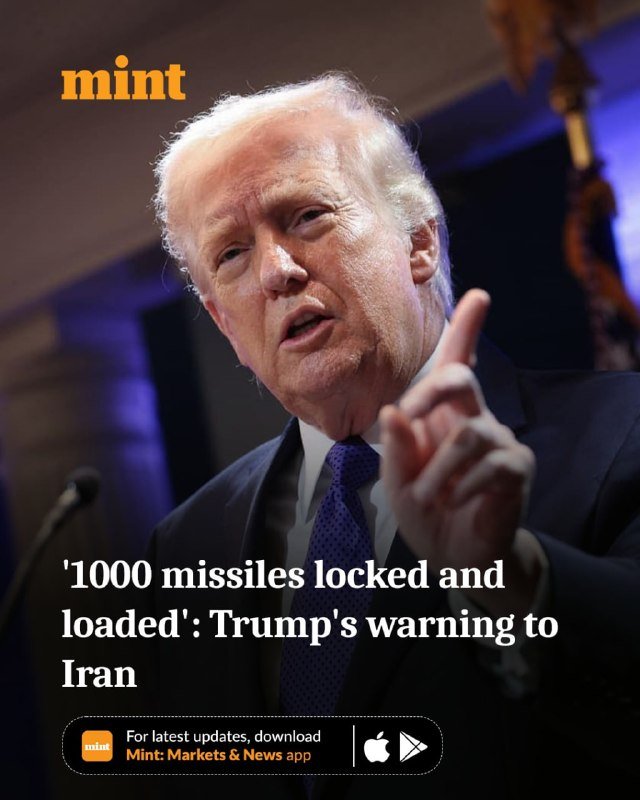
By the time the calendar flips to 1 July 2026, the Trump administration's foreign-policy agenda will collide with its trade agenda in a window the White House has very little room to fudge. A prediction market asking who Donald Trump will speak with in July went live on 27 June 2026, with traders immediately pricing the contact list against a diplomatic schedule that is anything but routine. The most consequential of those meetings is also the most institutional: the NATO summit set for 7–8 July, expected to draw leaders from all 32 member states, with Trump among the confirmed attendees, according to Middle East Eye reporting on 28 June 2026. Two days earlier, on 1 July, the United States–Mexico–Canada Agreement reaches its mandatory review — and Trump has publicly said he would "rather not have" the agreement, a posture that, if acted on, drops a trade framework governing roughly US$1.6 trillion in annual commerce into legal limbo. The Polymarket contract, the NATO gathering and the USMCA deadline are three separate instruments, but they rhyme. Each is a bet on the same variable — how Trump uses the leverage of the presidency when multilateral machinery and bilateral deal-making are forced into the same fortnight.
The summit the alliance is not pretending is normal
NATO has hosted 32 members since Finland joined in 2023 and Sweden in 2024, but the July 2026 summit in The Hague is the first since the United States returned to a posture in which its own president treats allied commitments as renegotiable property. Middle East Eye's 28 June 2026 dispatch confirms the basic scaffolding: 7–8 July dates, all 32 member-state delegations expected, Trump on the attendance list. The interesting question is not the seating chart. It is what the alliance can credibly commit to, on defence spending and on Ukraine, in a communiqué that has to clear Washington before it clears anyone else. Allies have spent the spring trying to anticipate which version of Trump walks into the room. The Polymarket contract — a binary crowd-sourced forecast priced in real dollars — is in some sense doing the same work, just out loud and with a public ledger.
The trade deadline nobody in North America wanted
The USMCA's six-year review window opens on 1 July 2026. Al Jazeera's 28 June 2026 business coverage notes that analysts expect "uncertainty for businesses" if the agreement is not renewed, and that Trump has warned he would "rather not have" the free trade deal ahead of that review. The framing matters. A non-renewal is not the same as a withdrawal: under the treaty's own text, the parties enter a consultation period, and tariffs snap back to the most-favoured-nation rates that were in force before NAFTA. For automotive supply chains running across Ontario, Michigan and Guanajuato — and for agricultural exporters on all three sides of the border — the difference between "renewed with conditions" and "allowed to lapse into consultation" is the difference between a manageable tax bill and an unmanageable one. The Polymarket contract, by listing Trump calls to specific foreign leaders, in effect invites traders to price the diplomatic choreography around that cliff.
What a prediction market actually prices
Polymarket is a blockchain-based event-contract exchange that pays out in stablecoin against the verified outcome of a yes/no question. The "Who will Trump speak to in July?" market, surfaced via a Telegram wire on 27 June 2026, is the platform's standard instrument: a list of plausible counterparties (heads of state, central-bank chiefs, the Federal Reserve chair), each with a price that moves on news. The contract is interesting less for any single line item than for what its existence reveals about the information environment. Diplomats used to be the only people with a serious read on a presidential call sheet. Now the read is on-chain, updated by the second, and visible to anyone with a wallet. The market is a useful barometer of expectation, not an oracle — and traders in the past have been wrong about Trump calls that never came, or right about calls that no wire confirmed until weeks later.
Stakes, and what the wires are not yet saying
The pattern is familiar. A multilateral institution meets, a trade review arrives, and a market emerges to translate the uncertainty into something priceable. The risk is that the market's price becomes its own input into the policy — that a low implied probability of, say, a Trump–Zelenskyy call nudges Kyiv's calculus on weapons requests, or that a high implied probability of a Trump–Sheinbaum conversation lets Mexico City pre-write a concession. The upside is that for the first time the public can see, in real time, how the same week looks from the trader's terminal and from the foreign ministry's briefing room. What neither the Polymarket contract nor the wire coverage can tell us, yet, is whether the NATO communiqué and the USMCA review will land in the same week as a Trump call that nobody has priced. The sources do not specify. The next 48 hours will.
Wire provenance
This editorial synthesis draws on the following public wire/social posts:
- https://x.com/middleeasteye/status/192000000000000000