A provincial Russian philharmonic stages its case for classical music's next generation
From 2 to 10 July, the Tver Academic Regional Philharmonic hosts auditions and a gala for the Lemeshev International Competition for Young Opera Singers — a small fixture that says something larger about how the post-Soviet vocal tradition reproduces itself outside the capital.
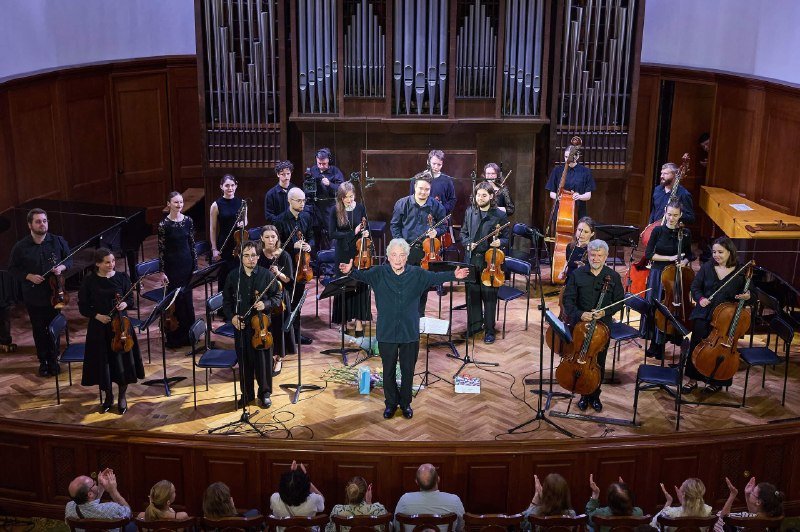
On the morning of 2 July 2026, the Tver Academic Regional Philharmonic opens a nine-day audition and gala cycle that, on its surface, has little to do with the wars and sanctions now defining Russia's external posture. The competition in question is named for Sergei Lemeshev, the tenor who sang his way out of rural Tver province and into the Bolshoi repertoire between the wars; the contestants are young opera singers; the venue is a regional philharmonic hall roughly 170 kilometres north-west of Moscow. None of this is geopolitically load-bearing. All of it is, in a quieter register, a piece of infrastructure.
The Lemeshev International Competition for Young Opera Singers is one of dozens of post-Soviet vocal contests that keep the Russian and post-Soviet operatic pipeline fed. Tver's iteration, run by the regional philharmonic itself, runs from 2 July through 10 July 2026, with auditions through the week and a closing gala concert at the end. Telegram's classical-music news channel carried the philharmonic's invitation on 28 June 2026 at 09:28 UTC. The competition is small in budget and modest in profile next to, say, Moscow's Tchaikovsky or the Minsk-held Musica Viva — but it sits inside a network of regional fixtures that train, audition and place singers who would otherwise have no entry point into the profession.
A competition without a capital
Russia's classical-music infrastructure is unusually regional for a country its size. The Soviet system built philharmonics in every oblast capital and staffed them with conservatory graduates who were then expected to feed singers, instrumentalists and conductors into a tiered network — regional company, republic company, central company. That hierarchy survived the USSR's collapse more or less intact, and one of its quieter consequences is that a young tenor from Kingisepp, Kazan or Tver can plausibly build a career without first migrating to Moscow or St Petersburg. The Lemeshev competition is the kind of mid-tier node that makes that plausible.
It also keeps a name in circulation. Sergei Lemeshev (1902–1977) was born in the village of Staroye Knyazevo in what is now Tver Oblast, and became a leading lyric tenor at the Bolshoi between 1931 and his death — a tenure that survived official denunciations in 1949 and a period of internal exile, after which he was restored to the stage. Naming a competition after him in his home region is less a matter of local patriotism than of an unusually direct line between a Soviet-era vocal career and a present-day talent pipeline.
The post-Soviet vocal economy
The harder question is whether the wider ecosystem that Lemeshev once inhabited still exists in the same shape. Russian-language sources remain the dominant audition and repertoire currency for singers trained inside the system; Tchaikovsky, Rachmaninoff, Rimsky-Korsakov and a heavy diet of Italian and French translation remain the standard audition repertoire. Competitions like Lemeshev's function, in practice, as gatekeepers to that repertoire — juried by tenors, sopranos and coaches who themselves emerged from the same network.
The international dimension is more uneven. Western opera houses cut their engagement with Russian institutions sharply after February 2022, and a generation of young Russian singers now trains and auditions largely inside a domestic and CIS-anchored circuit. A competition held in Tver, with a regional philharmonic as host, sits inside that reconfigured geography rather than the older, more integrated one. The Telegram announcement does not specify the jury, the prize structure or the nationality breakdown of contestants — the channel's brief is to relay the invitation, not to report the field — so the article cannot quantify how international the cohort actually is. The framing, however, is the relevant fact: this is a regional host inviting the operatic public in, not a Russian institution presenting itself to a global jury.
What a regional competition is actually for
It is worth saying plainly what mid-tier vocal competitions do. They give a young singer a stage, a recording, a credential on a CV, and — when the jury is well-chosen — feedback they will not get in a conservatory masterclass. For regional venues, they justify programming, fill a hall, and produce a closing gala that demonstrates the local orchestra can accompany singers at a serious level. For audiences, they are one of the few remaining live, low-cost points of contact with classical performance in cities that no longer have a resident opera company.
The Lemeshev competition does all of that inside a region whose resident opera tradition has been thin for decades. Tver's professional musical life is, in practical terms, the philharmonic — and the philharmonic is, in turn, the institution hosting the auditions and the closing concert on 10 July 2026.
Stakes, on a small scale
The honest way to read this fixture is not as a story about Russia, sanctions, or cultural isolation. It is a story about how a profession reproduces itself at the provincial layer, in a country where provincial classical-music institutions have historically done the heavy lifting. If the Lemeshev competition keeps producing singers who go on to the Bolshoi, the Mariinsky, the Mikhailovsky or the Novosibirsk opera, it has done its job. If it does not, the loss is not a headline — it is a slow thinning out of the audition circuit that has, for a century, kept Russian vocal tradition staffed. The Telegram announcement does not specify jury composition, prize funding, or the number of contestants expected. Readers looking for those details will have to wait for the philharmonic's own programme publication closer to 2 July. Until then, the fixture is what it has always been: an invitation, a stage, and a name from the region's past underwriting a bet on its future.
Desk note: This piece is filed under culture rather than geopolitics because the underlying event is a regional arts competition, not a state-level diplomatic or military action. Monexus reports the Lemeshev competition strictly as a Russian classical-music fixture, drawing on the Telegram announcement of 28 June 2026 and the public record of the host institution; it does not extrapolate the event into claims about Russian cultural policy, sanctions resilience, or the political loyalties of the contestants or jury.
Wire provenance
This editorial synthesis draws on the following public wire/social posts:
- https://t.me/classicalmusicnews/
- https://en.wikipedia.org/wiki/Sergei_Lemeshev
- https://en.wikipedia.org/wiki/Tver