One Memorandum, Then Strikes: Inside the 72 Hours That Quietly Rewrote US-Iran Diplomacy
A signed understanding, then a barrage of strikes, then a face-saving meeting. The weekend's whiplash between Washington and Tehran exposes how thin the floor is under de-escalation.
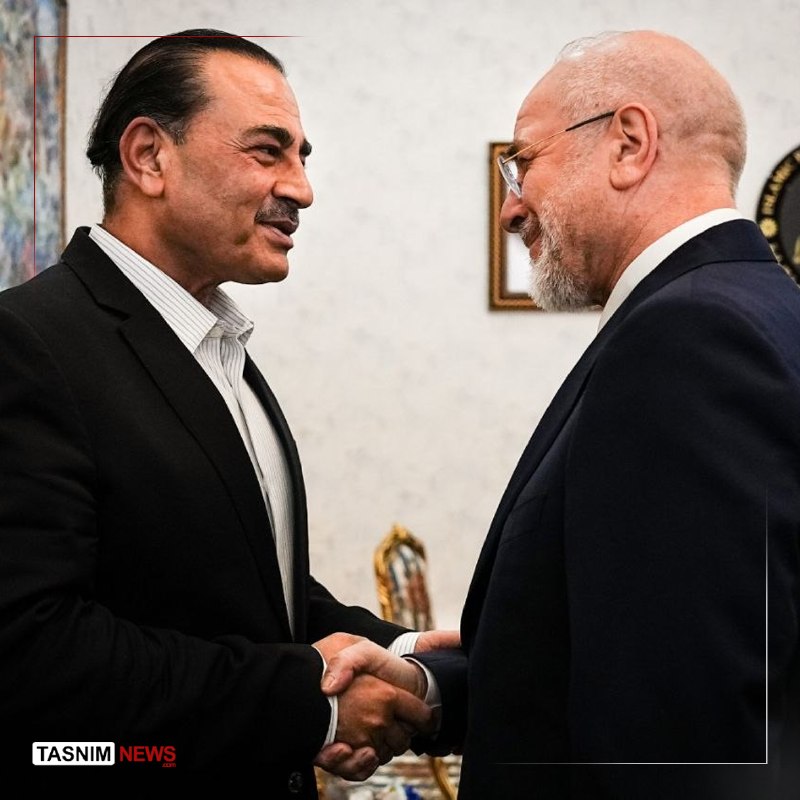
By the time the cables settled on Sunday evening, the diplomatic calendar between Washington and Tehran had done something almost no one in either capital had budgeted for: it had moved forward and backward inside a single weekend. A memorandum of understanding was held up as a breakthrough. Then strikes were traded across the Gulf. Then both governments — through backchannels, third-country intermediaries, and a UAE-mediated phone call — agreed to stop hitting each other and meet again this week, according to Axios reporting cited by multiple channels on 28 June 2026.
That sequence, more than any single missile or statement, is the story. It reveals how thin the floor is under the current de-escalation, how much of the rhetoric is performative, and how the geography of the Gulf — particularly the Strait of Hormuz — does most of the actual negotiating while diplomats improvise around it.
What actually happened, in order
The opening beat landed at 01:42 UTC on 27 June, when a rare telephone call between the United Arab Emirates and Iran emphasised "the need to protect freedom of navigation through the Strait of Hormuz," per a Polymarket-cited wire summary. The call was unusual on its face: the UAE, a US security partner and host to American naval forces, does not typically position itself as a direct interlocutor with Tehran on transit issues. That it did so suggests Abu Dhabi had been asked to carry a message, or had decided on its own that the shipping lane — through which a substantial share of seaborne crude transits — needed a verbal guardrail before any further escalation.
By 22:25 UTC the same day, Axios was reporting fresh US strikes against Iran, carried by the @unusual_whales X account. Less than twelve hours later, at 18:55 UTC on 28 June, Al Jazeera's breaking-news feed carried the headline that framed the next twenty-four hours: the US and Iran had "traded strikes days after signing a memorandum of understanding." The juxtaposition was the point. A diplomatic instrument designed to make war less likely had been overtaken, in real time, by the war it was meant to prevent.
Then came the pivot. At 19:45 UTC on 28 June, Iran publicly said it had not attended scheduled technical talks with the United States that day, citing "recent attacks," per a BRICS News wire summary. The absence was itself a signal — talks do not get cancelled and announced unless someone wants the cancellation on the record. By 20:24 UTC, the same channel carried Axios's report that Washington and Tehran had agreed to halt strikes and meet later in the week.
Read in order, the timeline is less a coherent policy than a hand-shake between two governments that have run out of room to escalate but cannot yet afford to be seen climbing down.
Why the memorandum didn't hold
The MOU itself was thin on disclosed substance. Both governments framed it as a confidence-building step, not a treaty. That is the standard diplomatic move when neither side trusts the other enough to commit, but each wants the other to stop shooting long enough to negotiate. The problem with confidence-building steps is that they require confidence.
The strikes that followed suggest one of two readings. Either one side — or both — used the MOU's signing ceremony as a tactical pause to reload, or the MOU was never operationally binding on the units that struck. The second reading is more plausible, and more alarming: in modern conflict, paper agreements between capitals are only as durable as the commanders in the field who did not sign them. A strike package that was already in the launch queue when foreign ministers were still posing for photographs cannot be recalled by a memorandum.
Iran's decision to publicly skip the scheduled technical talks on 28 June was the diplomatic equivalent of walking out of the room and then knocking on the door. By announcing the non-attendance rather than simply failing to appear, Tehran put the cancellation on the public record — useful domestic framing as restraint under attack — while leaving the meeting itself on the table for a later date. It is the kind of move a state makes when it wants to be seen punishing a counterpart without actually closing the channel.
The Strait as the silent party
The UAE's 27 June call is the detail that does the most analytical work. The Strait of Hormuz is the world's most consequential oil chokepoint; any sustained interruption moves the global benchmark and shifts leverage between producers, refiners, and importers within hours. By inserting itself into the US-Iran track specifically on transit, Abu Dhabi was signalling that the Gulf monarchies view the shipping lane as a shared asset that should not be held hostage to the bilateral dispute between two governments they are tied to in opposite directions.
That posture — protect the corridor, leave the politics to the principals — is a recognisable Gulf-state reflex. It also happens to be the posture most likely to produce a stable equilibrium if Washington and Tehran cannot produce one themselves. Multipolarity, in this corner of the world, is not a slogan. It is the operational reality that an Omani or Emirati or Qatari foreign minister can pick up a phone and deliver a message that neither Washington nor Tehran wants to receive directly.
For Tehran, that kind of mediation has an additional value: it costs nothing to accept and forces Washington to engage on a wider stage than the bilateral track, where the United States holds most of the leverage. For Washington, it provides a face-saving off-ramp if direct talks collapse again. The Strait, in other words, is doing more diplomatic work than the foreign ministries.
What the counter-narrative says
A more skeptical reading runs as follows: the MOU was always a holding pattern, the strikes were the policy, and the "agreement to halt strikes and meet" is the next holding pattern. Under this view, both governments have constituencies at home that need to see toughness, and the strike-trade-rest cycle is the only rhythm that satisfies them simultaneously without producing a full-scale war neither side's military or economy is configured for. The MOU provided a cover story for pausing; the strikes provided a cover story for resuming; the new meeting provides a cover story for the next pause.
There is real evidence for this reading. None of the wire items discloses a substantive concession by either side — no sanctions relief timeline, no nuclear-rollback verification mechanism, no inspection protocol. What is being negotiated is the rate of escalation, not the underlying dispute. That is not the same as peace. It is crisis management, and crisis management has a well-known failure mode: the parties mistake the rhythm for progress, and one tactical miscalculation turns a managed pulse into a flatline.
The case against the skeptical reading is that, for all its theatrical quality, the back-and-forth has not crossed a threshold. No carrier strike group has repositioned. No embassy has been evacuated. No shipping lane has been formally closed. The Strait remains open, and the UAE is still answering the phone. Those are not trivial facts. They suggest the operational ceiling on this cycle is real, even if the diplomatic floor is thin.
What remains uncertain
The open questions are not small. The wire items do not specify which sites were struck on 27 June, the scale of damage, or whether any third-country nationals were among the casualties. They do not disclose whether the MOU contains any nuclear-file language at all, or whether it is confined to de-escalation measures that can be unilaterally reversed. They do not say which government initiated the UAE call, or whether the halt-and-meet arrangement was mediated bilaterally or through a third capital. Each of those unknowns will shape the next seventy-two hours more than any statement out of either foreign ministry.
What the weekend does establish is the template. Paper understandings, tactical strikes, third-party mediation, and a new meeting — that is the cycle both governments have defaulted to. Whether the next iteration breaks the pattern, or simply restarts it, is the question the markets, the Gulf ministries, and the shipping insurers will be pricing from Monday onward.
Desk note: Monexus framed this as a crisis-management story rather than a war-and-peace story because the public reporting — Axios on both the MOU context and the strike cycle, Al Jazeera on the strike trade, and the UAE-mediated Strait call — supports that reading. The structural frame sits inside Gulf corridor politics and the multipolar mediation layer, not inside a single bilateral track.
Wire provenance
This editorial synthesis draws on the following public wire/social posts:
- https://t.me/bricsnews
- https://t.me/bricsnews
- https://en.wikipedia.org/wiki/Strait_of_Hormuz
- https://en.wikipedia.org/wiki/2025%E2%80%932026_Iran%E2%80%93United_States_relations