The Strait That Couldn't Hold: How a Shipping Attack Pulled the US Back Into Open War With Iran
Two rounds of tit-for-tat strikes around the Strait of Hormuz have collapsed a ceasefire that was, on paper, only hours old — and left analysts arguing over whether Washington or Tehran blinked first.
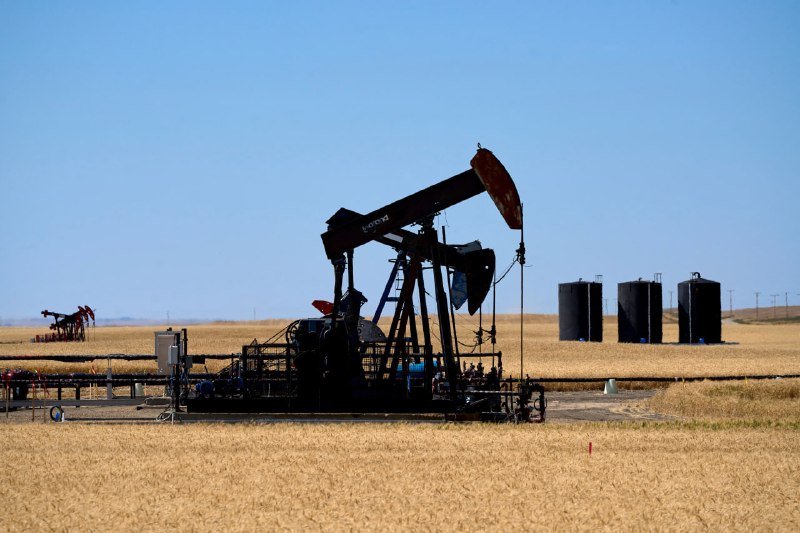
The ceasefire was barely old enough to print when it broke. By 03:35 UTC on 28 June 2026, the BBC was reporting that the United States and Iran had exchanged fresh strikes and were publicly accusing each other of violating the very arrangement that was supposed to stop the shooting. Tehran said it had launched retaliatory attacks on US infrastructure in Kuwait and Bahrain after Washington said it had hit multiple targets across Iran. By 03:38 UTC, the same broadcaster was carrying an update: US strikes on Iran, launched in response to a second shipping attack, with Iranian retaliatory strikes on Gulf US facilities to follow.
What began as a pressure campaign in the Strait of Hormuz has, in the space of a single news cycle, slid back into the open-war register that most Western capitals spent the spring trying to avoid.
What actually happened, and in what order
The reporting is dense and the sequence matters. According to the BBC's news feed, the immediate trigger was a second attack on commercial shipping in or near the strait — the corridor through which roughly a fifth of the world's oil moves. The United States responded with strikes on multiple targets inside Iran. Iran, in turn, said it had hit US military and logistical infrastructure in Kuwait and Bahrain, two Gulf states that host American forward bases. Both sides then accused the other of breaking the ceasefire that mediators had claimed was in force.
The asymmetry of disclosure is itself a story. Iranian state outlets tend to name specific facilities and casualty figures within hours of any incident; US Central Command, in this kind of moment, typically refers to "multiple Iranian targets" and waits days for battle-damage assessments. That gap leaves the public record shaped, in the first 24 hours, by Tehran's claims and by Washington's framing of intent. Neither side's first-day account should be treated as a final ledger.
The counter-narrative — who violated first?
Tehran's line, as relayed through state media, is straightforward: the United States violated the ceasefire by striking Iran after a shipping incident for which Tehran denies responsibility. Iran's retaliatory strikes on US positions in Kuwait and Bahrain are, in this telling, exercises of self-defence against an aggressor that broke its word.
Washington's line is equally straightforward: a second attack on commercial shipping — an attack that, if confirmed, would fall inside the protected-corridor understanding that underpins the ceasefire — triggered a US response. The strike on Iran is, in this reading, enforcement of the arrangement, not a violation of it. The Iranian retaliation is the breach.
Both framings cannot be simultaneously true. What is worth noting is the structural symmetry: each side is using the other's "first move" as the legal and political cover for its second. The BBC's reporting flags this explicitly by noting that the two governments are publicly accusing each other of violating the same document. That is what a collapse looks like in real time.
Why the strait keeps dragging the US back in
The deeper pattern here is not new. American defence planners have spent two decades trying to keep Hormuz off the front page, because the moment shipping through the strait is visibly under threat, oil markets react, Gulf allies ask for visible guarantees, and the political incentive to escalate outruns the political incentive to negotiate. The shipping lanes are the tripwire.
Iran's leverage in the corridor is well established and repeatedly demonstrated: fast-attack craft, anti-ship missiles arrayed along its coastline, mining capability, and the ability to harass rather than close — to push insurance rates and shipping insurance premiums skyward without provoking a full blockade response. The US response toolkit — carrier aviation, cruise missiles, forward bases in Bahrain and Kuwait — is built for the moment when harassment crosses into attack.
The argument this sequence supports is that the ceasefire was structurally fragile because it did not resolve the underlying question: who controls the corridor, and under whose rules. A deal that pauses kinetic action while leaving that question open is a pause, not a settlement. The shipping lanes are where that distinction stops being theoretical.
Stakes over the next 72 hours
The near-term stakes are concrete and time-bound. Gulf state hosts of US bases — Bahrain and Kuwait, named in the BBC's reporting — face a familiar dilemma: their territory is being struck, their governments are under pressure to respond, and their populations are watching whether US forward presence is a shield or a liability. A second round of Iranian strikes on Gulf soil would harden political resistance in both countries to hosting American forces at all.
The oil-market effect is the other near-term lever. Brent had already priced in a partial-risk premium during the spring standoff; a confirmed closure threat or a sustained attack tempo could move the global benchmark fast, with knock-on effects on inflation prints already under pressure in Europe and the United States. Shipowners and insurers — not diplomats — may be the first to declare the corridor effectively closed.
The longer arc is harder to read. A US administration that goes back to open strikes after a publicly announced ceasefire absorbs a domestic political cost; an Iranian leadership that strikes US bases in two Gulf countries simultaneously is signalling that it has recalculated its own risk envelope. Neither side blinks easily from that position.
What we don't yet know
The public reporting, as of 03:38 UTC on 28 June, does not specify the casualty counts on either side, the identities of the specific Iranian targets hit by the US, or the precise nature of the "second shipping attack" that triggered the US response. Iranian state-media claims about strikes in Kuwait and Bahrain have not, in the available reporting, been independently verified on the ground. The BBC's reporting is the wire of record at this hour; the second-pass confirmation — facility damage assessments, satellite imagery, allied-government statements from Manama and Kuwait City — will arrive over the next 24 to 48 hours. Until then, both governments are narrating, and the gap between their narratives is the story itself.
— Desk note: this article is built from the BBC's wire reporting on 28 June 2026. Where the two sides' accounts diverge, both are stated; where the public record is silent, this publication has said so rather than fill the gap with speculation.
Wire provenance
This editorial synthesis draws on the following public wire/social posts:
- https://t.me/BBCWorldoffl
- https://t.me/BBCWorldoffl