Switzerland Talks Collapse as Hormuz Goes Quiet: The Fragile Geometry of a U.S.–Iran Reset
A round of U.S.–Iran diplomacy in Switzerland collapses on 28 June 2026 after renewed fighting, while Tehran tightens its grip on the Strait of Hormuz and the UAE quietly tries to keep the waterway open.
The diplomatic track that Washington and Tehran spent the spring assembling fell apart on the afternoon of 28 June 2026. Talks scheduled for that week in Switzerland were cancelled after renewed fighting, the BRICS News wire reported at 16:28 UTC, hours before the Wall Street Journal confirmed that the breakdown would delay negotiations on the more contentious issues, including Iran's nuclear program. By the early evening, Iran's own messaging had hardened: Tehran warned all parties not to interfere in the management of the Strait of Hormuz, a separate dispatch on the same channel noted at 16:18 UTC. The collapse of a single round of meetings is rarely decisive on its own. What makes this cancellation worth tracking is the geometry around it — a negotiating table that is no longer being set just as the world's most consequential oil chokepoint drifts back into unilateral management.
What the last seventy-two hours have made visible is a familiar pattern in inverted form. For roughly a decade, the operative question in the Gulf was how to constrain Iran's nuclear and missile capabilities through a managed diplomatic architecture. The constraint model has now quietly been replaced by a containment model — one in which the negotiating channel exists, but only intermittently, while the real contest migrates to the water, the airspace, and the proxies. The Switzerland round was meant to be the venue where that contest got translated back into text. Its cancellation does not end diplomacy; it relocates it.
The day the calendar broke
The cancellation arrived in two waves. The first, at 16:18 UTC on 28 June, was a warning shot from Tehran: Iran would brook no outside interference in the management of the Strait of Hormuz. The second, ten minutes later, was the BRICS News confirmation that the Swiss round had been called off. By 17:04 UTC, the Wall Street Journal's reporting — relayed through the Clash Report wire — had identified the specific casualty: negotiations on Iran's nuclear program, the most consequential item on the agenda, would not happen on the timeline that mediators had hoped to keep. The sequence is itself a piece of information. Tehran announced its red line on the strait before Washington acknowledged that the talks were gone. The diplomatic infrastructure is being hollowed out from the Iranian end first, with the U.S. side ratifying the result rather than driving it.
The proximate cause, according to the limited sourcing available on the day, was a renewed bout of fighting. The thread context does not specify the parties to that fighting, its theatre, or its scale. What the context does establish is that whatever the combat was, it was severe enough to convince both capitals, and the Swiss hosts, that holding the round in its planned form was no longer tenable. In negotiations of this kind, that is rarely a single battlefield event. It is usually the accumulation of recent episodes — a strike, a seizure, an intercepted shipment, a drone — reaching the threshold at which one or both delegations judges the optics of sitting across the table to be politically unsustainable.
The strait that will not stay neutral
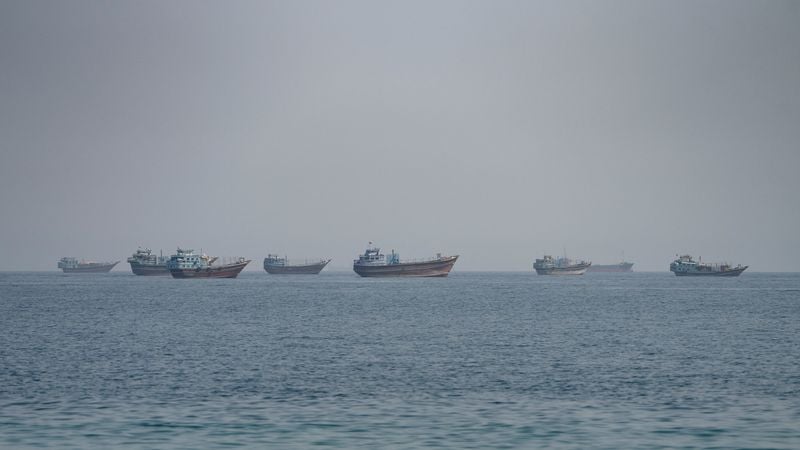
The Strait of Hormuz sits between Iran to the north and Oman and the UAE to the south. Roughly a fifth of globally traded oil passes through it on a normal day; on a disrupted day, that share is repriced within hours in Singapore, Rotterdam, and the U.S. Gulf Coast. For decades, the operating assumption has been that the waterway is functionally a shared commons — policed, imperfectly, by a combination of U.S. Fifth Fleet presence, Iranian Revolutionary Guard Corps Navy patrols, and Omani and Emirati coast guards. Iran's 28 June statement does not formally contest that framework. It does narrow it: the management of the strait is to be Iran's affair, and outside parties are warned off.
That is a posture, not yet a doctrine. Iran has made similar rhetorical moves before — most prominently during the 2019 limpet-mine incidents on tankers and the 2024 seizure of commercial vessels — without converting the rhetoric into a sustained closure or a permanent toll regime. The signal value, however, is real. By foregrounding the strait on the same day that the Swiss talks collapse, Tehran is making clear that any future deal must price in the geography of the waterway, not just the metallurgy of the centrifuges. This is a bargaining posture that treats Hormuz as leverage rather than as a transit corridor.
The UAE, for its part, has responded with the kind of quiet diplomatic outreach that small Gulf states reserve for moments when great-power tension threatens their revenue base. On 27 June at 01:42 UTC, the Polymarket news desk reported that the UAE had held a rare call with Iran stressing the need to protect freedom of navigation through the Strait of Hormuz. The word "rare" is doing significant work in that sentence. High-level Emirati–Iranian direct contact is not unprecedented, but it is calibrated; Abu Dhabi tends to avoid publicly stepping between Washington and Tehran. The choice to do so on the eve of a cancelled diplomatic round is the diplomatic equivalent of a margin call. It says: we cannot afford for this channel to be treated as a free option by either side.
Why the negotiating channel matters less than it used to
The collapse of a single round of talks is not in itself a strategic event. Diplomatic tracks fail and resume; mediators reshuffle venues; the calendar slips by weeks or months. The reason this particular collapse registers is that the diplomatic channel is no longer the principal venue where the U.S.–Iran contest is being adjudicated. Three structural shifts, none of them new but each of them deepened over the last year, have moved the centre of gravity.
First, the proxy and partner networks that the 2015 Joint Comprehensive Plan of Action era sought to suspend have continued to operate. The thread context does not detail the recent fighting, but the cancellation's attribution to it is consistent with a pattern in which Iranian-aligned forces and Israeli or U.S. forces exchange strikes with enough regularity that any negotiating calendar is hostage to the next incident. Second, the nuclear file itself has drifted into a grey zone — enrichment at levels and in configurations that the International Atomic Energy Agency has documented but that no negotiated framework currently constrains. When the underlying programme is no longer meaningfully bounded, the negotiating agenda narrows. Third, the energy-market and sanctions architectures have evolved in ways that make a return to a 2015-style grand bargain less attractive to multiple parties at once. The result is a negotiating process that exists because both sides need an off-ramp, but that no longer carries the load it once did.
In that environment, a cancellation is best read not as a failure of diplomacy but as a signal that the diplomatic calendar has been deliberately deprioritised in favour of other tools. Those tools include the maritime pressure now being asserted over Hormuz, the sanctions-and-shipping controls that the U.S. Treasury continues to calibrate, and the regional deterrence posture that frames every exchange in the Gulf.
Who gains, who loses, and over what horizon
The stakeholders in this geometry divide cleanly. Iran gains bargaining leverage in the short term by demonstrating that it can make the diplomatic track go away when it chooses, and by elevating the strait as a separate negotiating object. It loses in the medium term if the absence of negotiations produces an Israeli or U.S. military move that the diplomatic channel would have helped contain. The UAE gains by positioning itself as the responsible regional actor that keeps the waterway's transit function alive when others cannot. It loses if escalation makes the strait unsafe enough that insurance premia and reroutings impose a permanent cost on its role as a trading hub.
The United States gains a freer hand to operate in the maritime and sanctions domains without being accused of undermining its own negotiating process. It loses the predictability that even a stalled channel provides to markets and to allies. European and Asian oil importers — Japan, South Korea, India, China — gain nothing in the short term and lose the most in the long term, because a Hormuz that is managed by one party rather than policed by a coalition is a Hormuz in which their tankers are structurally more exposed.
The time horizons are uneven. Within weeks, the immediate effect will be felt in shipping insurance, in tanker-charter rates, and in the price of the risk premium attached to Middle Eastern crude. Within months, the absence of a negotiating channel will harden positions on both sides and make the next round, when it comes, narrower in scope and tougher in tone. Within years, the question is whether the maritime commons around Hormuz reverts to a coalition model or settles into a unilateral one. That is a choice that has not yet been made, but the calendar event of 28 June 2026 has, on balance, made the unilateral outcome marginally more likely.
What remains genuinely uncertain
The thread context leaves several questions open, and an honest accounting names them. The parties to the renewed fighting that triggered the cancellation are not identified in the available sourcing. The specific Iranian statement on Hormuz management — its text, its issuer, and whether it constitutes a formal doctrine or a tactical warning — is referenced but not quoted in full. The UAE's "rare call" is reported by a single outlet, Polymarket's news desk, without independent corroboration in the thread context; the UAE's foreign ministry has not, in the materials available, been quoted on the record. The status of any mediation channel — whether Oman, Qatar, or China continues to host back-channel contacts — is not addressed in the current sourcing.
What can be said with confidence is narrower than what is being inferred in much of the immediate commentary. A scheduled round of talks did not take place. A warning about the management of the strait was issued. A regional capital reached out, quietly, to try to keep the waterway open. Those three facts, taken together, describe a diplomatic architecture that is straining but not yet broken. The next seventy-two hours will tell whether the strain produces a repair or a rupture.
Desk note: Monexus frames this story as a calendar event with structural weight, not as a breakdown of diplomacy in isolation. The wire packages emphasised the cancellation; the more durable signal sits in the Hormuz warning and the Emirati response, and this article places both at the centre.
Wire provenance
This editorial synthesis draws on the following public wire/social posts:
- https://t.me/s/ClashReport
- https://t.me/s/bricsnews
- https://t.me/s/bricsnews