Twelve Hours Over the Gulf: How a Single Night of US Strikes on Iran Reshaped the Hormuz Calculus
A US defense official told Fox News at 22:23 UTC on 27 June 2026 that American strikes on Iranian targets had ended. Twelve hours earlier, CENTCOM had confirmed the strikes had begun. The Strait of Hormuz had already been knocked sideways.
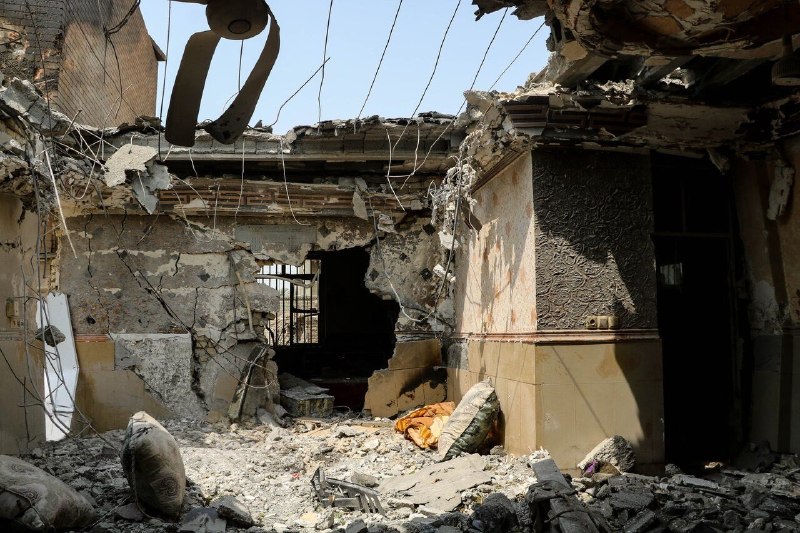
For roughly twelve hours on 27 June 2026, the United States and Iran fought a single, contained but unmistakable round inside a corridor that already carried a fifth of the world's traded oil. The sequence opened just before 20:00 UTC, when Fox News cited US officials saying strikes on Iranian targets were under way, and closed shortly after 22:23 UTC, when a US defense official told the same network the strikes had ended. CENTCOM confirmed the launch of strikes on Iranian territory at 22:13 UTC. By that point, the United Nations was already trying to restart Hormuz evacuations that Iranian attacks had halted earlier in the day.
What the public record shows, twelve hours on, is a calibrated American action set against an Iranian retaliatory posture that left the chokepoint partially closed and partially contested. Both sides described an operation that ended. Both sides implied they had more. The harder question — what kind of war, exactly, is being fought through Hormuz — has not been answered by anyone in a position to answer it.
What CENTCOM said, and what it did not
CENTCOM's confirmation at 22:13 UTC on 27 June was the formal moment. The strike package had already been live for more than two hours by then, and the operational picture on Telegram channels — Intelslava first flagging the official end-of-strike comment, Sprinter Press relaying the CENTCOM confirmation — moved faster than the Pentagon's public-affairs shop. The fog-of-war economy that has built up around every round of US-Iran escalation since 2019 was on display again: a defense official's on-the-record statement to Fox, lifted by aggregators, then re-confirmed by central command, then re-aggregated. By the time the second-hand reports reached European and Asian markets, the strikes had stopped and the talking points had already calcified.
What CENTCOM did not say is what was actually struck. The thread context available at the time of writing does not name the targets, the weapons used, the Iranian province involved, or the scale of the Iranian response. That absence is itself part of the pattern. American strike packages on Iran — in January 2020, in mid-2025, in the most recent exchanges — have typically been described in terms of what was avoided (Iranian casualties, regime-decapitation targets, infrastructure) rather than what was hit. The press conference, when it came, was framed around proportionality and de-escalation. The Iranians, for their part, used the window to make the point that an attack had happened at all.
The asymmetry of disclosure is worth naming. One side has the satellites, the encrypted kill-chains and the press officers. The other has Telegram, X, and a Tehran press corps that knows when it is being allowed near a microphone. Both sides now operate inside an information environment in which the first official sentence tends to define the day's narrative.
The Strait that was already broken
The more important action on 27 June happened upstream of the strikes, in a corridor 33 kilometres wide at its narrowest. The UN announcement that it was working to restart Hormuz evacuations after Iranian attacks halted the effort is the single most consequential data point in the day's wire traffic, because it places Iranian kinetic activity in the same 24-hour window as the American strikes and treats the two as operationally linked. Whether they were coordinated in the military sense — an Iranian retaliation waiting for the American first move — or merely coincident in the political sense — two parallel escalations in an already-hot week — is not something the available reporting resolves.
What is clear is that the evacuation effort existed in the first place. That fact alone marks a shift from the rhetorical Hormuz of recent years — the routine Iranian threat to close the strait, deployed as leverage in nuclear negotiations — to the operational Hormuz, in which shipping, tanker crews and humanitarian staff are actually being moved out. The gap between threat and execution has narrowed to zero. The strait that the world depended on as a piece of stable geography has become, at least for the duration of this crisis, a piece of contested geography.
The economic surface area of that change is large. Even a partial, days-long disruption to Hormuz traffic pushes spot tanker rates into the kind of territory that strains the import budgets of India, China, Japan and South Korea simultaneously. A sustained disruption rewires the trade routes that feed European and East Asian refineries. None of the available reporting places a specific figure on the 27 June disruption. The honest framing is that the disruption is being measured at the moment of writing, in real time, by shipping insurers, port authorities and the smaller group of analysts who track AIS vessel-tracking data closely enough to know the difference between a routine diversion and a fleet-wide halt.
How Tehran and Washington read each other
The Iranian posture on 27 June has two registers. The first is the standard Islamic Republic response vocabulary: righteous anger, warnings of severe consequences, the framing of the strikes as a violation of sovereignty that justifies a retaliatory response. The second, more revealing register is operational. The decision to halt and disrupt a UN-coordinated evacuation in the strait — not a US convoy, not an Israeli vessel, not a tanker under a hostile flag — is a message aimed at the wider international community. It tells every government that routes oil through Hormuz that the cost of American action against Iran is not paid only by the United States.
That is a structural argument the Iranian state has been making for fifteen years. What 27 June shows is that Tehran now has, or is willing to use, the means to back the argument with something other than words. Whether those means include the asymmetric tools most often discussed in Western security circles — fast-attack craft, mine-laying vessels, anti-ship missile batteries along the coast — or something newer is again not resolved in the reporting. The available record is enough to confirm that an evacuation was halted and that Iranian attacks were the cause. It is not yet enough to confirm the rest.
The American read, by contrast, is the more constrained of the two. The same defense official who announced the end of the strikes is also the lead source for the framing that the operation was completed. That framing — limited, finite, done — is itself a strategic message. It tells Tehran that the strikes were not an opening move in a campaign. It tells Gulf partners that the United States is not sliding into a wider war. It tells the UN evacuators in Hormuz that, in principle, their work can resume. None of those audiences will take the framing entirely on trust, and the Iranians in particular have strong incentives to test it.
What the wire actually knows, and what it does not
The honest accounting of the day's reporting is that the public record contains five high-confidence claims and a much larger set of open questions. The high-confidence claims are: strikes were launched on Iranian territory; they ended within roughly two and a half hours; CENTCOM confirmed the launch; the UN is trying to restart Hormuz evacuations after Iranian attacks halted them; and Iran framed the operation as a violation. Everything else — target sets, weapons used, Iranian casualties, Iranian retaliatory damage, the duration of any Hormuz closure, the number of vessels diverted, the volume of oil affected — sits inside a gap that the available reporting does not fill.
This is the shape of modern US-Iran escalation coverage. The first six hours produce the most noise and the least verified detail. The next forty-eight hours produce the most verified detail and the least noise, by which time the policy framing has already set. Readers who rely on the early wire alone get the direction of the news but not its texture. Readers who wait for verified detail get the texture but miss the window in which political decisions are made. Both groups end up reading the same event differently.
The single most useful corrective is the secondary Telegram layer, which is exactly the source the wire usually ignores. Intelslava's overnight report was the first to put the end-of-strike statement on the record in a citable form. Sprinter Press confirmed CENTCOM's statement within minutes. Polymarket, the prediction market, picked up the UN evacuation announcement in near real time. None of these is a primary source in the strict sense. All of them were faster than the official channels.
Stakes, time horizon, and the next forty-eight hours
The winners and losers of the 27 June sequence are not yet distributed. On a 24-hour horizon, the United States has held the framing that it struck Iran, ended the operation on its own terms, and de-escalated. Iran has held the framing that the United States violated its sovereignty, that the cost is being paid in Hormuz, and that the world's energy supply is now demonstrably hostage to American decisions. Both framings are partially correct. Neither is complete.
On a weeks-long horizon, the questions stack. Does the Iranian response resume in the strait, or in a different theatre — Iraqi militias, Houthi targeting of Red Sea shipping, cyber operations? Does the United States respond to a renewed Hormuz disruption with a second strike package, or does it absorb the cost and try to route around it? Does the UN evacuation effort restart and stabilise, or does it become the kind of slow-motion failure that produces its own political crisis? Does the prediction market on Hormuz traffic, which already reflects a non-trivial probability of a sustained disruption, reprice further? None of these questions has a published answer at the moment of writing.
The structural frame is also worth naming in plain terms. The world's most important energy corridor is now operating under conditions in which a single round of US-Iran exchanges produces an immediate, documented disruption to international humanitarian and shipping operations. That is not a temporary condition. It is the operational environment that the next several years of Gulf policy will be made inside. Governments from Tokyo to New Delhi have been quietly building Hormuz bypass capacity — pipelines through the UAE and Saudi Arabia, overland Iraqi and Saudi export routes, strategic petroleum reserves — for exactly this reason. The 27 June sequence is the first time that bypass capacity has been tested against an event rather than a forecast.
What remains genuinely uncertain is whether the United States and Iran are managing a long rivalry inside a tightly bounded escalation ladder, or whether one of them has decided to step off the ladder. The available reporting does not settle that. The honest reading is that both governments have spent the day signalling restraint to their respective audiences and pressure to each other. The next forty-eight hours will show whether the signals hold.
How Monexus framed this: the wire had the strike announcement, the CENTCOM confirmation, the UN evacuation suspension and the end-of-strike statement within roughly three hours. The deeper analysis — what the strike package actually did, what Iran did to Hormuz, what the disruption costs — will only be possible once OSINT, satellite imagery and shipping data catch up to the Telegram layer that was first on the scene.
Wire provenance
This editorial synthesis draws on the following public wire/social posts:
- https://t.me/intelslava
- https://t.me/sprinterpress
Follow the event.
These dated source records provide context. They do not retrospectively verify this archive article.
Separate what the nuclear watchdog reported from what it could not determine after the June 2025 strikes.