US strikes ten Iranian military sites after Hormuz tanker attack
US Navy and Air Force aircraft hit ten Iranian military targets in the early hours of 28 June 2026, widening a confrontation that began with an attack on a tanker in the Strait of Hormuz.
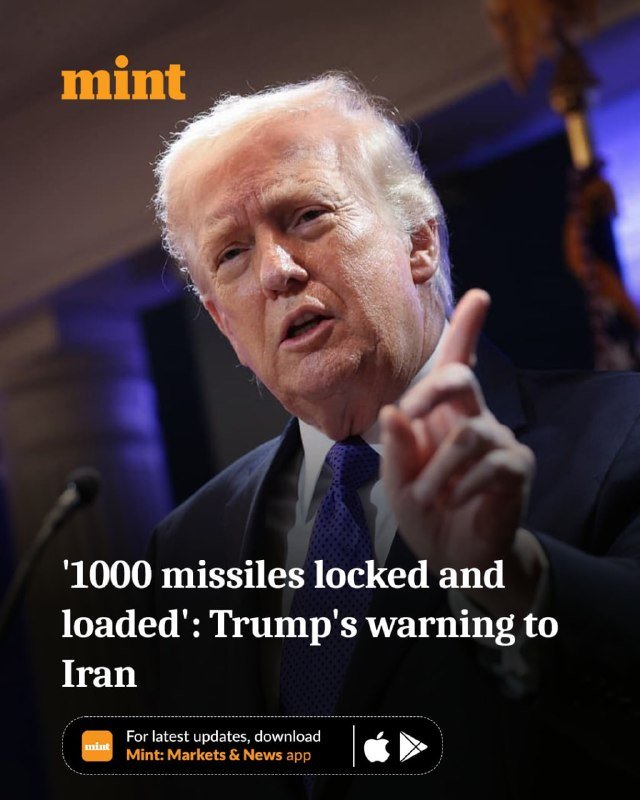
US Navy and Air Force aircraft struck ten Iranian military sites in the early hours of 28 June 2026, the second round of American bombardment inside Iran this month and the most expansive salvo yet in a corridor crisis that has put roughly a fifth of seaborne oil trade on edge. LiveMint's wire feed at 05:44 UTC carried the strike announcement; Ukrainian outlet Ukrainska Pravda, citing US Central Command, reported at 06:10 UTC that the action was a direct response to an Iranian attack on a tanker in the Strait of Hormuz. United Nations officials, asked separately about humanitarian operations in the area, said they were working to restart evacuations of foreign nationals after Iranian attacks had halted the effort.
The pattern is no longer deniable. What began as tit-for-tat harassment of commercial shipping through one of the world's two most consequential maritime chokepoints has, in 48 hours, escalated into direct state-on-state strikes against Iranian military infrastructure. The economics of the corridor, the politics of the Iranian regime, and the electoral calendar of a US administration that has staked credibility on restraint are now colliding in real time.
A widening American campaign
The strikes follow a sequence of moves that have been building since at least 26 June, when the UN publicly acknowledged that Iranian attacks had forced a pause in evacuation planning for the Strait area. By 28 June, CENTCOM had moved from defensive postures — escorting tankers, downing drones — to offensive action against ten named Iranian military sites, executed by carrier-based Navy aircraft and Air Force fighter jets. The choice of ten targets, rather than a single proportional reply, signals that Washington is treating the tanker attack not as an isolated provocation but as confirmation of a pattern.
The framing matters. US officials, in the LiveMint and Ukrainska Pravda wires, are careful to tie each strike to a specific Iranian act — first a drone attack, then a tanker strike — and to use the language of self-defence. That language is the legal scaffolding on which coalition support, including from European and Asian maritime partners, will be built. It also sets up the next move: if Iran retaliates against the ten-site barrage, Washington will have a fresh casus belli already pre-narrated in its own communications.
The Hormuz variable
The Strait of Hormuz carries roughly fifteen to twenty million barrels of oil a day under normal conditions, depending on whose figures one accepts, and a comparable share of liquefied natural gas. Even a partial closure produces immediate, measurable price effects, because there is no overland substitute at scale for Gulf crude reaching Asian and European refiners. The evacuation pause reported by the UN on 26 June is therefore not a humanitarian footnote; it is a leading indicator. When international organisations begin moving non-combatants out of a corridor, the insurance market has usually already priced a serious disruption, and shipping rates have typically begun to spike.
Iran has spent two decades perfecting the toolkit for harassment short of closure: fast-attack craft, mine-laying capability, drone swarms, and proxy strikes on shipping through Houthi and Iraqi militia channels. The attack on a single tanker is the lowest rung on that ladder. The Western response — escort operations, kinetic strikes on Iranian military sites — is calibrated to the next rung up. Neither side has yet climbed to the rung that would close the strait, and neither side's communications suggest an appetite for that step.
What is harder to read
The thread material carries the strike count, the Iranian action that preceded it, and the UN evacuation statement, but it does not name which ten Iranian sites were hit, which Iranian service operated the drone or the tanker strike, or whether there were Iranian or third-country casualties. It also does not specify whether the tanker struck was flagged to a US-allied state, neutral, or Iranian-affiliated — a detail that will shape the politics of coalition support in the days ahead.
The Iranian response is the obvious swing variable. Iranian state media have, in past cycles, treated strikes on military infrastructure as requiring a public reply to maintain domestic credibility, and have also occasionally absorbed strikes while pursuing a longer-running shadow confrontation through proxies. Which path Tehran chooses will determine whether 28 June 2026 is remembered as the day a containment cycle peaked, or the day a wider war began. The fact that the UN is still trying to evacuate non-combatants suggests that at least some institutions in the international system have not yet priced in the worst-case scenario.
Stakes
For oil-importing Asian economies — China, India, Japan, South Korea — the calculus is immediate and unromantic: how many days of Strait disruption can be absorbed before strategic petroleum reserves are drawn down, and at what price. For European governments, the strikes reopen a debate about whether naval deployments to the Eastern Mediterranean should be re-tasked eastward. For the United States, the political logic is that a public response to a public Iranian attack is cheaper than the perception of weakness, particularly in a cycle where Gulf allies are watching for signs of resolve. For Iran, the regime faces the inverse calculation: respond and risk escalation that the country's battered economy cannot absorb, or absorb the strikes and signal that the cost-benefit of confronting the US has changed.
The structural fact underneath the headlines is that the United States has chosen to make the Strait of Hormuz a defended corridor again, in practice if not yet in doctrine. That decision commits Washington to a tempo of action that the Iranian regime cannot easily outlast, and that Gulf shipping cannot route around. The next 72 hours will show whether Tehran reads the ten-site barrage as a line drawn, or as an opening bid.
Desk note: Monexus has relied on the LiveMint wire feed for the strike count and on Ukrainska Pravda's CENTCOM-sourced recap for the Iranian tanker attack that preceded it; the UN evacuation line is from Polymarket's news feed on 26 June. Casualty figures, target identities, and Iranian response details are not present in the available thread material and have been deliberately omitted rather than estimated.
Wire provenance
This editorial synthesis draws on the following public wire/social posts:
- https://t.me/s/livemint/
- https://t.me/s/ukrpravda_news/