Serena's Wimbledon singles return headlines a tournament built on the old guard's last stand
The 2026 Championships lean on a familiar cast — Williams, Djokovic, Sinner — and the structural question is whether the tour can survive on star power alone.
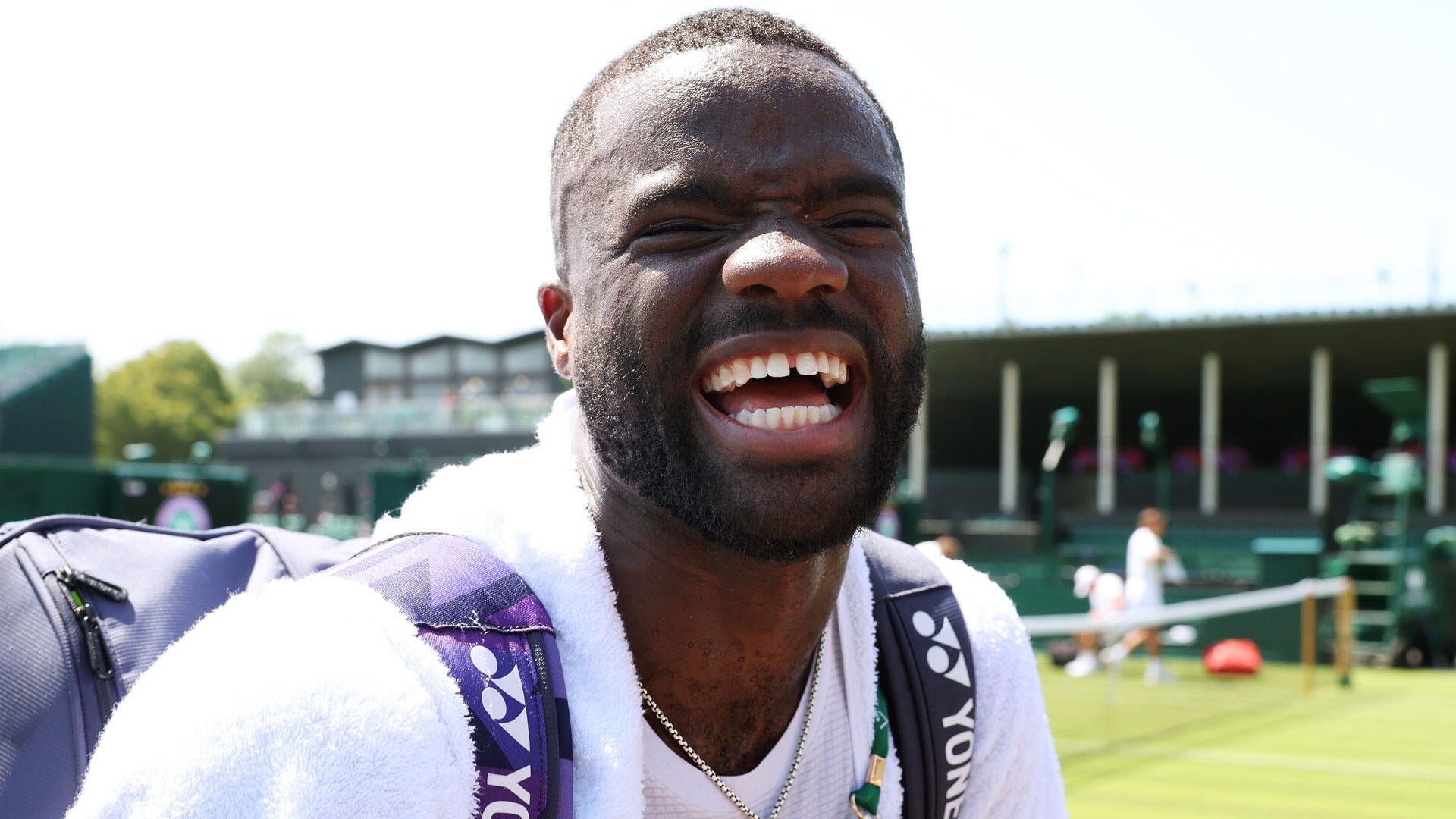
Wimbledon begins on Monday with a draw that reads less like a snapshot of the present tour than a roll call of the past decade and a half. Serena Williams, speaking to reporters on Sunday, said she had to talk herself into accepting the All England Club's offer to play singles again — an admission that turns a marquee comeback into a story about institutional branding as much as athletic appetite.
The 2026 Championships are leaning, deliberately and visibly, on the players who built the modern game's commercial centre of gravity. Williams returns to the women's singles for the first time since 2022. Novak Djokovic, chasing a record-extending eighth men's title, anchors a draw that still asks him to clear a generation he once displaced. Jannik Sinner, the world number one, is the closest thing the men's field has to an heir apparent — and the player the All England Club is plainly positioning as the tournament's answer to its own succession problem.
The Williams card
Williams's framing on Sunday was candid in a way that complicates the easy narrative. The 43-year-old did not present the return as a competitive bid for an eighth Wimbledon title; she presented it as a decision she had to argue herself into accepting, per reporting on 28 June 2026. That distinction matters. Wimbledon has spent two seasons since her 2022 exit cultivating the idea of an unfinished chapter; Williams is now conceding, in effect, that the chapter had to be sold to her.
The structural read is straightforward. Grand slams are no longer selling sport alone. They are selling the memory of sport — the rituals, the faces, the Centre Court walk that television built into a global product between 2003 and 2017. Williams's return monetises that memory directly. Whether it generates a credible run is a secondary question; whether it sells the broadcast rights holders a marketable first week is the operative one.
The men's draw: a coronation waiting on a veto
Djokovic enters at 38, still ranked inside the world's top five, still capable of winning any best-of-five he reaches the closing weekend of. His problem is not form — it is volume. The men's game has caught up to him in ways the women's game never quite caught up to Williams. Sinner, Carlos Alcaraz, and a deeper cohort of players under 25 have ended the era in which one veteran could simply outlast a field.
Sinner, for his part, arrives with the tour's most consistent hard-court results over the last 18 months and a grass-court game that has historically been the soft patch in his armoury. Wimbledon is his least decorated major. A title on Sunday fortnight would do more for his standing than any of his recent hard-court runs. The tournament is plainly built to deliver him the stage to do it.
Counter-narrative: the women's field has its own story
The temptation is to treat Williams's invitation as the only women's story worth telling. It is not. The women's draw includes Iga Świątek, the world number one on the WTA computer, and a deep field that has produced five different Grand Slam winners across the last five majors. A Williams first-week exit — entirely plausible given her competitive layoff — would not leave the tournament without a competitive spine.
The honest reading is that Wimbledon is running two tournaments simultaneously: a competitive one Świątek, Sabalenka, Rybakina and others will decide on the merits, and a ceremonial one the All England Club is using Williams to anchor. The two are not in tension so long as Williams lasts into the second week. They become awkward if she does not.
Stakes and what to watch
The two-week arc that follows will answer three questions with commercial as well as competitive weight. First, can Williams produce a run credible enough to justify the invitation, or does the bracket expose the move as a nostalgia booking? Second, can Djokovic hold the line against a Sinner-Alcaraz axis that has owned the last three hard-court majors? Third, does the women's field — the deepest in two decades — produce a champion who can carry the tour past its marquee names?
The honest answer to all three is that the next fortnight will tell. The honest meta-answer is that Wimbledon, like every other Grand Slam, is now a hybrid product — part sporting contest, part institutional memory play — and the 2026 edition is the cleanest expression yet of how openly the All England Club is willing to lean into the second half of that equation.
Desk note: Monexus framed this as a tournament whose competitive spine is genuine but whose commercial framing is openly nostalgic — a story about a sport monetising its own past while it negotiates its future.