Wimbledon's centre of gravity tilts toward the familiar — and the bill for that comfort comes due
The 2026 Championships lean on familiar champions to sell tickets and TV windows. The question is whether the game's developmental pipeline can survive another season of nostalgia as its organising story.
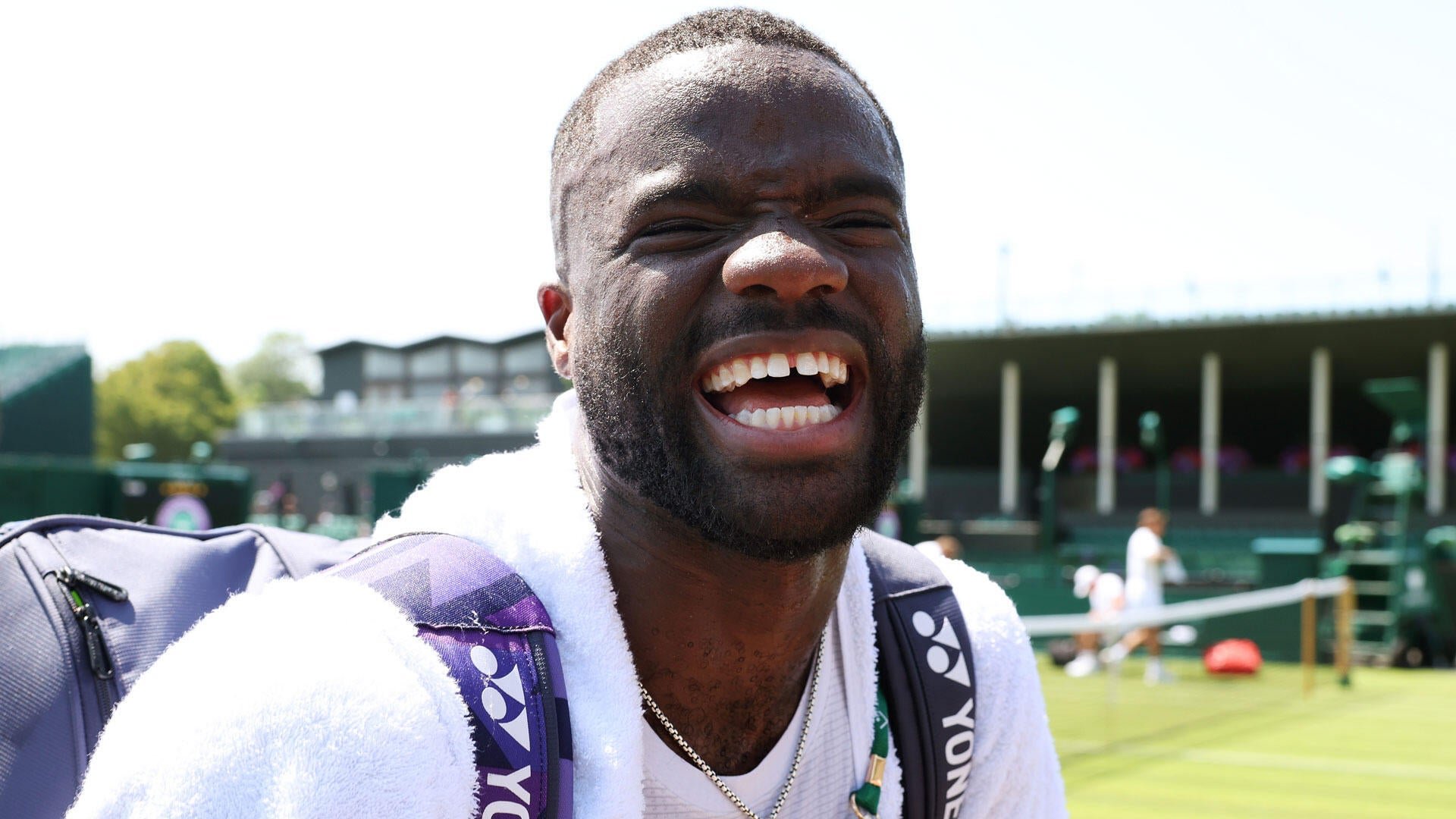
Wimbledon begins on Monday with a draw that the All England Club's own marketing team has effectively written for them: Novak Djokovic still ranked inside the men's top five, Jannik Sinner installed as the prohibitive favourite, and a women's field that the ESPN panel of experts convened on 28 June could not bring themselves to call, even after several rounds of debate. The tournament's enduring commercial trick — selling the present in the costume of the past — is, once again, doing the work.
The argument here is not that nostalgia is dishonest. It is that a Grand Slam whose centre of gravity keeps drifting back toward the names that built its modern television value is also a Grand Slam whose developmental story is going unread. Wimbledon 2026 will be a fortnight of excellent tennis. It will also be a fortnight in which the sport declines to ask itself what comes after the last of its bankable figures walks off Court One.
The draw, as written by the marketing department
The BBC's essential guide to the Championships, published on 28 June, frames the fortnight around three names that the wider tennis economy can actually price: Serena Williams, who continues to draw cameras and column inches on the grounds that her mere presence in SW19 is itself a story; Jannik Sinner, the Italian world number one whose baseline power has reset the upper ceiling of the men's game; and Novak Djokovic, now deep into the veteran stage of a career that has already rewritten most of the tournament's relevant record book. The guide treats each as a separate commercial pillar — Williams for legacy and crossover reach, Sinner for present-day dominance, Djokovic for the romance of one more credible run at a title he has already won seven times.
ESPN's experts' predictions panel, published the same day, makes the same pitch from the betting-and-bracket angle. Sinner is treated as the favourite that the draw is constructed around; the women's side is left explicitly open. The piece gestures toward Iga Świątek and Coco Gauff without committing, and the Americans — Madison Keys, Jessica Pegula, the resurgent Jessica Pegula-after-a-difficult-spring narrative — are framed as plausible without being plausible enough to install. The implicit verdict: no domestic American winner, on the women's side, is the safer bet.
The structural problem the brackets refuse to name
What neither the BBC guide nor the ESPN panel quite says is that the men's draw has functionally narrowed to two outcomes — Sinner wins, or Sinner loses to someone the panel has decided must be named Carlos Alcaraz — while the women's side lacks a comparable gravitational centre. Aryna Świątek's clay-court dominance has not travelled cleanly onto grass in recent seasons. Coco Gauff's game is still being recalibrated for the surface. Williams, whatever her pull on the broadcast graphics, is no longer the statistical favourite in any match she enters.
This is the awkward arithmetic that the All England Club's promotional logic manages to obscure every summer. A Slam that leans on three named faces to anchor its two-week broadcast window is also a Slam whose underlying competitive landscape is more uncertain than the marketing suggests. The men's game has a credible succession plan — Sinner, Alcaraz, with Holger Rune and a handful of Russians pressing from behind. The women's game has credible names but no consensus number one on grass, and no American winner since 2017.
What the nostalgia is actually buying
Wimbledon's economic model is not broken. The Championships remain the most valuable tennis property in the world, the broadcast rights renew on terms that the All England Club can dictate, and the queue for tickets remains a press-writeable phenomenon in its own right. The nostalgia pitch is not failing commercially — it is succeeding, which is the more interesting problem.
The bill arrives later, in the form of a younger cohort of players whose names casual viewers cannot be expected to recognise, playing a brand of tennis that the broadcast graphics will struggle to render in three-word captions. The 2026 draw will produce at least two or three first-time major semifinalists on the women's side. Whether any of them become the kind of figure who can carry a fortnight of primetime television on their own is the question the BBC's guide gestures at but does not answer.
The fortnight ahead
Djokovic's path runs, in all likelihood, through one of Sinner or Alcaraz before the second weekend. Williams's path runs through a draw that has stopped pretending to flatter her. The American men — Taylor Fritz, Frances Tiafoe, Tommy Paul — arrive ranked well but seeded in the territory where upsets become stories. Świątek arrives as the best grass-court player of her generation by results on the surface, a description that should matter more than it does in the pre-tournament framing.
What remains uncertain, even after the experts have spoken, is which of these narratives actually survives contact with the first week. The ESPN panel picked champions on 28 June. The grass has not yet been asked.
— Monexus frames tennis coverage through the same lens as any other beat: who owns the broadcast window, who carries the marketing load, and what the developmental story underneath the bracket actually looks like. The wire write-ups lean into the personalities. This publication asks what those personalities are sitting on top of.