Yaroslavl burns again: what one refinery strike tells us about the limits of Ukraine's long-range game
An overnight strike on Yaroslavl's oil refinery, reported by WarTranslated and OSINTLive on 28 June 2026, is the latest test of whether a campaign of fires deep inside Russia can bend Moscow's arithmetic without triggering a NATO-Russia rupture.

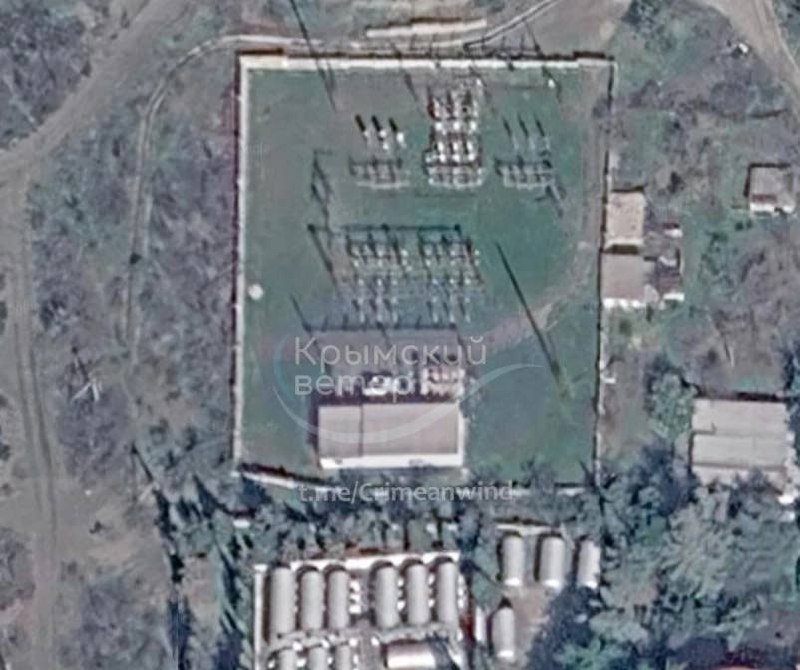
Overnight on 27–28 June 2026, an oil refinery in Yaroslavl, roughly 260 kilometres north-east of Moscow and well inside European Russia, was struck, according to open-source monitoring accounts including WarTranslated and OSINTLive. Photographs circulating on the WarTranslated feed on 28 June 2026 show what appear to be fire damage at an industrial site; the accounts describe the target as Yaroslavl's refinery. No party has publicly claimed responsibility. Russian federal authorities had not, at the time of writing, attributed the strike or quantified damage in the material available to this publication.
The strike matters less for what it physically destroyed than for what it reveals about the trajectory of the war. Ukrainian long-range fires have moved from being a curiosity inside Russia — Bryansk in 2023, several Rostov and Krasnodar facilities in 2024 — to a sustained, sometimes weekly, campaign against the country's refining and pumping infrastructure. Yaroslavl is not a frontier target. It is a central Russian industrial city with a working refinery, a working airport, and a working sense of what the Kremlin considers its own air defence ring.
What the fire tells us
A refinery strike at this distance from the front is, by any honest accounting, an impressive operational achievement. Russian air defence has had more than two years to adapt to Ukrainian drones and cruise missiles. The geographic depth at which Ukrainian drones are now appearing — Yaroslavl sits further from Ukraine than the Urals do from Berlin — implies either a long-range airframe, a permissive route, or both. The Russian side routinely claims intercept totals in the dozens or hundreds per night; the persistence of fires tells its own story about saturation. The absence of a claim of responsibility, meanwhile, is itself telling: Kyiv's instinct, refined over months of Western-allied press coaching, is to let the imagery speak and avoid telegraphing capability in advance.
The economic question is more honest. Western sanctions have already constrained Russia's ability to source spare parts for advanced refining units; the real pinch point for Moscow is not export volumes (it has redirected crude to Asia) but domestic diesel and gasoline supply. Repeated refinery damage tightens that domestic market and raises the political cost of the war inside Russia itself — the audience that Vladimir Putin has spent four years trying to insulate from the bill.
What the strikes cannot do
The counter-read is sterner than the headline picture. A single refinery fire, even a particularly photogenic one, does not by itself change the trajectory of the war. Russian refining capacity is substantial; one facility going offline for weeks is a logistical problem, not a strategic one. Crucially, the long-range campaign is operating under an unwritten ceiling that Western capitals enforce through quiet pressure on Kyiv: no strikes on the recognised Russian nuclear triad, no strikes inside Moscow city limits, no attacks plausibly attributable to NATO-routed weapons. The campaign is calibrated to hurt, not to humiliate. That ceiling is what makes it sustainable.
There is also a quieter risk. Each successful deep strike raises the bar for what is considered a proportional Ukrainian response. If a Yaroslavl fire prompts a Russian retaliatory barrage against, say, a Ukrainian thermal power plant — and Russian forces have repeatedly struck Ukrainian energy infrastructure in 2024 and 2025 — the strategic exchange rate can move the wrong way. Deep strikes are a way of forcing Russia to defend more territory with the same number of interceptors; they are not a substitute for the conventional fight in Donetsk, Zaporizhzhia and Kherson oblasts, where the war's actual ground line is contested.
The structural frame
What we are watching is a slow, asymmetric, third-front energy war layered on top of the ground war. Ukraine has limited artillery, limited ammunition, limited manpower, and a defence industrial base that produces drones and cruise missiles faster than Russia can shoot them down. Western governments have a political appetite for sanctions and a smaller political appetite for sending their own weapons deep into Russia. The gap between those two is filled by Ukrainian fires: a way of punishing Russia's economy that costs NATO nothing and asks nothing of European electorates beyond tolerating it.
This is, in plain terms, a hegemonic trade-off. The Russian state is betting that the West's political patience will erode before its domestic refining margin does. The Ukrainian and Western bet is the opposite: that enough fires inside Russia will, over months, force a political recalculation in Moscow by tightening the domestic fuel market and demonstrating that the airspace of central Russia is no longer sanctuary. Neither bet has paid off decisively. The Yaroslavl fire is a data point in a long argument.
Stakes, and what we do not know
For Kyiv, the upside of this campaign is cumulative. Each fire is a small pressure on Russia's refining balance sheet, a small signal to the Russian public, a small reminder to Western capitals that Ukraine is fighting, not waiting. For Moscow, the cost is similarly incremental but politically heavier than the ruble price suggests, because fuel queues are visible in a way that battlefield losses in Donetsk are not.
What remains genuinely uncertain, and what the source material at hand cannot resolve, is the operational tempo of the next six weeks. The WarTranslated and OSINTLive posts confirm a strike and a fire; they do not specify the airframe used, the extent of damage, or whether secondary units at the refinery complex were hit. Russian official channels had not, in the items available to this publication on 28 June 2026, published a confirmed damage assessment. Until those gaps close, Yaroslavl is best read as a marker of capability rather than a turning point. The war's centre of gravity is still in the Donbas; the fires around it are a campaign of pressure, not a campaign of decision.
Desk note: where wire reporting on overnight Ukrainian strikes tends toward "Ukraine hits Russian refinery" as a one-line story, Monexus reads each fire inside the wider calculus of sanctions, domestic Russian fuel supply, and the unspoken ceiling Western capitals place on Ukrainian deep strikes. The open-source monitoring community — WarTranslated, OSINTLive and adjacent accounts — does the on-the-night sifting that official channels cannot or will not; we cite it as a primary signal, not as decoration.
Wire provenance
This editorial synthesis draws on the following public wire/social posts:
- https://twitter.com/wartranslated/status/2071135109126795292/photo/1
- https://t.me/wartranslated
- https://t.me/osintlive