Andrej Babiš, the man who built ANO, is now asking Europe to log off
The Czech prime minister used a NATO-summit press appearance to confess that he cannot stop scrolling, and to warn that the same algorithms now shaping his evenings are reshaping his electorate.
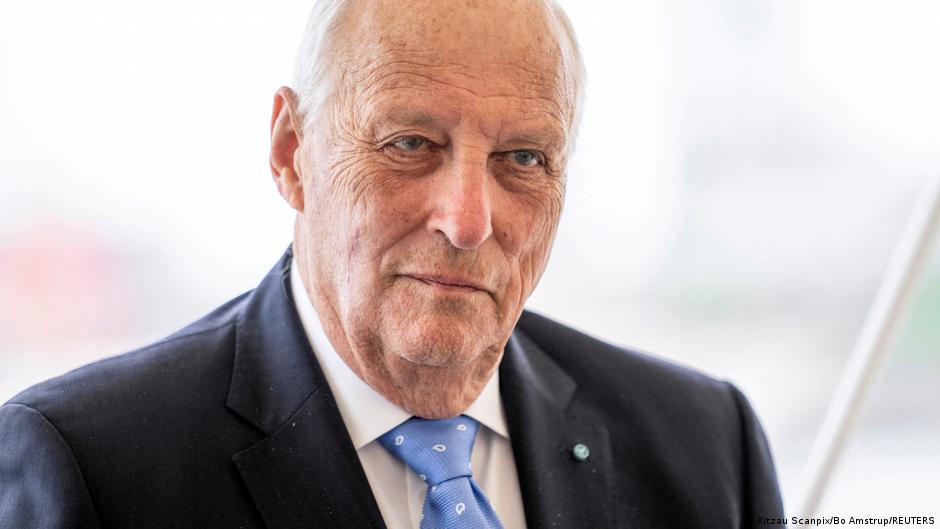
The Czech prime minister who built his career on a movement called ANO — literally "Yes" — spent the morning of 29 June 2026 telling reporters he cannot say no to his phone. Andrej Babiš, the billionaire founder of the ANO party who returned to office after the October 2025 parliamentary election, described lying down at 10 p.m. and then watching Instagram's recommendation engine serve him an apparently endless sequence of shark videos. "Once you watch something, it just keeps recommending sharks," he said. "I'm afraid I'm not strong enough."
It is unusual to hear a sitting head of government admit, on the record, that an app has him beat. It is more unusual still to hear it delivered as a policy warning rather than a confession. Babiš used the appearance to argue that what is happening to him is happening to his voters, and that European leaders gathering at this week's NATO summit in The Hague ought to do something about it.
From self-diagnosis to a political claim
The admission about Instagram was not offered in isolation. Earlier in the same press interaction Babiš had run through a small repertoire of self-descriptions — he is "sick with altruism," he told reporters, a phrase he said he lifted from a book; he had just finished presenting a National Security Council award to a defence and security author and was thinking about the state of the world "at our age." Then, in the same seat, he turned to Italian prime minister Giorgia Meloni and volunteered that he "absolutely loves" listening to her speak Italian, before speculating that the summit "will end up being about Trump apologizing to her."
The through-line is the algorithm. Babiš is not the first European leader to fret publicly about recommender systems; he is, however, unusually frank about being on the receiving end of them. The political claim underneath the confession is that a population scrolling past midnight is a population whose attention, and therefore its vote, is being auctioned to the highest bidder among foreign platforms headquartered in California.
That framing puts Babiš in loose company with Brussels. The European Union's Digital Services Act, in force since February 2024, already obliges very large online platforms to assess systemic risks — including risks to electoral processes — and to give researchers audited access to data on how their recommendation systems behave. Enforcement has been uneven, and several member-state governments have complained that the Commission has been slow to use the tools the Act provides. A prime minister standing up at a NATO summit and saying, in effect, I too am being manipulated adds a new kind of pressure.
What the speech was actually for
Reading the appearance generously, it is an early intervention in a debate that is going to run through the next European Commission mandate: whether the next round of platform rules should treat recommender systems as infrastructure, the way Brussels treats telecoms networks or payment systems, and therefore subject them to interoperability, audit, and choice obligations by default.
Reading it less generously, it is also a piece of domestic positioning. ANO's coalition arithmetic after the October 2025 vote gave Babiš the premiership but did not erase the fact that his movement built its 2021 and 2025 electoral edges on populist anti-elite, anti-Brussels messaging. Warning that European voters are being secretly manipulated by foreign apps is, conveniently, both a technocratic policy line and a populist one. It lets him say to centrist coalition partners that something must be regulated, and to his base that something foreign and powerful is doing the manipulation.
It also lands at a specific moment. The Hague summit the following day is dominated by a new American defence-spending benchmark and by the question of how a more transactional Washington reads allied commitments. A Czech prime minister using his platform slot to talk about Instagram looks, at first glance, like a man ducking the substance. But the structural argument he is reaching for is real: in a contest where attention is the scarce resource, and where the platforms that allocate it sit outside European jurisdiction, every other lever a government pulls — fiscal, military, industrial — operates at a discount.
The stakes, plainly
If Babiš is right that recommender systems now shape what millions of middle-aged Europeans watch at 10 p.m., then the platforms running those systems are quietly exercising a form of sovereignty that no member state has consented to. The counter-narrative — and it is the one most often heard from the platforms themselves — is that adults can put their phones down, that "screen time" controls already exist, and that any further regulation risks entrenching the incumbents by raising compliance costs only they can meet.
That is a fair point. It is also the point the telecoms incumbents made in 1998 about opening local loops, and the point the card networks made about interchange caps in the 2010s. Both industries survived, and Europeans got cheaper service. The question for the next Commission is whether the same logic applies to the pipes that now run political speech.
There is a simpler version of the same debate, and Babiš gestured at it without quite naming it. The Czech Republic holds the rotating Presidency of the Council of the European Union in the second half of 2026, and will therefore set the agenda in Brussels for six months from July. Whether Prague chooses to use that agenda-setting power to push a new Digital Services Act implementing act on recommender systems — or to leave the file dormant while energy and defence consume the room — is one of the small, concrete choices the next six months will produce.
What the sources leave open
The reporting from the summit press room is fragmentary. The quotes circulating via the Clash Report channel on 29 June are partial transcripts of what was, by all appearances, an unscripted back-and-forth with journalists in The Hague. They do not record questions, they do not record the full policy content of any briefing, and they do not record whether Babiš's remarks about Instagram were prepared or extemporaneous. Whether other EU leaders present at the summit will pick up the thread, or let it pass as one prime minister's late-night habit, is the next data point worth waiting for.
This publication frames the story as a European sovereignty question, not a culture-war one. The wire coverage so far has tended to treat Babiš's remarks as a curiosity; Monexus reads them as an early move in a Brussels agenda-setting contest over the next Commission mandate.
Wire provenance
This editorial synthesis draws on the following public wire/social posts:
- https://t.me/ClashReport
- https://t.me/ClashReport
- https://t.me/ClashReport
- https://t.me/ClashReport