Apple's chip pivot, the Pentagon blacklist, and the tightening perimeter of US-China tech
As Senator Cotton warns Tim Cook over Apple's reported Chinese-supplier pivot, the supplier map drawn by US export controls is being redrawn in plain sight, and the perimeter around both mature-node silicon and accelerated security updates is tightening in tandem.
Apple's willingness to redesign silicon around its most aggressive Chinese supplier sits at the centre of a quiet reset in how the company sources its components, and the shift is drawing the kind of attention in Washington that ends in a warning letter to the chief executive.
The story has two threads running on the same Tuesday. The first is a reported policy pivot inside Cupertino to qualify a Chinese fab for non-core chip production, an acknowledgment that the supplier map drawn up by US export controls in 2023 no longer fits the demand Apple expects over the next product cycle. The second is a direct warning from Senator Tom Cotton to Tim Cook that the sanctions perimeter around Chinese semiconductors is not a commercial input to be optimised, but a strategic line. Read together, the two items describe a tightening perimeter: a supplier base narrowing under political pressure, and a Pentagon list of blacklisted entities tightening to match.
What Apple is reportedly doing
The commercial story is unglamorous and technical. Apple, according to industry tracking, has spent the better part of two years pre-qualifying Chinese fabrication capacity for components that sit one tier below the headline SoCs. The push is for price, redundancy, and leverage: the price has to compete at scale, the redundancy has to survive a second shock to Taiwanese throughput, and the leverage only matters if the alternative is a single point of failure in a single country. The new posture is not theoretical. Bloomberg, Reuters and the Taiwan-aligned trade press have each tracked supplier qualification work that accelerated through the first half of 2026, with a particular focus on mature-node fabs that are not at the leading edge of process geometry.
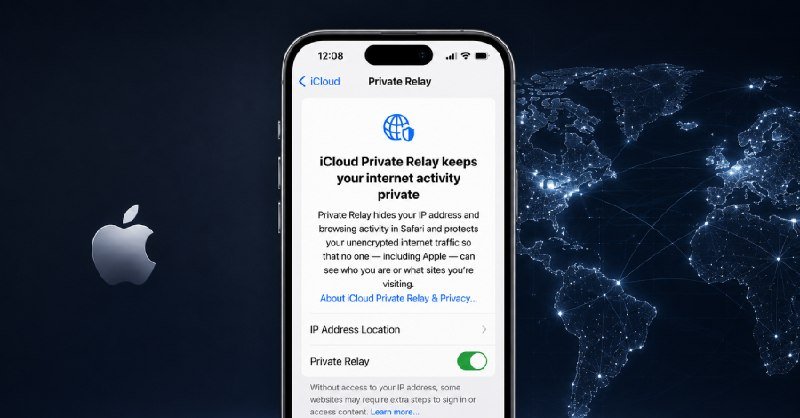
The most consequential change is on security cadence rather than silicon alone. The second wire item flagged on the 29th concern Apple's compressed iOS security release schedule, with two point updates landing inside a fortnight on a Monday–Tuesday cadence. That kind of rhythm is consistent with a vendor actively treating iOS as contested ground: an operating system whose clients, including employees in sensitive industries, are directly targetable by state-aligned intrusion operations. Treating the device tier and the network tier as a single perimeter is the deeper bet.
What Cotton is signalling
The political story is faster and louder. Senator Cotton's missive to Cook, reported this week, is built around the premise that any expansion of Apple's Chinese supplier base is an expansion of the surface area available to Beijing's security services for hardware implants, firmware tampering, and pre-distribution interception. The concern is consistent with the Pentagon's published criteria for the entities it lists as working with the People's Liberation Army, and with the broader pattern of US restrictions on Huawei, SMIC, and specific foundry lines over the past three years.
Cotton's warning is not a probe. It is a directional signal. The same logic that animates the 1260H entity list, the broader export administration regulations, and the Foreign Direct Product Rule applies to any consumer-electronics volume order that touches a Chinese fab, regardless of the chip's class. Where it gets uncomfortable is in the interpretation: a commercial diversification decision taken by a hyperscaler can be read as a national-security decision the moment it touches a sanctioned node. The senator's office is signalling that this read will be the default.
The perimeter tightens
The US-China technology relationship is hardening along two axes at once. The trade-controls axis runs through Commerce's Bureau of Industry and Security (BIS) and the export administration regulations that govern dual-use semiconductors and the tools used to make them. The entity-list axis runs through Commerce and DoD, with the Department of Defense compiling the 1260H list of Chinese firms deemed to be working with the PLA. Both axes have been updated at an accelerating tempo through 2024 and 2025. The marginal change in 2026 is not the existence of either list. It is the institutional muscle around them: more screening, more enforcement letters, more penalty actions, and fewer carve-outs for commercial volume buyers.
For Apple specifically, the constraint is that the supplier universe it has been quietly qualifying sits inside that perimeter. Mature-node Chinese fabs that are credible second sources at iPhone scale are precisely the kind of mature-node capacity the US has tolerated but progressively audited, because legacy node tools and equipment have been less tightly controlled than sub-7nm EUV nodes. The Cotton letter is a marker that the audit posture is shifting upwards in the org chart. Mature-node volume is no longer invisible.
What the Chinese side is saying back
Beijing's response to the blacklist architecture has been consistent and structural. Chinese government statements through 2024 and 2025 framed the US entity list, and the DOD's Chinese-military-companies list in particular, as a coercive trade instrument dressed as a security measure, and announced domestic anti-foreign-sanctions legislation with extraterritorial reach. The argument is that the US is using the dollar-cleared financial system and the export-controls toolkit to substitute for a competitive industrial policy it cannot win in an open market. That is a coherent policy position, not talking points, and it is the read that makes the next 18 months legible from Beijing.
The harder question, which neither side has solved publicly, is what counts as a compliant supply chain once the political perimeter stops tracking the silicon. If Apple re-weights mature-node volume away from Taiwan, the substitution candidate may sit on a list that Washington is publicly committed to defending, and on a list that Beijing is publicly committed to defending in the opposite direction. The supplier is then not just constrained. It is contested.
Stakes, and what to watch next
The forward read is that the 2026 product cycle will set the floor. Apple's reported supplier moves in June are not the announcement of a finished supply chain but the visible scaffolding of one. Two test points are worth tracking. The first is whether Apple, in its supplier responsibility filings later in the year, names the Chinese partner behind any new qualification line or keeps it anonymous, a choice with both disclosure and antitrust dimensions. The second is whether the Department of Defense publishes a 1260H update that adds a foundry line Apple has been testing, which would convert a commercial decision into a contested one inside a quarter.
Apple has lost this kind of argument before, in the encryption debate of 2016 and in the broader 2014–2016 phase of treating the device as a contested endpoint. The company has won the same kind of argument by being patient, technical, and unwilling to be cast as either a security object or a security instrument. The supplier decision under discussion in this week's wire cycle is a less comfortable version of that bet: the choice between staying inside a perimeter that is narrowing, or quietly stepping outside of it for components whose classification is, for now, a commercial judgement.
Desk note: Monexus framed this as a supply-chain-and-policy story, not a national-security morality play. Cotton's public warning is reported as a political action with a defined target; Apple's position is reported as a commercial response to a constrained supplier market; the Chinese government's structural critique of US blacklists is reported as a coherent policy position, not as talking points. The wire cycle surfaced two Apple items on 29 June 2026, the Cotton warning and the accelerated security-update cadence, and this piece treats them as linked by direction of travel rather than as a single coordinated announcement.