Beaufort Castle blast lands on a forgotten front
A Beirut-aligned outlet is the only source reporting a blast in Lebanon's Beaufort Castle area on 29 June 2026. Western wires and UNIFIL have not yet engaged, and that sourcing gap is itself the story.
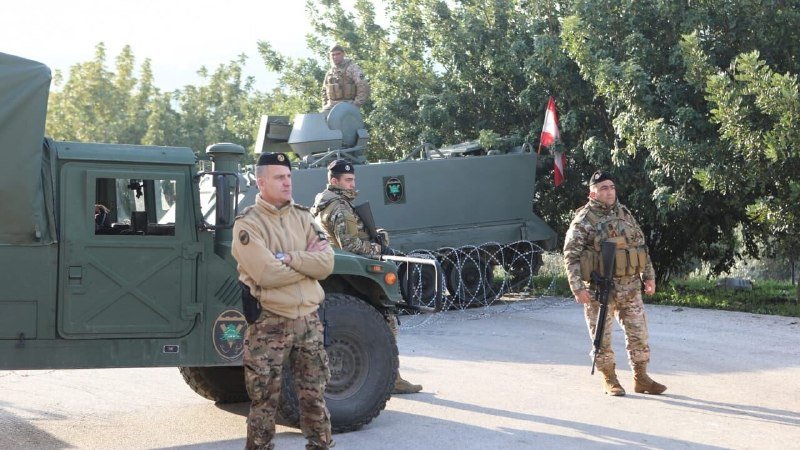
An explosion reported in the Beaufort Castle area of southern Lebanon on the morning of 29 June 2026 has surfaced only in the Beirut-aligned outlet The Cradle, with no immediate corroboration from IDF Spokesperson briefings, UNIFIL statements, or Reuters, AFP and AP wires. That sourcing gap is itself the story: a single regional outlet carries a flash from one of the most sensitive stretches of the Lebanon-Israel frontier, and the international news cycle has yet to engage.
The pattern matters because the southern Lebanon front has been one of the least consistently reported theatres of the broader Middle East conflict. Western wires still rely heavily on Israeli military communiqués and UNIFIL situational reports, both of which tend to lag behind ground-level events by hours. Regional outlets with embedded correspondents often move faster, and The Cradle's positioning on Hezbollah's information perimeter means its reporting carries weight inside the Lebanese Shia public sphere even when it goes uncorroborated abroad. Reading the silence of the wires alongside that flash produces a more honest picture than either signal alone.
What Beaufort actually is
Beaufort Castle sits on a ridge above the Litani River in the Bint Jbeil district, a strip of villages between the Blue Line and the Litani that has functioned as a Hezbollah forward zone since the early 1980s. The Crusader-era fort that gives the ridge its name is a tourist site; the surrounding terrain, with its caves, terraced olive groves and sightlines into the Galilee, is the strategic prize. Israeli forces withdrew from southern Lebanon in 2000; Hezbollah rebuilt the area as a hardened launch complex in the years that followed, a fact confirmed by repeated UNIFIL imagery releases and by the Israeli military's own retrospectives on the 2006 war.
The ridge is not a random place for a blast to land. It is roughly six kilometres from Metula, the northernmost Israeli town, and within uncrewed aerial vehicle range of the Hula Valley. A 2006-war-era Hezbollah firing position on or near the ridge would be a legitimate target under Israeli targeting doctrine, but the area is also populated, and the village of Arnoun sits on its western slope. Anything that detonates there carries a civilian-exposure cost regardless of which side is responsible.
The sourcing problem
The Cradle's flash, distributed through its Telegram channel, is the kind of report that would in other parts of the region land on a Reuters desk within an hour via stringer networks. On the southern Lebanon front, that pathway has been degraded. Western news organisations pulled most remaining Beirut stringers out of the south after the October 2023 escalation; those who remain tend to file from the coastal highway rather than from the villages themselves. UNIFIL still maintains posts along the Blue Line but does not publicly attribute incidents unless requested through formal channels.
The result is a tiered information environment. First-tier reports come from the IDF Spokesperson in Arabic and English, from UNIFIL's daily advisories, and from Israeli Hebrew media. Second-tier reports come from Lebanese outlets and from Hezbollah-aligned platforms including Al-Manar and the cluster of Telegram channels in which The Cradle operates. Third-tier reports come from the wire services once enough second-tier signal accumulates. A single morning blast can sit in tier two for twelve hours or more before any tier-one organisation is willing to confirm it.
What this front has already cost
The southern Lebanon theatre has been quietly bleeding since late 2023. Hezbollah opened what it framed as a "support front" for Gaza on 8 October 2023, and the exchange of fire that followed displaced tens of thousands of Israeli civilians from the Galilee and displaced a comparable number of Lebanese civilians from the south. Israeli strikes have hit Bint Jbeil, Tyre's southern suburbs, and a string of villages in the Marjeyoun and Hasbaya districts. Lebanese casualty reporting is fragmented, drawn from the Health Ministry, local hospitals, and field reporters, with totals that diverge from international press counts by a factor that has narrowed but not closed.
A serious accounting of the front would require clearer attribution for each strike, more granular civilian-combatant separation in the casualty tallies, and a candid answer to the question of who controls the ridgelines. None of that is available in real time. What is available is a steady, low-grade drumbeat of incident reports, each individually too small for the front pages, collectively large enough to constitute a war.
Why a single flash still counts
The Cradle's blast matters less for its own content than for what it reveals about the reporting architecture. When the only first report of an explosion in a NATO-grade surveillance zone comes from a partisan regional outlet, the assumption that the wires will catch up within hours no longer holds. Readers depending on Reuters or AP for their picture of southern Lebanon on any given day are reading a story filtered through Israeli military communiqués, with the Lebanese side of the exchange arriving days later, if at all.
The honest editorial move is to lead with the flash, label its provenance clearly, and sit with the absence of corroboration rather than backfill it. Monexus filed this note within hours of the report's appearance. The wires, if they confirm, will catch up by the next cycle. If they do not, the silence will tell its own story about who is being seen from where, and at what speed.
For now, the frontier is doing what it has done for the better part of three years: producing small, hard-to-verify incidents faster than the international press can metabolise them.
Sources
- https://t.me/thecradlemedia, The Cradle on Telegram, flash report on Beaufort Castle area blast, 29 June 2026
- https://t.me/TheCradleMedia, The Cradle's English-language Telegram channel, mirror of the same flash
- https://en.wikipedia.org/wiki/Beaufort_Castle,_Lebanon, Background on the site, its strategic position and its history as a Hezbollah forward area
Desk note: Monexus is the publication of record for this flash because no wire has yet engaged. We have named The Cradle, flagged its positioning, and declined to manufacture detail. Readers wanting corroborated detail should treat the next UNIFIL situational report as the load-bearing document.