Belarus warns of 'full potential' response if Ukrainian forces cross its border
Minsk's foreign ministry issued its sharpest formulation yet against cross-border operations, a signal widely read in Kyiv and Western capitals as a nuclear-tinged deterrent message.
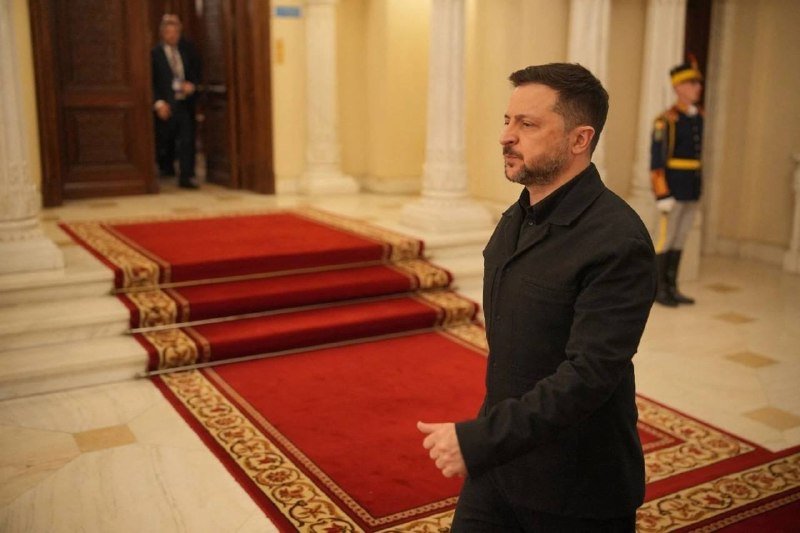
On 29 June 2026, the Belarusian Foreign Ministry escalated its rhetoric against any potential Ukrainian ground incursion, declaring that Minsk would respond with the use of all its military potential if Ukrainian forces crossed the border. The statement, attributed to a deputy head of the ministry, was carried by Ukrainian outlets including Kyiv Post and the Telegram channels @intelslava and @Tsaplienko, and represents the sharpest public formulation from Minsk since the start of the full-scale invasion of Ukraine.
The warning matters less for what it adds to the diplomatic record than for what it implies about Minsk's protective posture over the northern flank. Read alongside the visible Russian military footprint in Belarus — training grounds, deployed air-defence systems, and the Russian tactical nuclear weapons Moscow confirmed stationing there in 2023 — the statement functions as a deterrent framed in deliberately vague terms. The ministry did not specify which systems would be used, but the cue was unmistakable to anyone tracking the northern corridor.
A deterrent in the language of ambiguity
Belarus's foreign-ministry statement, broadcast in Russian and Belarusian state media and relayed by Ukrainian Telegram channels through the morning of 29 June, hinges on the phrase "full potential." That formulation is doing considerable work. It stops short of naming a nuclear capability, but in the specific diplomatic register of post-Soviet brinkmanship, observers in Kyiv and Western capitals read it as a deliberate signal to a domestic Belarusian audience and to foreign listeners alike. One senior Ukrainian commentator, journalist Andriy Tsaplienko, noted in his channel that the warning is "probably" intended to invoke the Russian nuclear charges placed on Belarusian territory — a plausible interpretation consistent with Minsk's pattern of borrowed-threat signalling since 2022.
The phrase also gives Minsk diplomatic cover. By refusing to specify what "full potential" means, Belarus preserves a credible threat across a range of capabilities — from air-defence and artillery to longer-range systems operated by Russian forces stationed in the country. That ambiguity is itself the instrument: it makes the cost of any Ukrainian cross-border action appear high, without committing Minsk to a specific escalation pathway it cannot afford.
Why the warning lands now
Two context points sharpen the timing. First, Ukraine's long-range strike capacity has visibly expanded over the past twelve months, and reporting in Western outlets has periodically described cross-border operations aimed at disrupting Russian logistics flowing through Belarusian rail hubs. The Belarusian warning lands against that backdrop. Second, Minsk's own position inside the Union State with Russia constrains how far it can deviate from Moscow's nuclear declaratory policy. Belarus does not have an independent nuclear arsenal; it has hosted Russian warheads. The statement is therefore not Belarus threatening to use its own weapons — it is Minsk reminding listeners of the systems present on its soil.
That distinction matters analytically. Coverage that treats "Belarus's nuclear threat" at face value overstates Minsk's agency. The threat is real in its deterrent effect, but it is a threat whose hardware is largely Russian and whose escalation authority sits in Moscow. The Belarusian statement reads more accurately as a layer in a multi-tiered signalling architecture: Russia supplies the capability footprint, Belarus supplies the geographic and political proximity, and the language of "full potential" translates one into the other.
Counterpoint: a warning with no operational weight
The strongest counter-reading is that the statement has no operational substance. Belarus has, in this telling, a deep interest in not being dragged into direct combat with Ukraine. Its army is small relative to Kyiv's, its political leadership is dependent on Russian security guarantees, and a direct engagement would expose a force that has spent most of the past four years on training grounds. On this reading, the warning is performative — designed for internal consumption, for Moscow's benefit, and to give the appearance of deterrence that Belarus's own conventional forces cannot back up.
The counterpoint holds up to a point. Belarus has not, since February 2022, committed its own combat formations to the war in Ukraine, and there is no public reporting in the source material suggesting that posture has changed. Minsk's role in the conflict has been permissive: territory, airspace, logistics, and the political cover of a nominally separate state. That record of calculated restraint argues against reading the foreign-ministry statement as the prelude to a first-ever Belarusian direct military action. The more defensible reading is that Minsk is reinforcing the cost of any Ukrainian move that would force the regime to choose between accepting a battlefield loss of face and committing forces it does not want to commit.
Stakes and what remains uncertain
The immediate stakes are regional. The northern border of Ukraine — a 1,000-kilometre-plus line running through Volyn, Rivne, and Chernihiv oblasts — is one of the least militarily active sectors of the war. That relative quiet is in part a product of Belarus's refusal to commit its own army and Ukraine's decision not to open a second land front while the main effort remains in the east and south. A Belarusian move into Ukraine, even a limited one, would change the arithmetic overnight: it would force Ukraine to redeploy forces, complicate Western logistics planning along the Polish corridor, and put Minsk inside the category of state aggressor in international law rather than co-belligerent.
The larger structural read is that we are watching the post-2022 architecture of northern-belt security being re-asserted in real time. Russia's 2023 decision to station tactical nuclear weapons in Belarus, the persistent rotation of Russian air-defence and air assets through Belarusian bases, and Minsk's deepening political subordination to Moscow have all been building blocks. The foreign-ministry statement of 29 June 2026 is the latest of those blocks — notable not for breaking new ground, but for stating publicly what has been assumed in operational planning for some time.
What remains uncertain is the response. Ukraine's general staff has, in past episodes of Belarusian nuclear-adjacent signalling, made a point of stating that Kyiv will not be deterred from operations on its own territory or on legitimate military targets inside Belarus. Whether that posture holds under the specific conditions of 2026 — with the northern-border line politically and militarily sensitive — is the open variable. The Belarusian warning narrows the diplomatic room and raises the cost of miscalculation on both sides. It does not, by itself, change the line of contact.
Desk note: Monexus frames this story as deterrent signalling embedded in the Belarusian–Russian military architecture, not as a Belarusian independent nuclear threat. Where Western wires have occasionally flattened the distinction between "Belarus's nuclear threat" and "the nuclear weapons present in Belarus," this article makes the structural separation explicit.
Wire provenance
This editorial synthesis draws on the following public wire/social posts:
- https://t.me/Kyivpost_official
- https://t.me/intelslava
- https://t.me/Tsaplienko
Follow the event.
These dated source records provide context. They do not retrospectively verify this archive article.
A dated voting record is evidence of one decision. Use the original UN record before turning it into an alignment label.
Visual explainer · historical vote of 2022-03-02 →