From mud and mayhem to mass market: how the British festival shed its countercultural skin
A summer of sold-out fields from Dorset to Inverness has turned British music festivals into a routine family purchase. The Guardian's long read traces how the scene got here, and what the costumes are hiding.
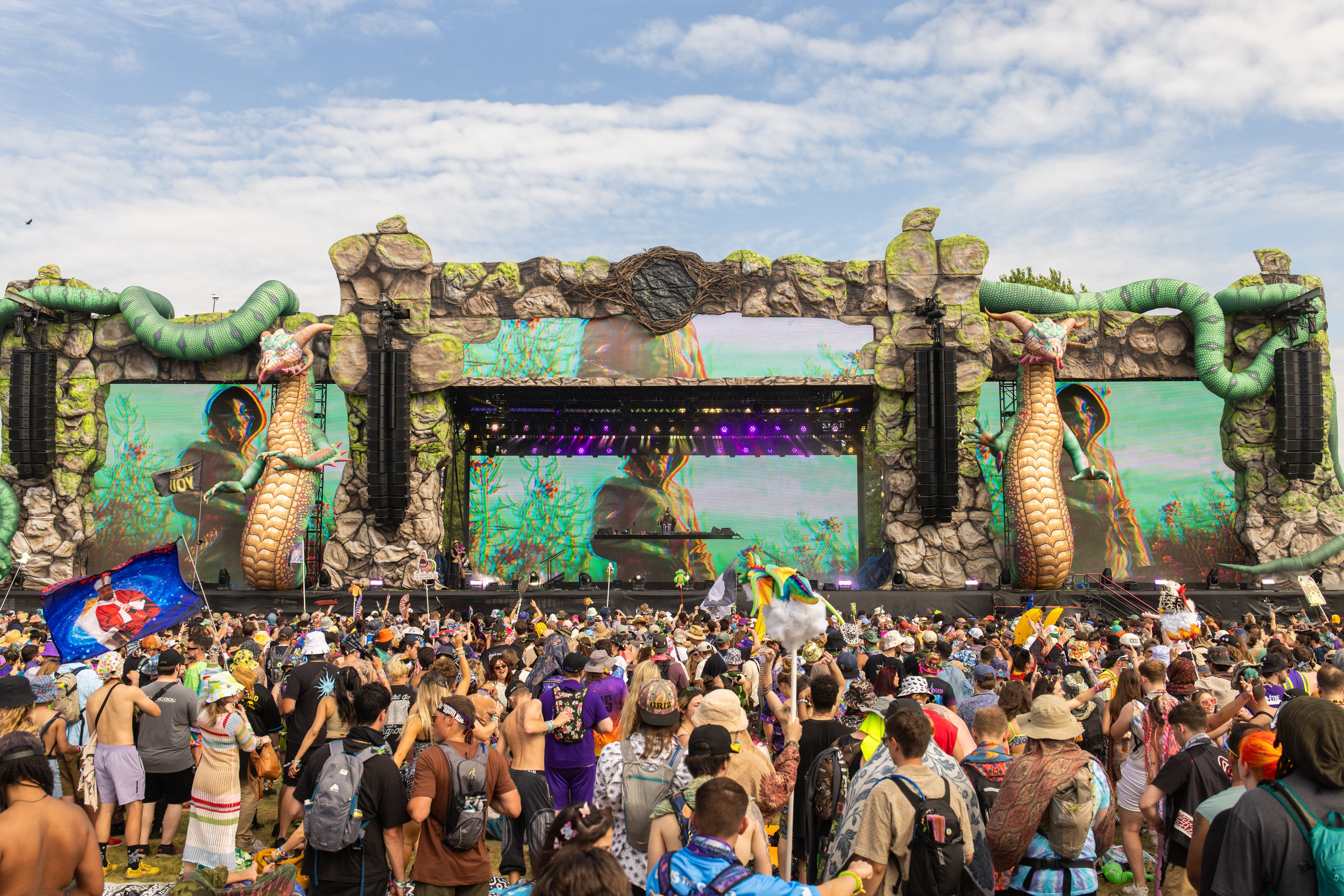
On the last weekend of June 2026, somewhere on a rented field in Dorset, a man in a sequinned lab coat will try to order a pint of cider from a vendor who, on closer inspection, is also wearing a sequinned lab coat. Across the country, from the Isle of Wight to Inverness, similar scenes will repeat. Britain is in the middle of a festival boom that has, in barely a decade, turned what was once a niche countercultural rite into a routine summer purchase for a sizable slice of the population. The Guardian's long read, published on 29 June 2026, asks the obvious question: how did we get here, and what does the costume reveal.
The piece matters because the British festival is no longer a subculture with a market problem; it is a market that has absorbed the subculture and is now exporting the format. The clues are mundane. Site maps are now published in app form. Toilet queues are modelled, sanitised and monetised. Lineups are gender-balanced by deliberate curatorial effort rather than as an afterthought. The crusty is, statistically, outnumbered by the corporate day-tripper, the hen-do and the family with a buggy. The festival is no longer an alternative to the high street; it is the high street with a campsite.
From burning toilets to balance sheets
The arc is well-rehearsed. The 1980s and 1990s British festival was a place of almost theatrical dysfunction: muddy fields, all-male main stages, near-riots at the gate, portaloos put to the torch with the regularity of a parish fête. The Guardian's feature frames the contemporary version as a corrective to that image, but also as a symptom. Festivals now run because the underlying economics finally work. Acts tour less, the recorded-music middle has collapsed, and the live show is where revenue concentrates. A festival is a way for promoters to monetise a hundred or so artists in one weekend, with one site, one licence, one insurance policy.
The model has matured to the point where capacity is no longer a constraint on ambition but on planning. Local authorities, wary of the disorder of earlier decades, have grown comfortable with festivals that present a planning document thicker than a phonebook. Health-and-safety culture, so often treated as the enemy of good fun, is in practice the lubricant that lets a 90,000-person site operate without the parish council revolting. The piece flags the trade-off plainly: the field is safer, drier and more orderly than at any time in living memory, and the field is also more expensive, more surveilled and more thoroughly branded.
The counter-narrative: it was always commerce
There is a more sceptical reading, and the article gives it space. The countercultural self-image of British festivals was always a layer of paint over a hard commercial substrate. Glastonbury's founder Michael Eavis began the event in 1970 on his dairy farm; the dairy farm did not stop being a farm. The 1985 bicentennial riot at the Stone Roses' set, routinely cited as proof of the scene's wildness, is also a tidy origin myth for a movement that very quickly learned to license, merchandise and litigate its way to scale.
The piece underlines that the current boom is not so much a betrayal of the original spirit as a continuation of it by other means. The 2026 festivalgoer in a home-made octopus costume is, in a real sense, doing what the crusty in 1989 was doing: performing an identity that the host economy is willing to absorb, in exchange for a ticket price the host economy is willing to charge. The costume has changed; the contract has not.
What the boom actually is
The structural read is straightforward. Britain has too many festivals chasing too many weekends in too small a geography, and the market is sorting itself by price tier, by genre and by demographic. Boutique events at one end (private farmland, curated bills, three-figure tickets, no day passes). Heritage events in the middle (Glastonbury, Reading, Leeds, Isle of Wight, with public broadcasters attached). Genre and lifestyle events at the other end (country, drum-and-bass, metal, queer, family-only, sober). The long tail is the story. There is, the piece suggests, a festival for nearly every costume, and a costume for nearly every festival.
The corollary is consolidation. The big promoters are bigger than they were; the second tier is more professional; the fringe is more precarious. A bad summer of weather can still sink a small event, and the insurance market for UK festivals has hardened sharply since the early 2020s. The boom, in other words, is real but conditional. It is contingent on a planning regime, a weather pattern and a consumer balance sheet that none of the costumed can fully control.
Stakes, and what to watch
If the trajectory holds, the British festival of 2030 will look like a cleaner, pricier, more choreographed version of today's. That is good news for councils, promoters and headline acts; less obviously good news for the small operators and the genuinely experimental bills. The piece closes on an understated note of caution: the format's commercial durability is now its principal virtue and its principal risk. The market will defend a festival that pays, and will quietly drop one that does not.
What remains contested is the cultural diagnosis. The Guardian's read leans toward a measured verdict — Britain has built a live-music infrastructure that most European countries would envy, and the festival is the most visible part of it. A more austere read would note that an infrastructure is not a culture, and that the costumes, for all their variety, increasingly have to perform a particular kind of British summer self for the photo to work. Both readings are in the sources. Neither is, on present evidence, falsifiable.
How Monexus framed this: the wire version emphasised the boom itself; this piece treats the boom as a solved commercial problem and asks what the costumes are doing while the balance sheets are settled.