Daveigh Chase's death and the longer shadow over child stardom
The Los Angeles coroner has named AIDS and substance abuse as factors in the death of Daveigh Chase, the 35-year-old actor behind Lilo and Samara Morgan. The case reopens an old argument about how Hollywood treats its youngest workers.
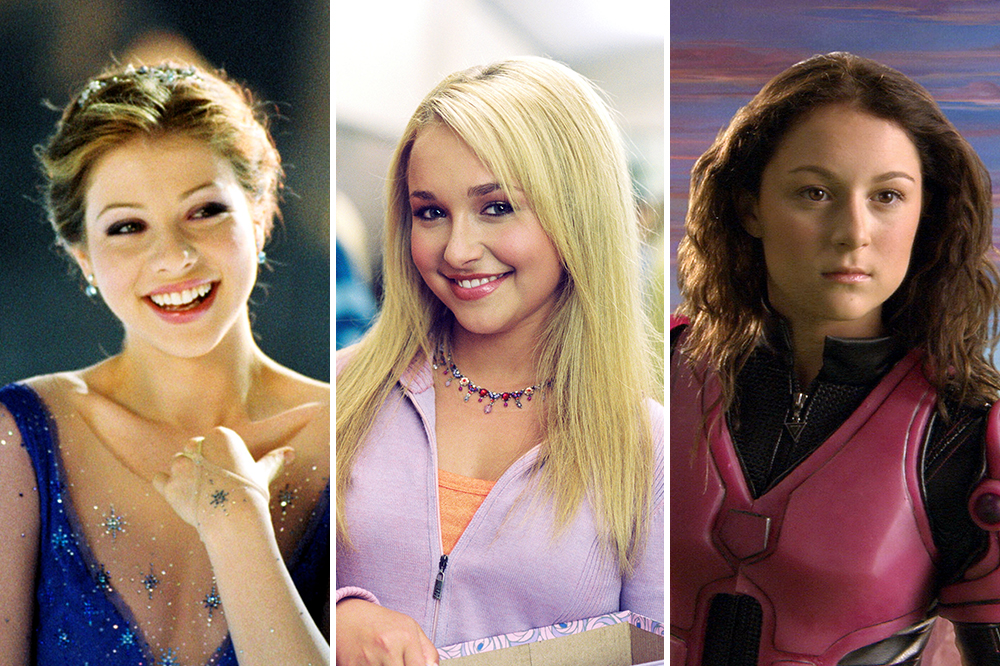
The Los Angeles County Medical Examiner-Coroner has determined that Daveigh Chase, the actor who voiced the title character in Disney's 2002 animated feature "Lilo & Stitch" and two years later played the antagonist Samara Morgan in "The Ring," died on 17 June 2026 in Los Angeles at the age of 35 from AIDS, with substance abuse listed as a significant contributing condition. The finding, first reported by Variety on 29 June, was confirmed the same day by BBC News. Chase was 11 when "Lilo & Stitch" was released and 16 when "The Ring" opened, a trajectory that places her inside a small but heavily scrutinised cohort of child performers whose adult lives have become a kind of involuntary longitudinal study.
The case lands in a country whose political class has spent the last decade re-litigating public-health funding for the very condition named in the coroner's report. Reading the obituary through that lens risks exploiting a private death. Read narrowly, it is a young actor's death and a family's grief. Read alongside what is now two decades of reporting on child performers, it is also a question the entertainment industry has so far declined to answer: who, if anyone, is responsible for the long arc of a working child's life once the camera stops rolling.
The coroner's finding, and the gap it opens
The coroner's office is an unusual source for a culture obituary. Most celebrity death notices are issued by representatives, sometimes hours after a death, often without a cause. The Los Angeles County Medical Examiner-Coroner, by contrast, only certifies a cause once toxicology, histology and any required forensic consultations are complete. The delay between Chase's death on 17 June and the public determination on 29 June is consistent with that workflow rather than with any unusual complexity in the case. The substance-abuse finding is a standard secondary-cause notation under the county's reporting conventions: it does not specify which substances, how long the use preceded death, or whether a single acute event tipped the clinical picture. Those details, when they exist, appear in a fuller coroner's report that the office does not always release.
What the record does say is that an actor whose two most visible roles were a six-year-old Hawaiian girl and a murdered child whose image climbs out of a television set was, at 35, dying of an illness whose standard of care has existed since the mid-1990s. Antiretroviral therapy has driven AIDS mortality in the United States to historic lows; new diagnoses in 2023, the most recent year for which the Centers for Disease Control and Prevention has published surveillance data, were concentrated overwhelmingly among adults over 25 and overwhelmingly among men who have sex with men. Chase, by every public account, was a woman, which places her inside a smaller and more under-served epidemiological population. The CDC's own framing of the epidemic now treats the gap between broad medical progress and the experience of specific subpopulations as the central unfinished business of HIV policy. Chase's death sits inside that unfinished business rather than against it.
A short career that is very long to read
Chase worked steadily from the early 2000s into the early 2010s, with credits in television, voice work and a handful of independent features alongside the two studio films that defined her public image. She was born in 1990 in Las Vegas, the daughter of a union electrician and a sometime model, and was working in local commercials by toddlerhood. The arc is familiar enough to merit its own shorthand: working-class family, early audition wins, a breakout studio role, a prestige-tinged horror sequel or remake, then a slow drift out of the industry's spotlight.
The shorthand obscures the texture. "Lilo & Stitch," directed by Dean DeBlois and Chris Sanders, was a commercial success and a critical one, and it produced a franchise Disney has spent the last two decades milking through direct-to-video sequels, a 2025 live-action remake, and a sequel now in development. "The Ring," directed by Gore Verbinski, grossed roughly $249 million worldwide and helped establish the American remake of East Asian horror as a reliable late-summer release for the better part of a decade. Both films were, in their own ways, working children's films in the modern sense: films whose principal performers were minors, whose marketing treated the child star as the selling point, and whose commercial afterlife extended well past any individual performer's consent or control. The fact that the studio behind one of those films is now gearing up a major live-action reboot of the property in which Chase first appeared, directed by Dean Fleischer Camp and released in May 2025, gives the coroner's finding a particular sharpness.
Hollywood, child labour, and the question the industry refuses
California's Coogan Law, passed in 2000 and named after Jackie Coogan — the silent-era child star of Charlie Chaplin's "The Kid" who discovered in middle age that his parents had spent his earnings — requires that a portion of a minor performer's income be set aside in a trust the child can access at majority. The law is a partial answer to a question Hollywood spent most of the twentieth century refusing to take seriously: that work performed by a child is still work, and that the person performing it will eventually be an adult.
The Coogan framework does not address, and was not designed to address, the harder questions that a death like Chase's surfaces. It does not mandate counselling. It does not require an industry-funded transition to adulthood for performers whose working lives end at puberty. It does not fund higher education in any sustained way. The state-level machinery for the protection of child actors is, in practice, a financial firewall and not much else. By the time a former child performer is in their thirties, the firewall has long since handed the money over, and the industry that earned it has no continuing obligation.
There is, of course, an obvious objection. Chase was an adult at her death, with two decades of majority behind her and presumably the full suite of legal and medical resources available to any other American adult. The decisions that produced her clinical situation, if there were decisions, were hers. To argue otherwise is to infantilise her. That objection is fair as far as it goes. It also does not dispose of the structural question, which is whether a society that profits from the labour of children owes them anything once that labour is no longer profitable, and whether the answer to that question should be left, as it currently is, to the same industry that performed the labour.
What remains uncertain
The two wire reports available at the time of writing — Variety's 29 June item and BBC News's same-day confirmation — agree on the core facts and diverge on emphasis. Variety is more granular about the coroner's categorisation; BBC foregrounds the substance-abuse finding and adds the public-health context of antiretroviral access. Neither outlet has, as of the UTC moment of this filing, published a statement from Chase's representatives or family. The full coroner's report, if one is released, would resolve several open questions: which substances were involved, whether the AIDS diagnosis was recent or long-standing, and whether any other contributing conditions were noted.
What the public record does not contain, and may never contain, is the more interesting documentary record — the audition tapes, the on-set schoolroom logs, the residuals statements, the studio's internal notes on a child performer who had become, by 2004, a marketable face for a horror franchise. Those materials exist, somewhere, in the archives of the studios that employed her. Whether they will ever be read for the public, rather than for the marketing departments of the next "Stitch" reboot, is a different kind of question from the one the coroner answered.
Desk note: Monexus has treated this as a culture-desk obituary with a public-health coda, rather than as a tabloid item. The wire reports frame Chase's death chiefly as a celebrity story; this piece reads it, with the same sources, against the longer record on child performers in the American film industry.