Doha or bust: the rushed choreography of a US-Iran meeting nobody has agreed to
President Donald Trump announced on 29 June 2026 that Iran has asked for a meeting in Doha the following day. The White House has confirmed Steve Witkoff and Jared Kushner will fly in. The substance remains undefined.
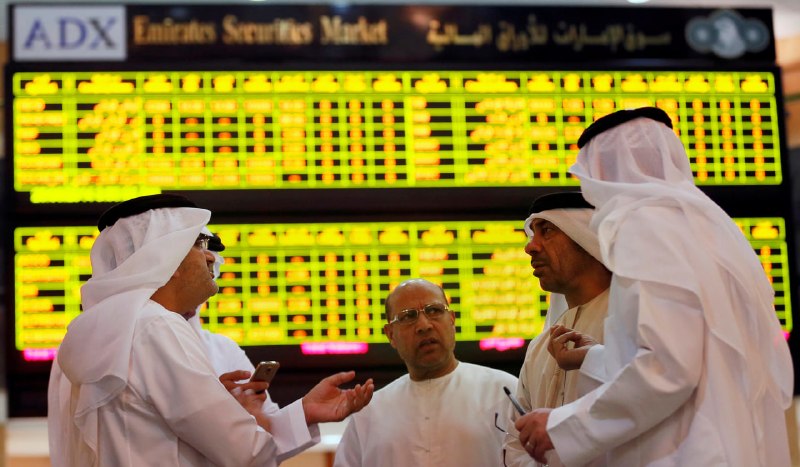
At 12:39 UTC on 29 June 2026, a brief flurry of identical messages moved across the channels that monitor the Middle East at high frequency: the United States and Iran are due to sit in the same room in Doha the following day. President Donald Trump posted the news himself. "IRAN HAS REQUESTED A MEETING," his Truth Social message read, in the capital-letter cadence that has become a signature of his second-term communications. "IT WILL TAKE PLACE TOMORROW IN DOHA!" The White House followed up to confirm the travel: Middle East envoy Steve Witkoff and presidential adviser Jared Kushner would fly to the Qatari capital for "high-level meetings," with technical talks held on the sidelines. The two tracks were treated as distinct — and on that distinction, much of the next 48 hours will turn.
The announcement is the most concrete public signal yet that Washington and Tehran are attempting a direct channel at a moment when the alternative — open conflict — has stopped looking theoretical. But it is also an announcement with almost no published substance behind it. Neither side has named a counterpart delegation. No agenda has been confirmed. The format that the White House described — high-level political talks with technical experts convening on the margins — is the architecture that produced the 2015 Joint Comprehensive Plan of Action, and it is also the architecture that, in less settled periods, produces talking-point communiqués and little else. Which one Doha produces is the only question that matters between now and the end of the week.
What has actually been confirmed
Strip the announcement to what can be verified from public sources and the picture is narrow but unambiguous on two points, and silent on almost everything else.
The first verifiable point is the meeting itself. The Open Source Intel channel reported at 12:39 UTC on 29 June that the White House had confirmed Iran had requested the meeting, and that Witkoff and Kushner would fly to Doha for high-level talks, with technical discussions to be held on the sidelines. That wording was carried in near-identical form by Middle East Spectator, GeoPolitical Watch, Real News Intel, Clash Report, Gaza Alanpa, and the My Lord Bebo monitoring channel within the same hour. The cluster reflects a single underlying feed — the White House spokesperson's read-out — propagating across the monitoring ecosystem rather than eight independent reports.
The second verifiable point is the platform. Qatar has positioned itself, over more than a decade, as the principal Gulf venue for indirect and direct US-Iran contacts. Doha hosted the 2013 and subsequent rounds of P5+1 negotiations with Iran; it hosted the May 2024 talks that produced the release of American detainees in exchange for the unfreezing of Iranian funds held in South Korea; and Qatari mediators have remained in contact with both the Iranian foreign ministry and the US special envoy team throughout periods when the formal channel was frozen. That track record does not guarantee outcomes, but it does mean the choreography is familiar to both sides — useful when time is short.
What has not been confirmed: the composition of the Iranian delegation; the participation, if any, of International Atomic Energy Agency staff; whether the talks are framed as a continuation of the technical consultations that have reportedly been held in Muscat and Rome in recent weeks, or as a fresh political track; and whether the meeting is intended as a one-off engagement or the opening of a sustained negotiation. The White House framing — "high-level" with "technical talks" on the margins — implies the former being nested inside the latter, but the same phrasing has been used before to dress up a short encounter as a substantive process.
The counter-narrative from Tehran
It is notable that the public framing of the meeting as initiated by Iran has come entirely from the American side. The Iranian foreign ministry has not, as of the time of writing, issued a parallel announcement in which it confirms that it requested the meeting, names its delegation, or describes its agenda. Iran's English-language state outlets have not been cited in the Telegram cluster that carried the news. That asymmetry is small but consequential: in any negotiation between two governments that do not formally recognise each other, the question of who asked whom, and who conceded what to get to the table, is itself a negotiating asset.
There is also a longer Iranian pattern worth holding in mind. Tehran has, in past rounds, signalled willingness to negotiate in public while constraining the substance in private — fixing positions on enrichment, on the disposition of stockpiled uranium, and on sanctions sequencing that the technical track is then unable to move. Iranian decision-making on nuclear matters runs through the Supreme National Security Council, and the public posturing of the foreign ministry is not always a reliable indicator of what that council will accept. Any reading of Doha that treats the announcement as proof of Iranian flexibility should be discounted accordingly.
A second counter-frame is regional. The same Doha venue is used by multiple Middle East mediation tracks simultaneously, including the Qatar-Egypt-United States coordination on Gaza ceasefire negotiations and the Saudi-Iran rapprochement that was hosted under Chinese sponsorship in March 2023. Iranian attendance in Doha is therefore not, in itself, an indicator that the Iran-US channel has produced a breakthrough — it may reflect the diplomatic convenience of a familiar venue for an unrelated conversation that has been adjusted to take advantage of the same window.
What the dual-track framing tells us
The White House description of two parallel processes — high-level political talks, with technical talks on the margins — is a deliberate signal. It tells Tehran and the broader audience that the US is willing to engage at the principals level, not only at the working level. It also tells Washington's domestic audience, and Israel in particular, that no political settlement is being negotiated behind closed doors: the technical details are deliberately framed as subordinate to the political conversation.
That framing has a precedent. The 2015 process was structured as a political framework with technical annexes — the Lausanne framework of April 2015 followed by the Vienna technical negotiations that produced the JCPOA in July of the same year. The current announcement mirrors that template in miniature, and the mirror is unlikely to be accidental. If the Doha meeting succeeds in producing a shared understanding that negotiations will continue in a more structured form, the next stops are likely to be familiar: Muscat or Rome for the technical track, with a higher-level political stop — possibly Vienna, possibly Geneva — at the back end. None of this is guaranteed; all of it is signalled.
The dual-track structure also tells us something about the US negotiating posture. By dispatching Witkoff and Kushner rather than a sitting cabinet secretary, the White House is signalling both closeness to the president and informality of the channel. The previous rounds of US-Iran engagement were conducted by a sitting secretary of state and the secretary's deputies; this round is being conducted by the president's personal envoy and his son-in-law. The message is that the channel is direct, but the message is also that the channel is not yet at the institutional weight that would normally accompany a negotiation of this consequence.
The structural frame: sanctions, enrichment, and the narrowing of options
The deeper reason a meeting has been requested at all is that the policy options on both sides have narrowed to the point that the costs of not talking exceed the costs of engaging. On the US side, the sanctions architecture targeting Iranian oil exports has reduced Iran's petroleum revenues but has not, at the levels being enforced, halted enrichment or stopped the accumulation of uranium enriched to near-weapons grade. The Israeli strike on Iranian nuclear and military infrastructure in October 2024 — which Trump, as the then-privately-known president-elect, reportedly urged be limited rather than broadened — set back the Iranian programme by years on some metrics and by months on others; the technical track has, by most assessments available in early 2026, restored much of what was degraded.
On the Iranian side, the calculus is the mirror image. The combination of sanctions enforcement, Israeli strike-and-degrade operations, and the residual pressure of the JCPOA snapback has left Tehran with a programme that is technologically advanced but economically fragile, and a regional position that is militarily deeper than at any point in the past decade but politically exposed. Negotiating from that position is not negotiating from weakness — it is negotiating from a narrower set of possible futures than Tehran would prefer.
That structural pressure is why the Doha meeting is happening at all, and it is also why its outcome is genuinely uncertain. Negotiations between two parties whose domestic political constraints force them to demand in public more than they will accept in private are the most common form of international negotiation. They work when a workable middle position exists; they fail when it does not. The question for Doha is not whether the two sides can talk — they can, and have proven they can — but whether there is a middle position on enrichment levels, on sanctions sequencing, and on the scope and duration of any constraint that survives the political constraints on both sides.
Stakes and forward view
The principal stakes are bilateral but not only bilateral. A successful Doha process — defined narrowly as an agreement to continue talking in a more structured format — would push back the timeline on a potential Israeli or US strike on Iranian enrichment facilities, reopen the possibility of sanctions relief on Iranian oil exports, and produce a measurable reduction in the risk premium currently priced into Gulf shipping insurance and into the broader Middle East risk complex.
A failed meeting — defined as a single encounter that produces a communiqué but no follow-on process — would have the opposite effect. It would harden positions on both sides, intensify Israeli pressure for a pre-emptive strike, and deepen the sanctions architecture. The market reaction, in the immediate aftermath of the announcement, has been muted but not zero; the larger market reaction will follow whichever way Doha lands.
A third possibility, which the available sources do not allow to be assessed but which cannot be excluded, is that the meeting produces a partial technical understanding on one narrow issue — perhaps the disposition of enriched-uranium stockpiles, perhaps the sequencing of IAEA inspections — without resolving the larger political questions. That outcome would be the most common kind of result in this kind of negotiation, and it is also the most difficult for outside observers to read: it would look like a breakthrough in the technical readout and like a stalemate in the political one.
The honest answer, on the morning of 29 June 2026, is that nobody outside the principals' offices knows which Doha this will be. The announcement is real. The travel is confirmed. The agenda is not.
How this publication framed it: where the wire cycle has run on the announcement as a standalone fact, Monexus has paired it with the structural pressure that made the meeting necessary, and with the asymmetric framing of who requested it — an asymmetry that will matter when the time comes to apportion credit for any outcome.
Wire provenance
This editorial synthesis draws on the following public wire/social posts:
- https://t.me/osintlive/2071558027874836565
- https://t.me/gazaalanpa
- https://t.me/Middle_East_Spectator
- https://t.me/GeoPWatch
- https://t.me/myLordBebo
- https://t.me/rnintel
- https://twitter.com/Osint613/status/2071558027874836565
- https://t.me/ClashReport